The best wall mounted cat doors give cats reliable access without leaving doors or windows open all day. The right model can also help limit drafts, unwanted animal entry, and installation hassles.
This roundup compares 10 options for different homes and cat sizes, including weather-resistant designs, telescoping tunnels, locking systems, and flap-free interior doors.
Best 10 Wall Mounted Cat Doors Picks for 2026
Best Wall-Ready Build
Baboni Steel-Frame Wall Pet Door
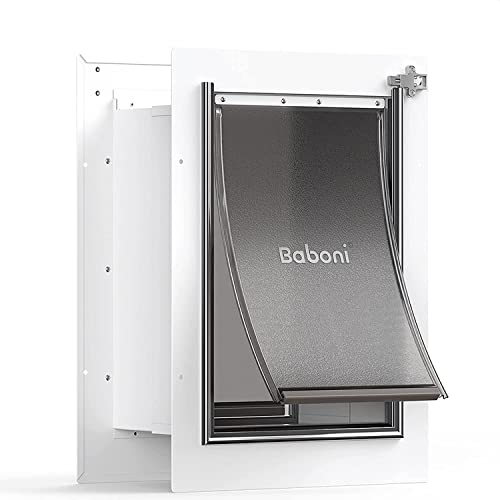
- Fits 4.75–7.25-inch walls
- Double flaps help block drafts
- Supports pets up to 40 pounds
Best For: Medium pets and thicker exterior walls
Best Versatile Access Control
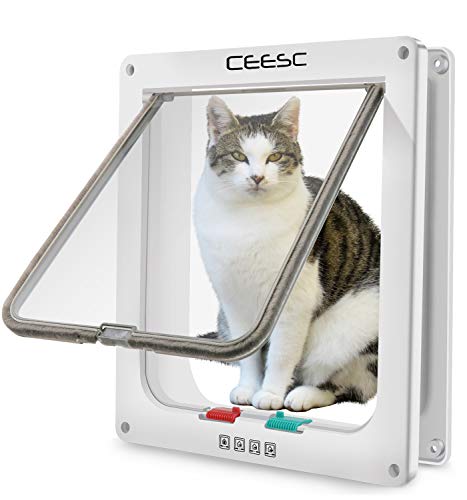
- Four-way access switch
- Fits 1.26–2.17-inch surfaces
- For pets up to 25 pounds
Best For: Larger cats in thinner walls, doors, or panels
Best Weather Protection
Decormax Energy-Efficient Cat Door

- Double magnetic flaps
- Fits walls up to 7.875 inches thick
- Three sliding-panel access modes
Best For: Cats using exposed exterior wall openings
Best Compact Interior Option

- Compact 6.18-by-6.3-inch passage
- Four-way rotary lock
- Fits 1.26–2.14-inch surfaces
Best For: Small cats under 11 pounds
Best Telescoping Wall Cat Door

- Adjustable tunnel for thicker walls
- Double silicone flaps help seal the opening
- Lockable design for controlled access
Best For: Small cats and extra-small pets up to about 10 pounds
Best Interior Cat Door
XL No-Flap Door for Standard Doors

- Open passage needs no flap training
- Fits 1.25–1.75-inch interior doors
- Paintable frame coordinates with décor
Best For: Large cats needing private access between interior rooms
Best Steel Wall Cat Door

- Alloy-steel frame for repeated use
- Fits walls about 3.95–7.88 inches thick
- Magnetic closure helps keep the flap closed
Best For: Small cats or small animals needing a sturdy wall entry
Best Stylish No-Flap Pick
Purrfect Portal French Cat Door

- French-door-inspired interior design
- No flap or training required
- Fits cats up to 20 pounds
Best For: Decor-conscious owners installing an indoor cat door
Best Adjustable Flap Option
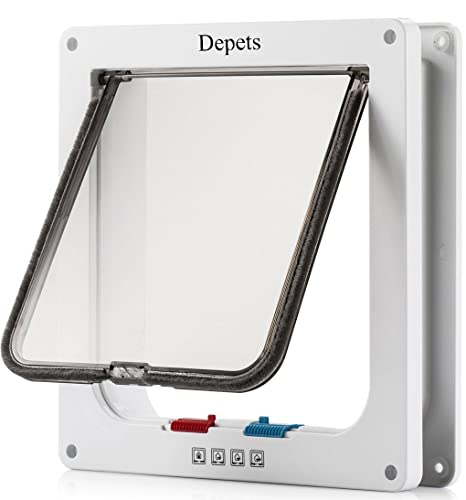
- Four independent locking modes
- Weather-resistant ABS construction
- Transparent, noise-reducing flap
Best For: Owners who want precise control over cat access
Best Large No-Flap Design

- Large opening for cats up to 20 pounds
- No flap, noise, or training requirement
- Screw-secured DIY installation
Best For: Larger cats needing indoor access to private spaces
Best Wall-Ready Build – Baboni Steel-Frame Wall Pet Door
For homeowners comparing wall mounted cat doors, the Baboni stands out with a steel-and-aluminum frame, a telescoping tunnel, and double flaps. Its larger opening suits cats and small dogs up to 40 pounds, provided your wall falls within the supported thickness range.
Best For: Medium-sized cats or dogs needing a durable door for thicker interior or exterior walls.
Pros:
- Telescoping tunnel fits walls 4.75 to 7.25 inches thick.
- Double flaps help reduce drafts and improve weather resistance.
- Metal construction and an aluminum lock support durability and security.
- Includes a cutting template and step-by-step installation instructions.
Cons:
- Its 9.875-by-13.75-inch wall cutout requires more installation space than smaller cat doors.
- The 8.25-by-12.25-inch flap opening may be larger than necessary for smaller cats.
Choose this model when wall compatibility, weather protection, and rugged construction matter more than having the smallest possible opening.
Best Versatile Access Control – CEESC X-Large Cat Door
The CEESC X-Large is a practical option among wall mounted cat doors when you want adjustable access without a complicated electronic system. Its four-way switch allows you to control whether your pet can enter, exit, move freely, or remain inside.
Best For: Larger cats and small dogs up to 25 pounds using thinner walls, doors, windows, or panels.
Pros:
- Four-way control provides flexible in-only, out-only, open, and locked settings.
- Adjustable tunnel fits surfaces 1.26 to 2.17 inches thick.
- Transparent flap lets pets see through the door.
- Rain sealing and a brush strip help with weather and closing noise.
Cons:
- Its maximum supported thickness of 2.17 inches is not suitable for many full-thickness walls.
- The inner opening is smaller than the outer frame, so pets should be measured before ordering.
This is a flexible choice for installations in thinner wall sections or other panels, especially when straightforward manual access control is a priority.
Best Weather Protection – Decormax Energy-Efficient Cat Door
For wall mounted cat doors intended for exposed locations, this Decormax model emphasizes insulation and weather sealing. Its steel frame, double magnetic flaps, and sliding lock panels are designed for walls roughly 4 to 8 inches thick and pets up to 22 pounds.
Best For: Cats needing a weather-resistant wall passage in brick, drywall, or wood walls.
Pros:
- Fits walls from 3.9 to 7.875 inches thick.
- Double magnetic flaps help seal against rain, wind, and snow.
- Three safety settings provide open, locked, or partial access.
- Steel framing is designed to withstand scratching, chewing, and regular use.
Cons:
- The 9.25-by-6.5-inch opening is intended for pets up to 22 pounds and may not suit larger animals.
- Its larger frame and wall cutout require careful measuring before installation.
This model makes the most sense when energy efficiency and protection from outdoor conditions are central concerns, while the three-mode controls add useful containment options.
Best Compact Interior Option – CEESC Medium Cat Door
The CEESC Medium is a compact choice for wall mounted cat doors and interior or exterior door installations. Its 4-way rotary lock gives you simple access control, while the adjustable tunnel fits surfaces between 1.26 and 2.14 inches thick.
Best For: Smaller cats under 11 pounds with a waist circumference below 15.75 inches.
Pros:
- Rotary control offers in-only, out-only, free-access, and locked settings.
- Compact 6.18-by-6.3-inch passage suits smaller cats.
- Adjustable tunnel can be trimmed for a closer fit.
- Brush strip helps reduce noise, wind, rain, and drafts.
Cons:
- It is limited to pets up to 11 pounds.
- The tunnel supports surfaces no thicker than 2.14 inches, limiting use in many solid walls.
- Accurate waist and surface-thickness measurements are especially important before ordering.
For a small cat and a relatively thin installation surface, this model offers useful locking flexibility without the oversized frame of larger pet doors.
Best Telescoping Wall Cat Door – Steel-Frame Small Pet Door
If you need wall mounted cat doors for a small cat or tiny pet, this steel-frame model combines an adjustable tunnel with double silicone flaps. Check your pet’s measurements and wall thickness carefully before ordering, since it is designed for small animals and compatible with walls approximately 4.13 to 7.87 inches thick.
Best For: Cats and extra-small pets up to about 10 pounds needing controlled indoor-outdoor wall access.
Pros:
- Adjustable telescoping tunnel suits thicker walls.
- Aluminum-alloy construction is designed to resist rust and deformation.
- Double-layer silicone flaps offer flexible, pet-safe sealing.
- Built-in safety lock helps control access.
Cons:
- Small opening and weight limit make it unsuitable for adult small dogs.
- Requires careful sizing and wall cutting before installation.
- Its wall compatibility may not cover especially thin or thick walls.
This is a practical choice when durability, adjustable wall fit, and access control matter most. Confirm the opening, pet dimensions, and actual wall thickness against the listing before installation.
Best Interior Cat Door – XL No-Flap Door for Standard Doors
For shoppers comparing wall mounted cat doors with indoor access solutions, this XL no-flap design is aimed at interior doors rather than exterior walls. It fits hollow or solid doors measuring 1.25 to 1.75 inches thick and provides an open passage that cats can use without flap training.
Best For: Large cats needing private access to rooms such as a litter area, closet, basement, or garage.
Pros:
- No-flap opening requires no training or adaptation.
- Includes a cutting template for quicker installation.
- Fits many standard interior doors from 1.25 to 1.75 inches thick.
- Paintable carved frame can be customized to match décor.
Cons:
- Designed for interior doors, not described as an exterior wall installation.
- Open design does not provide a flap barrier.
- Requires cutting the door and using standard tools.
This model makes sense for indoor room-to-room access where ease of passage and décor flexibility are priorities. Measure the door thickness first, and choose it only if an open, no-flap passage suits your household.
Best Steel Wall Cat Door – Small Magnetic-Flap Entry
This small wall mounted cat door is built for interior or exterior wall installation and uses an alloy-steel frame for a sturdy passage. Its listed wall range is approximately 3.95 to 7.88 inches, so measuring the installation area remains essential before choosing this model.
Best For: Small cats or small animals needing a durable wall entry with a magnetic closure.
Pros:
- Alloy-steel frame is designed to withstand repeated use.
- Compatible with a relatively broad range of wall thicknesses.
- Magnetic closure helps keep the flap closed when not in use.
Cons:
- Small sizing may not suit larger cats or dogs.
- Supplied notes provide limited installation detail beyond wall compatibility.
- Requires cutting through an interior or exterior wall.
If you want a straightforward, steel-framed wall entry and prefer a magnetic closure, this is a sensible option to consider. Verify your pet’s size and wall thickness, then plan the opening carefully before installation.
Best Stylish No-Flap Pick – Purrfect Portal French Cat Door
For shoppers seeking wall mounted cat doors with a decorative indoor look, the Purrfect Portal French Cat Door combines a French-door-inspired design with a flap-free opening. Its ABS construction fits solid and hollow-core interior doors and is rated for cats up to 20 pounds.
Best For: Cat owners who want an attractive interior door for litter-box privacy, without flap training.
Pros:
- Distinctive white French-door styling with coordinating window panels.
- No flap means cats can pass through without flap training.
- Includes a traceable template and instructions for DIY installation.
- Designed for cats up to 20 pounds.
Cons:
- Designed for interior doors rather than weather-exposed exterior use.
- The opening is intended for average-sized cats, not larger pets.
The French styling makes this a strong choice when appearance matters as much as access. Confirm your door type and available opening space before installation.
Best Adjustable Flap Option – Depets Large 4-Way Cat Door
The Depets Large Cat Door is a practical choice among wall mounted cat doors when you want control over your pet’s movement. Its four-way locking system supports exit-only, entry-only, fully open, or fully locked settings, and the weather-resistant ABS frame suits interior or exterior doors.
Best For: Cat owners who need flexible access control for cats under 17.6 pounds.
Pros:
- Four locking modes provide flexible control over entry and exit.
- Transparent flap lets pets see through the door.
- Water-resistant exterior and weather-resistant ABS construction.
- Brush strip helps reduce closing noise.
Cons:
- The flap may require a cat to become accustomed to using it.
- It supports cats up to 17.6 pounds, with a waist circumference under 23.62 inches.
- Installation requires a cut-out measuring 7.7 by 8.3 inches.
This model stands out for access management and broader placement flexibility. Measure both your cat and the installation surface carefully, especially for thicker doors or exterior applications.
Best Large No-Flap Design – Purrfect Portal Meow Manor
The Purrfect Portal Meow Manor is a large indoor option for shoppers comparing wall mounted cat doors for private litter-box or feeding areas. Its no-flap portal fits cats up to 20 pounds, installs with screws, and is designed for solid or hollow-core doors between 1.25 and 1.75 inches thick.
Best For: Owners of larger cats who want a secure-feeling, flap-free passage through an interior door.
Pros:
- Large 9.25-inch-high by 9-inch-wide design fits cats up to 20 pounds.
- No flap avoids flap noise and paw-catching concerns.
- Includes sturdy screws and instructions for DIY installation.
- Can help separate cats from litter-box or food areas when the human door is closed.
Cons:
- Designed for interior doors, not described as weatherproof for exterior installation.
- Door thickness must be between 1.25 and 1.75 inches.
- The original size may not suit cats weighing 20 pounds or more.
Meow Manor is a sensible fit when opening size and flap-free use are priorities. Check your cat’s weight and door thickness before choosing the original model over the manufacturer’s larger XL option.
How We Picked These Wall Mounted Cat Doors
We focused on the features that matter most in everyday use: compatible wall or interior-door installation, clear size guidance, locking flexibility, weather resistance, tunnel adjustability, flap design, and ease of DIY setup. The selection includes compact doors for smaller cats, larger openings for heavier pets, and no-flap options suited to interior rooms.
Because wall construction varies, always confirm the product’s installation requirements before cutting an opening. Exterior walls may require additional framing, insulation, waterproofing, or professional installation.
Quick Comparison
| Best For | Features to Prioritize | Recommended Style |
|---|---|---|
| Exterior walls | Weatherproof frame, tunnel, secure locks | Insulated flap door |
| Interior rooms | Simple fitting, quiet operation, compact design | No-flap or interior cat door |
| Small cats | Accurate opening measurements, limited draft | Small or medium flap |
| Larger cats | Generous opening, sturdy frame, weight rating | Large or XL model |
| Multi-purpose access | Four-way locking and controlled entry | Lockable flap door |
Key Buying Factors for Wall Mounted Cat Doors
Measure the Cat and the Wall
Measure your cat’s chest width and height at the shoulders, then compare those figures with the manufacturer’s actual opening dimensions—not just the outer frame size. For a wall installation, also measure wall thickness so the included or adjustable tunnel can span the opening.
Choose the Right Location
Position the opening at a comfortable height for your cat and check for studs, wiring, plumbing, siding, insulation, and interior trim. A wall-mounted model generally needs more planning than a door-mounted unit, particularly in masonry or insulated exterior walls.
Consider Weather and Security
For exterior use, look for weather-resistant materials, a tight-fitting flap, double-flap construction, and a tunnel that can be sealed around the wall cutout. Locking modes are useful when you need to keep your cat inside overnight or prevent entry by other animals.
Evaluate Flap Design and Noise
Flapped doors offer better protection from drafts and rain, while no-flap designs can be simpler and quieter for interior use. Some cats may need a short adjustment period with flexible or magnetic flaps.
Who Should Buy Which Wall Mounted Cat Doors?
Choose a steel-framed, telescoping-tunnel model if you need a durable exterior installation that can handle thicker walls. A weatherproof large or XL door is better for bigger cats, provided the opening fits your pet and the wall structure supports the installation. For smaller cats, select the smallest comfortable opening to reduce drafts and improve control.
If you are connecting rooms inside the home, a no-flap interior door is usually the simplest choice. Buyers who want maximum control should choose a model with multiple locking positions, while households prioritizing style may prefer a streamlined interior design. In every case, verify the cutout template, pet weight range, wall thickness, and return policy before purchasing.