The best microchip cat doors let your pets come and go while helping keep unfamiliar animals out. They use a cat’s implanted microchip—or, in some cases, an RFID collar tag—to control access.
Our 2026 roundup includes basic four-way flaps, timer-controlled models, selective-entry designs, and connected options. Check each opening size carefully, then match the door’s controls and installation requirements to your home.
Best 10 Microchip Cat Doors Picks for 2026
Best Overall
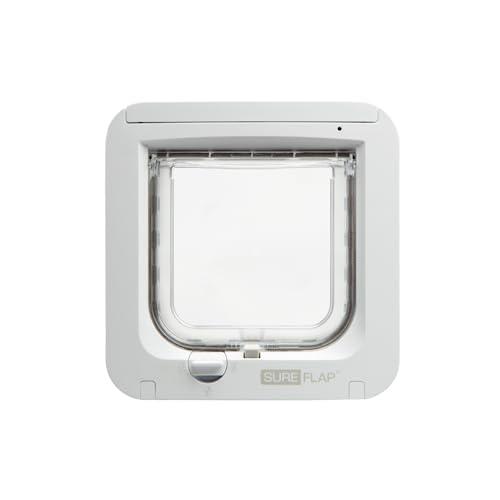
- Reads compatible implanted microchips
- Stores up to 32 pet identities
- Works in doors, windows, or walls
Best For: Multi-cat homes seeking selective entry
Best With Timer
Cat Mate Elite Microchip Cat Door

- Programmable four-way timer
- Recognizes multiple microchip IDs
- Allows unrestricted exit
Best For: Multi-cat homes needing scheduled indoor access
Best Color Option
SureFlap Brown Microchip Cat Flap

- Brown plastic frame
- Reads compatible implanted microchips
- Learns up to 32 identities
Best For: Homes wanting selective entry with a brown finish
Best for Interior Rooms
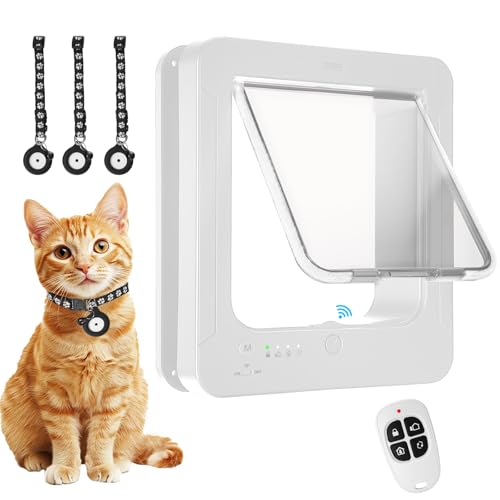
- Unlocks for authorized RFID collars
- Supports up to four collar sensors
- Designed for standard interior doors
Best For: Separating pets around feeding or litter areas
Best for Controlled Multi-Pet Access

- Separate entry and exit permissions
- Stores up to 32 pets
- Fits doors, windows, or walls
Best For: Multi-cat homes needing selective outdoor access
Best for Larger Openings
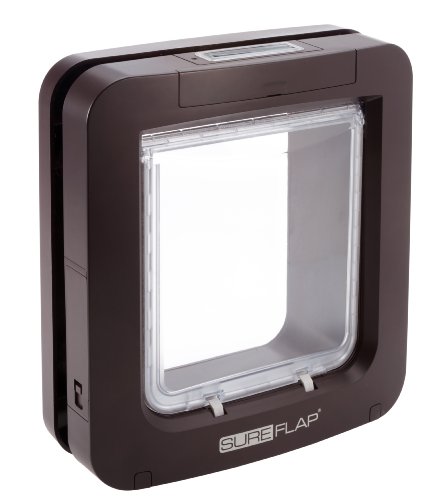
- Larger 6 11/16-by-7-inch opening
- Learns up to 32 pet identities
- Supports door, window, or wall installation
Best For: Cats and small dogs needing a roomier passage
Best with Extra Features

- Programs up to 40 pets
- Four-way manual locking
- Weather stripping and magnetic latches
Best For: Multi-cat homes wanting simple, flexible access control
Best Connected Pick
SureFlap Microchip Cat Door Connect
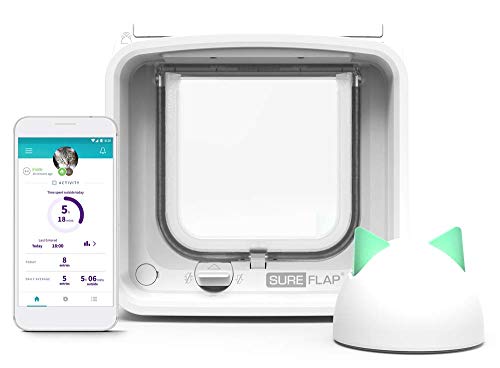
- Remote app control with included Hub
- DualScan entry and exit permissions
- Supports up to 32 identities
Best For: Owners who want remote monitoring and control
Best Simple Pick

- 7-by-6 11/16-inch flap opening
- Scheduled curfew locking
- Supports up to 32 identities
Best For: Homes needing a larger opening and timed access
Best Overall – SureFlap Microchip Cat Flap
The SureFlap Microchip Cat Flap is a practical choice among microchip cat doors for households that want selective entry without requiring a collar. It reads compatible implanted microchips, stores up to 32 identities, and can be fitted in doors, windows, or walls with the appropriate accessories.
Best For: Homes that want to keep stray cats out while allowing multiple approved cats to enter.
Pros:
- Recognizes compatible 9-, 10-, and 15-digit microchip formats.
- Stores up to 32 pet identities.
- Battery life is estimated at up to 12 months.
- Includes a low-battery indicator and three-year warranty.
Cons:
- Four AA non-rechargeable batteries are not included.
- The flap opening is limited to 4 3/4 inches high by 5 5/8 inches wide.
- Cats without microchips need a separately sold collar tag.
Its one-button programming and broad installation options make this a well-rounded microchip cat door, provided the opening suits your cat and the required microchip format is compatible.
Best With Timer – Cat Mate Elite Microchip Cat Door
The Cat Mate Elite is one of the more versatile microchip cat doors for controlling both entry and schedule. It permits recognized cats to enter, lets all cats exit freely, and adds a programmable timer for setting indoor-only periods.
Best For: Multi-cat households that want scheduled access, such as keeping cats indoors overnight.
Pros:
- Uses existing microchips for collar-free entry.
- Stores multiple microchip IDs.
- Four-way timer-controlled locking supports scheduled routines.
- Battery-powered and designed for installation in doors, panels, and selected walls.
Cons:
- Designed for small to medium cats.
- Its cut-out size and thickness limits require careful installation planning.
- Battery-powered operation requires ongoing battery replacement.
The programmable timer sets this model apart from simpler microchip cat doors. Check the listed dimensions and installation requirements before choosing it for a larger cat or unusually thick mounting surface.
Best Color Option – SureFlap Brown Microchip Cat Flap
The brown SureFlap Microchip Cat Flap offers the same practical selective-entry design as the standard model while providing a different frame color. It reads compatible implanted microchips, supports up to 32 IDs, and can be installed in doors, windows, or walls with suitable accessories.
Best For: Cat owners who want SureFlap microchip access control in a brown finish.
Pros:
- Helps prevent stray animals from entering.
- Supports up to 32 registered microchip identities.
- Works with specified 9-, 10-, and 15-digit microchip formats.
- Includes a low-battery indicator and three-year warranty.
Cons:
- AA alkaline batteries are required but not included.
- The opening measures 4 3/4 inches high by 5 5/8 inches wide.
- Unchipped cats require separately sold RFID collar tags.
This is a straightforward option for buyers who prefer the brown finish and need selective entry rather than timer programming. Confirm both chip compatibility and opening dimensions before installation.
Best for Interior Rooms – Smart Collar-Sensor Cat Door
This smart collar-sensor door is an alternative to microchip cat doors for indoor spaces. Rather than reading an implanted microchip, it unlocks for authorized RFID collars, helping control access to bedrooms, feeding areas, and litter box rooms.
Best For: Indoor multi-pet homes that need to separate cats from other pets or control access to specific rooms.
Pros:
- Uses RFID collar recognition for automatic access.
- Supports up to four collar sensors.
- Designed for standard interior doors.
- Quiet operation and ABS construction suit everyday indoor use.
Cons:
- Requires authorized collars rather than implanted microchips.
- Metal doors or walls may affect RFID reading.
- The supplied notes do not specify opening dimensions or battery details.
For indoor room-to-room separation, this model offers targeted collar-based control and simple installation. It is less suitable if you specifically need an exterior door that reads your cat’s existing implanted microchip.
Best for Controlled Multi-Pet Access – DualScan Microchip Cat Door
For households comparing microchip cat doors, the SureFlap DualScan stands out for its ability to manage entry and exit permissions separately. It recognizes compatible existing microchips, helps keep out intruder cats and wildlife, and stores up to 32 pets.
Best For: Multi-cat homes that need selective exit permissions for individual pets.
Pros:
- Uses compatible existing microchips, so no collar key is required.
- DualScan technology lets you set exit permissions for each pet.
- Stores up to 32 pets and can be installed in doors, windows, or walls.
- Batteries can last up to a year with normal use.
Cons:
- The 4 3/4-inch by 5 5/8-inch opening may not suit larger cats or small dogs.
- Four AA batteries are required and are not included.
This is a practical choice when controlling which pets may leave matters as much as keeping unfamiliar animals outside. Check the opening dimensions before installation.
Best for Everyday Selective Access – Cat Mate 360 Microchip Cat Flap
The Cat Mate 360 is a practical option among microchip cat doors for small to medium-sized cats and small dogs. Its compatible microchip recognition helps deter unfamiliar cats, while the flap also provides four-way locking for flexible everyday access.
Best For: Owners wanting a straightforward microchip flap with manual locking choices.
Pros:
- Recognizes compatible identification microchips without requiring a collar key.
- Four-way locking supports flexible access control.
- Designed for small to medium-sized cats and small dogs.
- Self-lines to walls or doors up to 85 mm thick.
Cons:
- Not compatible with 10-digit microchips or microchips containing letters.
- The 5 3/4-inch square flap opening may be limiting for larger pets.
Choose this model if your pet’s microchip matches its compatibility requirements and you want both automatic recognition and conventional locking controls. Confirm the cut-out size before buying.
Best for Larger Openings – SureFlap Microchip Pet Door
The SureFlap Microchip Pet Door is worth considering when standard microchip cat doors may feel restrictive. Its 6 11/16-inch by 7-inch opening accommodates cats and some small dogs, while RFID recognition helps allow registered pets in and keep stray animals out.
Best For: Cat households needing a larger opening and support for multiple registered pets.
Pros:
- Stores up to 32 pet identities and works with several common microchip formats.
- Larger 6 11/16-inch by 7-inch flap opening suits cats and some small dogs.
- Can be installed in doors, windows, or walls with available accessories.
- Includes a low-battery indicator and a three-year warranty.
Cons:
- Requires four C non-rechargeable alkaline batteries, which are not included.
- It uses a one-button programming system rather than separate exit permissions for each pet.
This model offers a larger passage and broad microchip compatibility, making it a sensible fit for homes with bigger cats or small dogs. Verify your pet’s chip format and the installation measurements first.
Best with Extra Features – PetSafe Microchip Cat Door
For households comparing microchip cat doors, the PetSafe Microchip Cat Door offers straightforward selective access without requiring an app or hub. It reads a cat’s unique 15-digit microchip ID, supports up to 40 programmed pets, and includes flexible manual locking controls.
Best For: Multi-cat homes that want dependable microchip entry with simple four-way locking.
Pros:
- Reads 15-digit microchip IDs and can program up to 40 pets.
- Four settings provide locked, unlocked, enter-only, and exit-only control.
- Magnetic latches and weather stripping help limit drafts and unwanted entry.
- Fits most wood, PVC, and uPVC doors.
Cons:
- Additional accessories are required for metal, glass, brick, or wall installation.
- Collar keys for cats without microchips are sold separately.
This is a practical choice if you prioritize broad pet capacity and physical controls over connected features. Its installation limitations are worth checking before purchase.
Best Connected Pick – SureFlap Microchip Cat Door Connect
Among microchip cat doors, the SureFlap Microchip Cat Door Connect stands out for remote monitoring and control. The included Hub works with the Sure Petcare app to track activity, manage permissions, and lock or unlock the door from anywhere.
Best For: Cat owners who want app-based access control and visibility into their pets’ comings and goings.
Pros:
- App and Hub connection provides remote locking, unlocking, and activity updates.
- DualScan technology controls entry and exit permissions for individual cats.
- Recognizes 9-, 10-, and 15-digit microchip numbers and learns up to 32 identities.
- Battery life is estimated at up to 12 months, with a low-battery indicator.
Cons:
- Four AA alkaline batteries are required and not included.
- Collar tags for pets without microchips are sold separately.
- The flap opening is smaller than the standard SureFlap model.
The Connect model is the strongest fit for owners who value remote oversight and individual exit permissions. Confirm the 5 5/8-by-4 3/4-inch opening suits your cat before ordering.
Best Simple Pick – SureFlap Microchip Pet Door
The SureFlap Microchip Pet Door is a practical option among microchip cat doors when a larger opening is helpful. It scans pets on entry, supports scheduled curfews, and allows programmed pets to enter while unwanted animals remain outside.
Best For: Cat owners or small-dog households needing a wider, taller opening and scheduled locking.
Pros:
- Generous 7-inch-wide by 6 11/16-inch-high flap opening.
- Recognizes 9-, 10-, and 15-digit microchips and stores up to 32 identities.
- Curfew scheduling can lock and unlock the door at specified times.
- Includes a low-battery indicator and estimated battery life of up to 12 months.
Cons:
- It scans on entry only, so any animal can exit.
- Four C alkaline batteries are required and not included.
- Installation in windows or walls requires available accessories.
This model makes sense when opening size and scheduled access matter more than exit-by-exit permissions. Its entry-only scanning is the key limitation for homes requiring tightly controlled departures.
How We Picked the Best Microchip Cat Doors
We focused on the features that matter most in everyday use: dependable pet identification, selective entry, locking flexibility, opening dimensions, installation suitability, and ease of programming. The lineup includes established Microchip Cat Doors from SureFlap, Cat Mate, and PetSafe, along with an RFID collar-sensor alternative.
We also considered practical differences between standard, dual-scan, timer-controlled, and connected models. A door that works well for one cat may not be ideal for a multi-pet household, a rental, or an installation in a thick wall.
Quick Comparison
| Best for | Look for |
|---|---|
| Basic selective access | Microchip recognition and programmable entry |
| Multiple pets | Individual permissions and multi-pet memory |
| Keeping a cat indoors | Timer control or selective exit settings |
| Maximum control | Dual-scan or app-connected operation |
| Homes without compatible microchips | RFID collar-sensor support |
Key Buying Factors for Microchip Cat Doors
Opening Size and Cat Fit
Measure your cat’s widest point and compare it with the stated flap opening, not the exterior frame. Several options here have an opening around 5 5/8 inches wide by 4 3/4 inches high, which may suit many cats but can be restrictive for larger breeds. Allow room for comfortable passage without making the opening unnecessarily large.
Microchip and Collar Compatibility
Most models read a standard implanted pet microchip, but capabilities vary. Confirm whether the door supports your cat’s chip type and whether it can store multiple pets. RFID collar sensors can be useful when a cat is not microchipped, though collars may be lost or removed.
Entry, Exit, and Timing Controls
A four-way lock typically offers open, closed, in-only, and out-only settings. Timer controls are helpful for curfews, while dual-scan designs can provide more precise control over which pets may leave or enter. Connected models may add remote management, notifications, or schedules through a hub and app.
Installation and Power
Check whether you are fitting the door into a standard door, glass, wall, or another material. Wall installations may require an adapter or tunnel. Battery-powered flaps are convenient, but check battery life and low-power alerts; connected models also need reliable wireless coverage and a compatible hub where required.
Who Should Buy Which Microchip Cat Doors?
Choose a standard microchip flap if you want straightforward selective entry without app features. A timer-controlled Cat Mate model is a practical choice for households that need scheduled access. Consider a dual-scan model if controlling individual cats’ indoor and outdoor permissions is important.
For remote access rules and activity oversight, a connected SureFlap bundle is the better fit. PetSafe and RFID collar-sensor options can suit households prioritizing flexible identification, while larger cats should start by comparing the actual flap dimensions and installation space before choosing a model.