The best cat doors for kittens give young cats safe, convenient access without creating an oversized opening or complicated installation project. The right choice depends on your kitten’s current size, expected growth, door location, and whether you need indoor privacy or outdoor weather protection.
These 10 options include simple interior doors, four-way locking flaps, weather-resistant designs, and larger models suited to kittens that will grow into bigger cats. Use the guide below to compare fit, security, installation, and long-term value before buying.
Best 10 Cat Doors for Kittens Picks for 2026
Best No-Flap Option

- No-flap design needs no training
- 9.25-by-9-inch opening
- Fits doors 1.25 to 1.75 inches thick
Best For: Quiet indoor access to litter-box or food areas
Best Weatherproof Large Pick
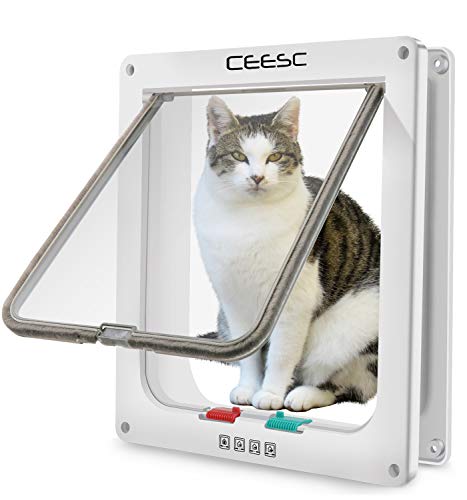
- Four access-control modes
- Supports pets up to 25 pounds
- Rain seal and quieting brush strip
Best For: Growing kittens and larger cats needing flexible access
Best Compact Interior Pick
PetSafe 2-Way Locking Cat Door

- Supports cats up to 15 pounds
- Sliding lock controls access
- Fits 0.5- to 2-inch doors
Best For: Indoor rooms, closets, cabinets, and litter-box areas
Best Value Four-Way Door
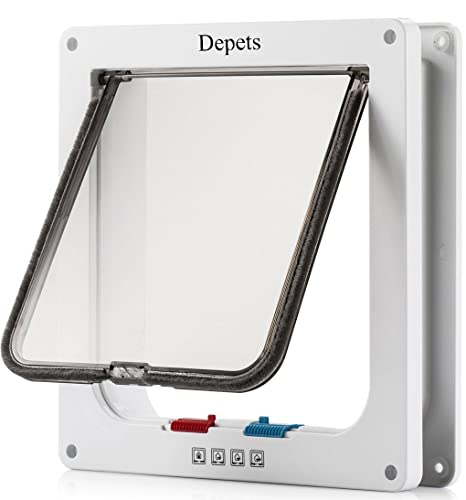
- Four independent locking modes
- 7.08-by-7.48-inch inner opening
- Water-resistant exterior screen
Best For: Kittens transitioning to controlled indoor or outdoor access
Weather-Ready Control
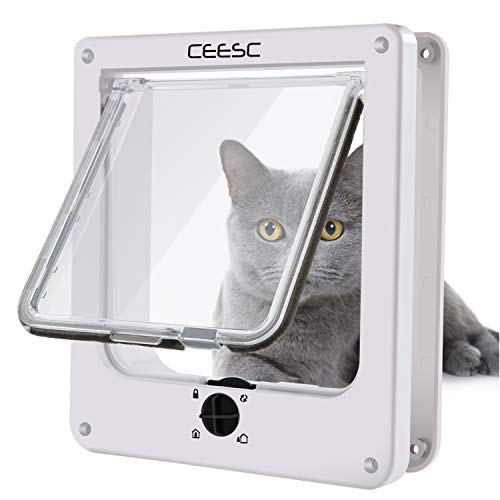
- Four-way rotary access control
- Weatherproof brush strip
- Fits 1.26–2.14-inch doors
Best For: Smaller kittens and cats needing controlled interior or exterior access
Roomy No-Flap Design

- Fits cats up to 25 pounds
- No training required
- Flush-mount ABS construction
Best For: Kittens expected to grow into larger cats using standard interior doors
Simple Four-Way Access

- 5.7-by-5.6-inch entrance
- Four-way lock settings
- For doors or wall spaces
Best For: Kittens and small cats needing compact, adjustable access
No-Flap Privacy Pick
Meow Manor XL Interior Cat Door

- Flap-free arch avoids flap noise and paw concerns
- Fits 1.25–1.75-inch interior doors
- Supports cats up to 30 pounds
Best For: Indoor homes needing a wide, quiet cat passage
Compact Locking Option

- Four-way locking controls pet access
- Brush strip helps reduce weather and noise
- Fits cats under 17.64 pounds
Best For: Smaller cats needing a compact, adjustable passage
Best No-Flap Option – Meow Manor Interior Cat Door
For cat doors for kittens and adult cats that need access to a private indoor area, the Purrfect Portal Meow Manor uses a no-flap opening that avoids flap noise and paw concerns. Its 9.25-by-9-inch opening is designed for cats up to 20 pounds and fits solid or hollow-core interior doors from 1.25 to 1.75 inches thick.
Best For: Indoor litter-box, food-area, or room access where a quiet, no-flap design is preferred.
Pros:
- No-flap opening requires no training and avoids flap noise.
- Large opening accommodates cats up to 20 pounds.
- Includes instructions and screws for a secure DIY installation.
Cons:
- Designed for interior doors rather than weatherproof exterior access.
- The original size may not suit cats weighing 20 pounds or more.
Choose this model when indoor privacy and simple passage matter more than locking or outdoor weather protection. Its larger opening can also work well as a kitten grows.
Best Weatherproof Large Pick – CEESC X-Large Cat Door
The CEESC X-Large is a practical choice among cat doors for kittens when you want adjustable access and potential outdoor use. It has a 7.9-by-8.7-inch inner opening, supports pets up to 25 pounds, and fits doors 1.26 to 2.17 inches thick.
Best For: Growing kittens, larger cats, or small pets needing controllable indoor and outdoor access.
Pros:
- Four modes provide in-only, out-only, both-way, or locked access.
- Transparent flap lets pets see through the door.
- Rain seal and brush strip support weather resistance and quieter closing.
- Can be installed in doors, windows, cupboards, panels, or thin walls.
Cons:
- The flap design may require more adjustment or familiarity for very young kittens.
- Its X-Large opening may be more than needed for a small kitten.
This is the most flexible option for households that may transition from indoor kitten access to controlled exterior access. Confirm the cut-out dimensions before installation.
Best Compact Interior Pick – PetSafe 2-Way Locking Cat Door
The PetSafe Interior Cat Door is a compact option for cat doors for kittens, especially when access is limited to rooms, closets, cabinets, or laundry areas. It fits interior doors from 0.5 to 2 inches thick, supports cats up to 15 pounds, and includes a cutting template and installation hardware.
Best For: Small cats and kittens needing controlled access to an indoor food, litter-box, or private area.
Pros:
- Sliding lock lets you lock or unlock access as needed.
- Fits a wide range of interior door thicknesses.
- Includes template, foam tape, screws, instructions, and hardware.
- Compact design is suited to closets, cabinets, and room doors.
Cons:
- Supports cats up to 15 pounds, less than the larger alternatives.
- Uses a flap, which may be less appealing for kittens sensitive to moving doors.
- It is intended primarily for interior use.
Its broad thickness compatibility and included cutting template make this a straightforward pick for indoor installations. Consider it if your kitten will use a dedicated room or cabinet area.
Best Value Four-Way Door – Depets Large Cat Door
The Depets Large Cat Door offers four-way control and weather-resistant construction for households comparing cat doors for kittens that may eventually use exterior access. Its 7.08-by-7.48-inch inner opening is designed for pets under 17.64 pounds with a waist circumference under 23.62 inches.
Best For: Kittens and medium-sized cats needing adjustable access through doors, windows, cupboards, or similar panels.
Pros:
- Four switches provide out-only, in-only, two-way, or locked settings.
- Transparent flap improves visibility through the door.
- Water-resistant exterior screen and brush strip support outdoor use.
- Includes installation instructions and works in several panel types.
Cons:
- Weight limit is lower than the CEESC X-Large model.
- The listed compatible thickness is 2.16 inches, so door fit should be checked carefully.
- Flap operation may take some kittens time to get used to.
This model balances adjustable access with a relatively compact opening. Check both the kitten’s waist measurement and the required cut-out size before choosing it.
Weather-Ready Control – Medium CEESC Cat Door
For cat doors for kittens, the CEESC Medium model offers a practical balance of controlled access and weather protection. Its 6.18-by-6.30-inch passage is intended for cats with waist circumferences under 15.75 inches, typically weighing under 11 pounds.
Best For: Smaller kittens and cats needing an interior or exterior door with adjustable access control.
Pros:
- Four-way rotary lock supports in-only, out-only, free-access, and fully locked modes.
- Weatherproof brush strip helps reduce noise, drafts, wind, and rain.
- Adjustable tunnel depth fits doors from 1.26 to 2.14 inches thick.
- Includes screws and an installation manual.
Cons:
- The medium passage may not suit cats over the stated size limits.
- Installation requires measuring the cat and door thickness carefully.
- The tunnel may need trimming for a snug fit.
This is a versatile choice when you want kittens to move between spaces while retaining hands-on control over access. Measure before ordering, especially for a growing cat.
Roomy No-Flap Design – Large Interior Cat Door
This large interior cat door is a strong option among cat doors for kittens when you want a low-training, no-flap design that can accommodate growth. It fits standard interior doors from 1.25 to 1.75 inches thick and is rated for cats up to 25 pounds.
Best For: Homes with kittens that may grow into larger cats and need access through standard interior doors.
Pros:
- No-flap design is described as ready for immediate use without training.
- Large opening accommodates cats up to 25 pounds.
- Scratch-resistant ABS construction is designed for daily use and easy cleaning.
- Flush-mount white styling blends discreetly with interior doors.
Cons:
- Designed for interior doors rather than exterior or wall installation.
- Its large size may be more than a small kitten needs initially.
- Compatible door thickness is limited to 1.25–1.75 inches.
Choose this model if long-term room-to-room access matters more than a compact opening. Its generous size avoids quickly outgrowing the door, while the flush design keeps the installation visually subtle.
Simple Four-Way Access – Amazon Basics Small Pet Door
The Amazon Basics Small pet door is a straightforward pick for cat doors for kittens, with a 5.7-by-5.6-inch entrance and four-way access control. It is designed for interior and exterior doors or wall spaces, with installation components and instructions included.
Best For: Kittens and small cats needing a compact opening with flexible access settings.
Pros:
- Four-way lock provides in-only, out-only, both, or locked settings.
- Small 5.7-by-5.6-inch entrance suits cats and small dogs.
- Plastic construction is designed for use in various weather conditions.
- Includes installation components and instructions.
Cons:
- The smaller opening may not suit larger cats as they grow.
- Installation is required for either a door or wall space.
- The supplied notes do not specify a compatible door-thickness range.
This model keeps the feature set simple while offering useful control over indoor and outdoor movement. Check the opening against your kitten’s current size and expected growth before installing.
No-Flap Privacy Pick – Meow Manor XL Interior Cat Door
For cat doors for kittens and larger cats that will be used indoors, the Purrfect Portal Meow Manor offers a wide, flap-free passage. Its arch-style opening is designed for interior doors and gives cats access to areas such as a litter-box or feeding space while helping preserve household privacy.
Best For: Indoor homes wanting a quiet, no-flap doorway for cats up to 30 pounds.
Pros:
- No flap means no flap noise or paws getting caught beneath it.
- Fits solid and hollow-core doors measuring 1.25 to 1.75 inches thick.
- Includes instructions and sturdy screws for DIY installation.
- The 11-inch by 10.5-inch opening accommodates larger breeds.
Cons:
- Designed for interior doors rather than weather-sealing an exterior entry.
- The large opening may not restrict access by dogs or children.
- Door cutting is required for installation.
This is a strong choice when ease of passage and privacy matter more than a locking flap. Measure the door thickness and available wall or door space before installation.
Most Versatile Flap – Ycozy XL 4-Way Locking Cat Door
Among cat doors for kittens, the Ycozy XL stands out for flexible placement and access control. Its transparent flap can help pets see through the opening, while four lock settings let you allow free movement, entry only, exit only, or no access.
Best For: Homes needing a locking flap for an indoor or exterior door, window, wall, or cupboard.
Pros:
- Four-way settings provide practical control over pet movement.
- Transparent flap may make training easier by improving visibility.
- Brush-style weather protection helps reduce drafts, rain, snow, and noise.
- Long and short screw sets support different installation thicknesses.
Cons:
- The flap opening is intended for pets under 27.5 pounds with a waist under 25 inches.
- Requires measuring the pet and cut-out area before ordering.
- The listed compatible thickness is 2.15 inches, so other installations may need adjustment.
With its four-way lock and weather-resistant brush, this model is more adaptable than a simple indoor passage. Confirm the 8.3-by-9.5-inch cut-out and your installation surface before buying.
Compact Locking Option – goTeamghjkl Large Cat Door
For cat doors for kittens and smaller adult cats, the goTeamghjkl model combines a compact flap opening with four-way access control. Its ABS construction and brush strip are suited to doors, thin walls, windows, cupboards, and other installations where a smaller passage is appropriate.
Best For: Smaller cats under 17.64 pounds and with a waist circumference below 23 inches.
Pros:
- Four settings offer in-only, out-only, open, and locked modes.
- Weather-resistant brush strip helps limit rain, wind, pests, and passage noise.
- The tunnel depth can be cut to suit the installation.
- Includes installation instructions and can fit several surfaces.
Cons:
- Its opening is smaller than the other listed options and may not suit larger cats.
- Installation requires a 7.7-by-8.3-inch cut-out.
- It is rated for a fixed 2.16-inch installation thickness.
This door is a practical fit when a kitten-sized opening and lockable access are priorities. Check both your cat’s waist measurement and the mounting surface dimensions before cutting.
How We Picked the Best Cat Doors for Kittens
We focused on the factors that matter most for kittens and growing cats: entrance dimensions, stated weight limits, lock settings, installation flexibility, weather resistance, and ease of use. The selection includes no-flap interior models for rooms such as laundry areas and litter spaces, as well as insulated or weatherproof designs for exterior doors, walls, and windows.
Because kittens grow quickly, we also considered whether each door can remain useful beyond the earliest months. Product descriptions do not always use consistent measurements, so check the actual opening size—not just the overall frame size—against your kitten’s chest width and height.
Quick Comparison
| Best For | Recommended Type | What to Prioritize |
|---|---|---|
| Small indoor kittens | Compact interior door | Low threshold, easy swing, simple installation |
| Growing or larger cats | Large or extra-large door | Clear opening and sufficient weight capacity |
| Restricting access | Two-way or four-way lock | In-only, out-only, or fully locked settings |
| Exterior installation | Weatherproof flap | Sealing, durable frame, and suitable wall or door thickness |
| Rental-friendly indoor use | No-flap interior model | Simple DIY fitting and a clean, low-profile design |
Key Buying Factors for Cat Doors for Kittens
Measure the Opening, Not the Frame
Measure your kitten’s widest point and shoulder height, then compare those measurements with the usable flap or passage opening. Allow room for growth, but avoid choosing an unnecessarily large opening that could make outdoor access less secure or less energy efficient.
Choose the Right Locking System
A two-way lock usually allows free passage or keeps the door closed. Four-way locks add in-only and out-only modes, which are useful when you want your kitten indoors overnight or want to prevent re-entry. No-flap designs are often best for interior room-to-room access where weather sealing is not needed.
Match the Door to Its Location
Interior doors generally need a lightweight, low-resistance flap and straightforward installation. Exterior doors require better weather protection and a frame compatible with the material and thickness of the installation surface. Wall or window installations may need additional hardware or trimming.
Plan for Training and Safety
Some kittens may need time to learn how to push through a flap. Look for a door that swings easily and avoid placing it where furniture, sharp edges, or busy outdoor areas create hazards. Supervise early use, particularly with exterior doors.
Who Should Buy Which Cat Doors for Kittens?
Choose a compact interior model if your kitten only needs access to a litter room, pantry, or bedroom. Pick a medium model when you want extra growing room without creating a very large opening. Large and extra-large doors make more sense for bigger breeds or households planning to use the same door throughout the cat’s life.
For exterior access, prioritize a weatherproof four-way locking model such as the larger CEESC, Depets, Ycozy, or goTeamghjkl-style options. For simple indoor installations, a Purrfect Portal or other no-flap design can be easier to fit and less intimidating for a young cat. If access control is the main concern, choose a model with clearly defined locking positions and verify that the installation surface matches its specifications.