Finding the best cat doors for apartments means balancing your cat’s independence with limited space, rental restrictions, and the need to keep dogs or other pets out of certain rooms.
This roundup covers compact interior doors, adjustable latch systems, screen-door solutions, and pet gates to help you choose a practical setup for feeding areas, litter boxes, bedrooms, and shared living spaces.
Best 10 Cat Doors for Apartments Picks for 2026
Best No-Flap Pick

- No-flap design needs no training
- Fits cats up to 20 pounds
- Screw-in DIY installation
Best For: Private access through interior apartment doors
Best No-Cut Option
TGIOW Adjustable Cat Door Latch
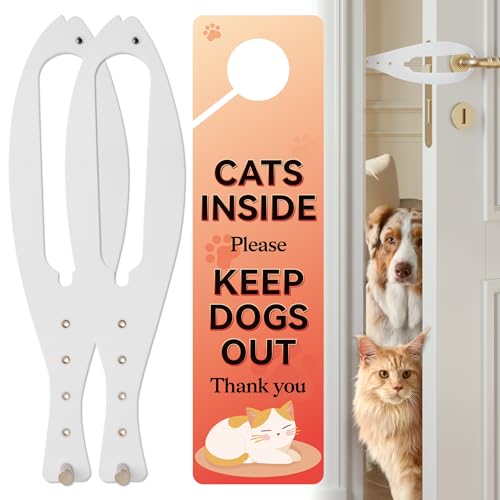
- No door cutting or replacement needed
- Adjusts from 2.5 to 6 inches
- Designed to limit larger-dog access
Best For: Renters seeking reversible cat access
Best for Wide Doorways

- Fits doors up to 32 by 80 inches
- Claw-resistant reinforced mesh
- Tool-free hook-and-loop installation
Best For: Wide apartment doorways and temporary room separation
Best Traditional Door

- Two-way sliding access lock
- Fits doors 0.5 to 2 inches thick
- Includes cutting template and hardware
Best For: Lockable interior access for cats up to 15 pounds
Best Doorway Latch for Cat Access

- Adjusts the door gap from 1.5 to 8 inches
- No-drill installation with no door damage
- Helps cats pass while keeping dogs out
Best For: Renters needing a simple, adjustable cat passage
Best Zipper Screen for Large Doorways

- Fits door openings up to 32 by 80 inches
- Thickened mesh resists claws and climbing
- Tool-free adhesive hook-and-loop installation
Best For: Wide apartment doorways needing temporary pet separation
Best Cat-Access Pet Gate
Adjustable CatPrivilege III Gate

- Adjustable cat door offers three access settings
- Fits openings from 29 to 43 inches
- Pressure mounts without drilling or wall damage
Best For: Sturdier separation between cats and larger pets
Best Non-Permanent Pick
Adjustable Door Buddy Door Prop

- No cutting, adhesive, or new holes
- Adjusts from 3 to 5.5 inches
- Portable and made in the USA
Best For: Renters needing a sturdy cat-only door gap
Best Adhesive Combo
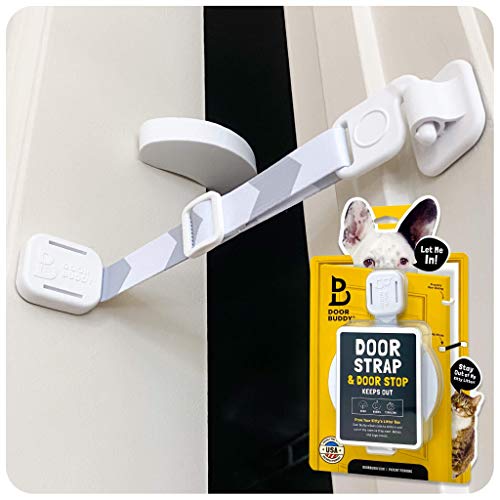
- Includes latch and door stopper
- Fits gaps from 0 to 6 inches
- Works with multiple door styles
Best For: Apartments needing tool-free installation and door-stop support
Best Strap-Only Option
Door Buddy Adjustable Cat Latch
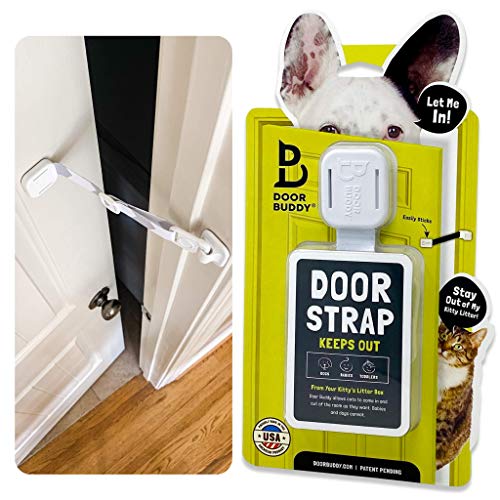
- Creates a 0- to 6-inch opening
- Fits several interior door styles
- Tool-free adhesive installation
Best For: Cat owners who do not need an included door stopper
Best No-Flap Pick – Meow Manor Interior Cat Door
For cat doors for apartments, the Purrfect Portal Meow Manor is a practical interior-door option when you want your cat to access a litter box, feeder, or private room without leaving the door open. Its 9.25-by-9-inch opening fits cats up to 20 pounds and installs with screws on solid or hollow-core doors 1.25 to 1.75 inches thick.
Best For: Apartment cats needing private access to an interior room, especially homes where a flap-free design is preferred.
Pros:
- No-flap opening avoids flap noise and does not require training.
- Large opening accommodates cats up to 20 pounds.
- Includes instructions and sturdy screws for DIY installation.
- Can help keep dogs away from litter or feeding areas.
Cons:
- Designed for interior doors rather than exterior entry points.
- Installation requires cutting the door and using screws.
- The original size may not suit cats over 20 pounds.
Meow Manor stands out for apartment residents who want a roomy, easy-to-use passage between interior spaces. Confirm your door thickness and cat’s size before ordering.
Best No-Cut Option – TGIOW Adjustable Cat Door Latch
Among cat doors for apartments, the TGIOW latch holder is a renter-friendly alternative to cutting a door. It props an existing door open by 2.5 to 6 inches, allowing cats to pass while helping keep larger dogs out.
Best For: Renters who want adjustable cat access without replacing a door or cutting into the door panel.
Pros:
- Installs using the door-frame striker plate without cutting the door.
- Five adjustment positions accommodate different cat sizes.
- Allows one-handed operation from either side.
- Comes as a two-piece set.
Cons:
- Leaves the door partially open rather than creating a sealed passage.
- It may not prevent every large dog from entering a 2.5-to-6-inch opening.
- Best suited to compatible hinged doors with a striker plate.
This latch is a useful apartment solution when reversibility matters more than insulation or a finished cat-door appearance. Its adjustable gap provides flexibility, but measure the space and consider your dog’s size.
Best for Wide Doorways – Reinforced Pet Screen Door
For cat doors for apartments that need to cover a full doorway, this reinforced pet screen creates a hands-free passage between rooms. The 34-by-83-inch screen fits doors up to 32 by 80 inches and uses hook-and-loop strips instead of tools.
Best For: Apartment doorways where cats and dogs need to move through freely and a full-height screen is more practical than a small pet flap.
Pros:
- Fits door openings up to 32 by 80 inches.
- Thickened vinyl-coated steel-wire mesh is designed to resist claws and bites.
- Installs without tools using adhesive hook-and-loop strips.
- Works with interior, patio, sliding, storm, and other listed door types.
Cons:
- Requires precise door-size measurement before purchase.
- Adhesive installation may be less permanent than a framed door.
- A full screen does not provide the same closed-door separation as a small cat door.
This screen is suited to apartments where a wide, temporary barrier is needed. Check the actual door panel dimensions—not the frame—and use the included push pins if additional hold is desired.
Best Traditional Door – PetSafe Interior Cat Door
The PetSafe Interior Cat Door is a conventional choice for cat doors for apartments, offering a framed flap and sliding lock for controlled access. It fits interior wood, storm, PVC, paneled, or metal doors from 0.5 to 2 inches thick and supports cats up to 15 pounds.
Best For: Apartment owners or renters with permission to install a compact, lockable cat door in an interior door.
Pros:
- Two-way sliding lock lets you control access.
- Fits several interior door materials and thicknesses.
- Includes a cutting template, hardware, foam tape, and instructions.
- Designed for cats and small dogs up to 15 pounds.
Cons:
- Installation requires cutting an opening in the door.
- The flap may require more adjustment or acceptance than a no-flap design.
- Maximum supported pet weight is 15 pounds.
PetSafe offers a straightforward, established design for separating a cat’s food or litter area while retaining control over access. Verify door thickness and pet weight, and confirm that permanent installation is allowed in your apartment.
Best Doorway Latch for Cat Access – Adjustable Cat Door Stopper
For apartments where you want cat access without permanently modifying the door, this adjustable latch holder offers a simple alternative to traditional cat doors. It holds the door open from 1.5 to 8 inches, creating a passage for cats while helping keep larger dogs away from food or litter areas.
Best For: Apartment residents who need a no-drill way to create a controlled cat-sized doorway.
Pros:
- Eight adjustable gap settings accommodate different cat and dog sizes.
- Installs around the door knob and latch hole without screws or door damage.
- Flexible plastic construction fits rounded and flat door knobs.
- Maintains airflow while preventing the door from slamming or blowing open.
Cons:
- Requires a compatible door knob and latch hole.
- It creates an open gap rather than a fully enclosed pet flap.
This is a practical pick for renters seeking cat doors for apartments without cutting into a door or wall. Its adjustable opening is especially useful when cats need access but dogs should be restricted.
Best Zipper Screen for Large Doorways – Reinforced Cat Screen Door
This reinforced screen door is designed for apartment interiors where you want separation, ventilation, and visibility without installing a permanent pet door. It fits door openings up to 32 by 80 inches and uses a zipper closure to control access.
Best For: Apartment doorways needing a wide, temporary screen barrier that supports airflow and pet separation.
Pros:
- Fits openings up to 32 by 80 inches; measuring before ordering helps ensure compatibility.
- Thickened vinyl-coated steel wire mesh is designed to resist scratching and climbing.
- Double-sided zipper makes opening convenient from either side.
- Adhesive hook-and-loop installation requires no tools.
Cons:
- Installation depends on a clean, suitable door-frame surface for the adhesive strips.
- The door frame is not included.
- It is a screen barrier, not a rigid gate or lockable pet flap.
Among cat doors for apartments, this option stands out for broad openings and ventilation. It can also help separate pets during introductions while allowing them to see and smell one another.
Best Cat-Access Pet Gate – Adjustable CatPrivilege III Gate
For apartments that need a sturdier barrier than a flexible screen, this pressure-mounted gate combines a steel frame with an adjustable cat door. It fits openings from 29 to 43 inches and is 30 inches tall, making it suitable for doorways, hallways, and stairs.
Best For: Households that want to restrict larger pets while allowing cats to pass through a dedicated adjustable opening.
Pros:
- Adjustable 7-by-5.8-inch cat door has three access settings.
- Fits 29- to 43-inch openings with the included extensions.
- Pressure-mounted setup requires no drilling and includes wall cups.
- Steel construction, triple locking, and optional hardware mounting provide a firm barrier.
Cons:
- At 30 inches tall, it may not contain every determined or larger pet.
- The cat opening is smaller than a full-width doorway passage.
- Its larger gate footprint may be less convenient than a simple door latch in compact spaces.
This gate is a strong choice when apartment pet management calls for structure and controlled access. The adjustable cat door offers more deliberate separation than simply propping a door open, while pressure mounting helps avoid wall damage.
Best Non-Permanent Pick – Adjustable Door Buddy Door Prop
For renters looking for cat doors for apartments without cutting into an interior door, this adjustable door prop keeps a door open just wide enough for a cat while helping keep larger dogs out. It replaces the existing strike plate and is removable and portable.
Best For: Renters and apartment residents who want a sturdy, no-cut solution for separating cats from dogs, litter boxes, or feeding areas.
Pros:
- Adjusts the door opening from 3 to 5.5 inches.
- Uses existing strike-plate screws, with no adhesive or new holes required.
- Works from either side and automatically relatches when the door is closed.
- Designed to avoid door movement, pinched fingers, and trapped tails.
Cons:
- Compatible with standard 1-3/8-inch interior doors and specific strike-plate spacing.
- Not intended for thick exterior, pocket, barn, or accordion doors.
This is a practical apartment-friendly choice when you want a durable, reusable alternative to a bulky pet gate, provided your door and frame match the compatibility requirements.
Best Adhesive Combo – Door Buddy Latch With Stopper
This Door Buddy latch and stopper is a flexible option for cat doors for apartments, especially where you need a narrow, adjustable opening without modifying the door. Its adhesive strap can help keep dogs away from cat food or a litter box while the included stopper helps prevent the door from closing.
Best For: Apartment households seeking a tool-free, adjustable latch that works across several door styles and includes a door stopper.
Pros:
- Adjusts the door gap from 0 to 6 inches.
- Works with bifold, sliding, pocket, and double doors.
- 3M adhesive installation requires no tools.
- Rated to stop dogs up to 120 pounds according to the supplied notes.
Cons:
- Should not be installed on drywall.
- Adhesive performance can vary with the surface, paint, and installation conditions.
- Not designed for accidental forceful impact from adults or older children.
Because it combines the adjustable strap with a stopper, this version offers more complete door management than a latch alone, but careful surface preparation and installation are important in a rental.
Best Strap-Only Option – Door Buddy Adjustable Cat Latch
For a simple approach to cat doors for apartments, this adjustable strap latch creates a controlled opening without cutting an interior door. It attaches with 3M adhesive and can keep dogs away from a cat’s litter box or food, but this version does not include a door stopper.
Best For: Cat owners who want an inexpensive, strap-based interior-door solution and do not need an included stopper.
Pros:
- Adjusts the opening from 0 to 6 inches.
- Works with bifold, sliding, pocket, and double doors.
- Installs without tools and latches from either side.
- Made in the USA and designed to stop dogs up to 120 pounds according to the supplied notes.
Cons:
- Does not include a door stopper.
- Must be installed on the door and door frame, not drywall.
- Adhesive is not permanent, and results vary by surface, paint, dog size, and temperament.
This is a focused choice if you only need an adjustable latch and already have another way to prevent the door from closing; choose the combo version instead if a stopper is important.
How We Picked the Best Cat Doors for Apartments
We focused on solutions that address common apartment concerns: minimal installation, limited wall or door modification, compact dimensions, adjustable access, and easy removal or replacement. The selection includes traditional interior cat doors, door-prop and latch systems, reinforced screen doors, and a pet gate with an integrated cat opening.
Because apartment layouts and pet relationships vary, we considered more than opening size. We also looked at whether each option supports one-way or two-way control, helps restrict dogs, works with screen or interior doors, and suits cats of different sizes. Always verify the listed dimensions against your door, frame, screen, and cat before ordering.
Quick Comparison
- Best for a permanent interior opening: A traditional two-way interior cat door offers predictable access between rooms but may require cutting or modifying a door.
- Best for renters: Door latches and prop systems typically avoid cutting holes and can be removed when you move.
- Best for screen doors: Reinforced mesh panels add a passage while helping resist scratching and tearing.
- Best for dog-restricted areas: Adjustable cat-door latches and gates can create access for cats while limiting larger pets.
- Best for flexible room separation: A pet gate with a cat opening can block a doorway without fully closing off airflow or visibility.
Key Buying Factors for Cat Doors for Apartments
Installation and Rental Limitations
Check whether the product attaches with adhesive, hardware, a strap, or a cutout. If you rent, removable latches, door props, and freestanding gates are generally safer choices than permanently altering a door or wall.
Opening Size and Cat Fit
Measure your cat’s widest point, then compare it with the usable opening rather than the exterior frame size. Leave enough clearance for comfortable passage, especially for older, heavier, or long-haired cats.
Access Control
Choose a two-way flap for unrestricted movement, a locking model when you need to control access, or an adjustable latch when the goal is to leave a narrow cat-sized gap. A dog-proof design can be useful for protecting litter boxes and food from larger pets.
Door and Screen Compatibility
Interior doors, hinged screen doors, sliding screens, and wide openings may require different solutions. Confirm thickness, width, closure style, and whether the product is intended for a framed door or mesh panel.
Durability and Cleaning
Look for sturdy plastics, reinforced mesh, secure fasteners, and surfaces that wipe clean. In high-traffic areas, a stronger frame or scratch-resistant screen can provide better long-term value than the lowest-cost option.
Who Should Buy Which Cat Doors for Apartments?
Choose an interior cat door if you own the door, want a neat finished passage, and prefer a dedicated flap with straightforward two-way access.
Choose a latch holder or door prop if you rent, want a low-commitment installation, or need to leave a controlled gap between rooms. These are especially useful for cat feeding stations and litter areas.
Choose a reinforced screen door if your priority is airflow, patio access, or protecting a mesh panel from scratching. Measure carefully because full-height screen solutions can be less forgiving than compact latches.
Choose an adjustable gate with a cat opening if you need to block dogs, children, or a larger pet while preserving a dedicated route for your cat. This is often the most flexible option for shared apartments with multiple animals.