The right slate can turn a plain aquarium into a layered, natural-looking habitat while providing structure for plants, caves, and hardscape designs. These options cover compact pieces, large accent stones, mixed-size packs, and polished slate.
Before adding any rock, inspect it for sharp edges, wash it thoroughly, and confirm that its chemistry suits your livestock. The guide below explains how to compare size, quantity, finish, and practical safety.
Best 10 Slate Aquarium Rocks Picks for 2026
Deep-Grey Hardscape Slate

- 5-pound mix of natural 3–5 inch slate pieces
- Builds cliffs, caves, walls, and other large hardscape features
- Deep grey color suits planted and freshwater or saltwater tanks
Best For: Larger aquariums and substantial aquascaping structures
Stackable Black Slate

- 5-pound set of naturally flat, layered slate
- Easy to stack for caves, ledges, cliffs, and tunnels
- Suitable for aquariums, terrariums, and reptile habitats
Best For: Stackable hardscape layouts and basking platforms
Smooth Small Slate
1–3 Inch Tumbled Aquarium Rocks
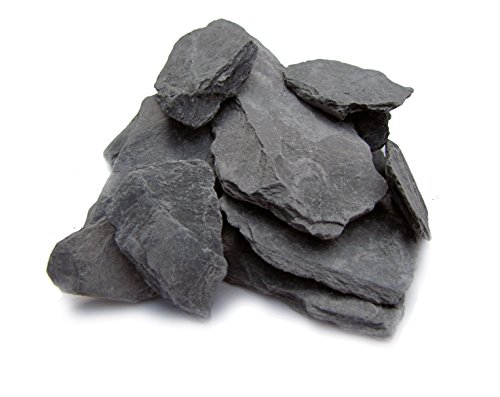
- 2-pound package sized for smaller layouts
- Tumbled edges provide a more weathered, smoother finish
- Matte slate grey with a subtle blue tint
Best For: Nano tanks, betta tanks, and compact aquascapes
Versatile Black Slate

- 5-pound set of natural 2–4 inch slate rocks
- Listed as pH-neutral for freshwater, shrimp, and planted tanks
- Works for aquariums, terrariums, bonsai, and fairy gardens
Best For: Multi-purpose aquascaping and habitat decoration
Versatile Pick

- PH-neutral natural slate
- Hand-picked and washed
- Good for custom caves and cliffs
Best For: Smaller aquariums and custom layouts
Large-Scale Choice
USA-Sourced Large Slate Stones
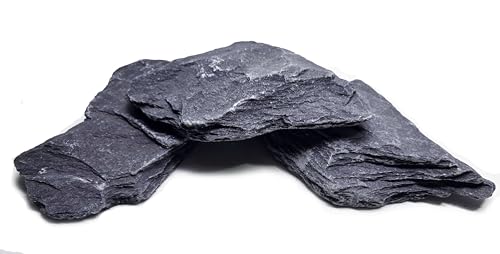
- Large 8- to 10-inch pieces
- Suitable for varied aquatic setups
- Deep-grey, coating-free natural stone
Best For: Large aquariums and dramatic aquascapes
Smooth-Edge Option

- Rounded, polished edges
- Inert for freshwater and saltwater tanks
- Useful for caves and terrain features
Best For: Aquariums and habitats needing smoother rockwork
Hand-Picked Slate
- PH-neutral natural slate
- Large 5–7-inch pieces
- Suitable for custom caves and cliffs
Best For: Large aquascaping structures and natural hardscape
Smoothed Slate
Polished 3–5 Inch Aquarium Rocks

- Rounded, polished edges
- Inert for freshwater and saltwater
- Easy to stack or customize
Best For: Smooth, flexible aquarium and terrarium layouts
Mixed-Size Slate

- Includes one piece around 8 inches
- Adds smaller 2–3-inch stones
- PH-neutral and customizable
Best For: Layered aquascapes with a focal stone
Deep-Grey Hardscape Slate – 3–5 Inch Natural Slate Rocks
If you need substantial slate aquarium rocks for building prominent aquascaping features, this 5-pound mix offers 3- to 5-inch pieces in deep grey tones. The stones can be laid flat, stood on edge, or angled with support to create cliffs, caves, mountains, berms, and walls.
Best For: Medium to large aquariums, planted tanks, paludariums, and aquascapes that need larger structural pieces.
Pros:
- Natural slate sourced, washed, and packaged by a family-owned U.S. business.
- Useful for freshwater and saltwater aquariums, including Iwagumi, Dutch, nano, and betta layouts.
- Larger pieces can help anchor medium or large driftwood and create dramatic hardscape formations.
- Also suitable for reptile enclosures, miniatures, and model railroad scenery.
Cons:
- The 3- to 5-inch size may be too large for small tanks.
- Natural pieces can include white quartz veining or brown surface discoloration.
- Creations should be secured with aquarium-safe glue or epoxy when needed.
This is a versatile choice when scale and structure matter more than uniformity. Its deep grey color can make plants and tank inhabitants stand out, while the varied natural finish adds visual character.
Stackable Black Slate – Flat 2–4 Inch Aquarium Stones
These 5-pound slate aquarium rocks feature naturally flat, layered shapes that are convenient for stacking and arranging. Their deep grey-to-black tones and varied textures work well for creating ledges, tunnels, caves, cliffs, and other custom fish-tank layouts.
Best For: Aquascapers who want stackable slate pieces for freshwater or saltwater tanks, terrariums, and reptile habitats.
Pros:
- Flat, layered pieces are easy to arrange, trim, or bond with aquarium-safe glue.
- Natural shapes and surface patterns give each hardscape a distinct appearance.
- Suitable for freshwater and saltwater aquariums, as well as reptile basking and climbing areas.
- Pre-washed and intended to be rinsed with clean water before use.
Cons:
- Individual stones vary in thickness, shape, and surface pattern.
- At 2–4 inches, some pieces may be less suitable for very small aquariums.
- The listing identifies the color as black, so it may be darker than standard grey slate.
Choose this set if stackability is a priority. The naturally layered profile gives you flexibility for building practical, stable-looking formations without relying on uniformly cut stones.
Smooth Small Slate – 1–3 Inch Tumbled Aquarium Rocks
For smaller layouts, this 2-pound package provides 1- to 3-inch slate aquarium rocks with tumbled edges. The matte slate-grey color has a subtle blue tint, making these pieces useful for compact aquariums, nano tanks, small reptile enclosures, mossariums, and miniature scenes.
Best For: Nano and betta tanks, smaller aquascapes, and projects where smoother edges and compact stones are helpful.
Pros:
- Tumbled edges are designed to be smoother for tank inhabitants and miniature displays.
- Natural slate is sourced, washed, and packaged by a family-owned U.S. business.
- Matte grey-blue color is described as long-lasting and fade-resistant.
- Useful for small cliffs, paths, ledges, caves, and driftwood anchoring.
Cons:
- The 2-pound quantity is smaller than the 5-pound options in this roundup.
- Pieces may be slightly above or below the stated 1- to 3-inch range.
- White quartz veining or brown discoloration may occur as natural variations.
This is the most size-conscious option here. Its tumbled finish and smaller pieces make it a practical fit for compact tanks and detailed layouts, though larger projects may require additional stone.
Versatile Black Slate – 2–4 Inch Aquascaping Stones
This 5-pound set of 2- to 4-inch slate aquarium rocks combines naturally varied shapes and textures with flat pieces that can be stacked into caves, cliffs, and mountains. The listing describes the stones as pH-neutral and suitable for freshwater, shrimp, and planted tanks.
Best For: General-purpose aquascaping, terrariums, reptile habitats, bonsai, and decorative natural-stone projects.
Pros:
- Natural slate offers varied shapes, sizes, and textures for realistic layouts.
- Flat pieces stack easily for caves, cliffs, and mountain-style formations.
- Listed as non-toxic and pH-neutral for freshwater, shrimp, and planted aquariums.
- Versatile enough for reptile basking areas, bonsai, fairy gardens, and outdoor décor.
Cons:
- Natural pieces will not have a uniform shape or finish.
- The black color may create a darker look than grey slate varieties.
- The directions recommend placing stones steadily, so careful positioning is needed for stable layouts.
This set is a broad-use option for shoppers who want one package for aquarium and terrarium projects. Its 2- to 4-inch range balances manageable sizing with enough material for noticeable hardscape features.
Versatile Pick – Natural Slate Aquarium Rocks
These 3- to 5-inch natural slate aquarium rocks are a practical choice for adding realistic structure to smaller aquascapes, amphibian enclosures, and model landscapes. The hand-picked, washed stones are PH neutral and can be arranged individually or secured with aquarium-safe glue.
Best For: Smaller aquariums, custom caves, cliffs, and natural-looking decorative layouts.
Pros:
- Natural PH-neutral slate suitable for aquarium decoration.
- Hand-picked, inspected, and washed before packaging.
- Irregular shapes and varied thicknesses create a distinctive appearance.
- Can be glued into caves, cliffs, and mountain-style structures.
Cons:
- Natural stones vary in size, shape, and thickness.
- The 3.5-pound pack may be limited for larger aquariums.
- Some pieces may require planning or aquarium-safe adhesive for stable structures.
Choose this set if you want flexible, character-filled slate aquarium rocks for a smaller or highly customized display. Its varied natural shapes are especially useful when building decorative formations rather than creating a uniform base layer.
Large-Scale Choice – USA-Sourced Large Slate Stones
For dramatic aquascapes, these 8- to 10-inch slate aquarium rocks provide substantial pieces for forming cliffs, walls, caves, and mountain features. The USA-sourced stones are hand split, tumbled, washed, and packaged in a deep-grey finish.
Best For: Large aquariums, planted or saltwater setups, paludariums, and bold aquascaping structures.
Pros:
- Large 8- to 10-inch pieces suit expansive layouts.
- Natural, coating-free stone with a deep-grey color.
- Works in freshwater, planted, saltwater, and paludarium setups.
- Can be positioned flat, upright, or at an angle with support.
Cons:
- Each box contains only 3-4 stones, so coverage is piece-limited.
- Large rocks may need support when placed at an angle.
- White quartz veining or brown/orange discoloration may occur naturally.
This is the strongest option for creating a large-scale focal point with slate aquarium rocks. Its oversized pieces are useful for structural aquascaping, but plan placement carefully and rinse the stones before use.
Smooth-Edge Option – Polished Slate Aquarium Rocks
These 5- to 7-inch polished slate aquarium rocks combine a rugged natural look with rounded, smooth edges. The inert stones are designed for freshwater and saltwater tanks, and their varied textures can support caves, cliffs, terrain features, and reptile basking areas.
Best For: Aquariums needing smoother-edged rockwork, planted layouts, terrariums, and reptile habitats.
Pros:
- Inert slate is described as safe for fish, shrimp, plants, and sensitive aquatic environments.
- Polished, rounded edges are designed to avoid harming fish.
- 5- to 7-inch size supports mountains, caves, cliffs, and terrain layouts.
- Can be stacked, customized, or secured with aquarium-safe glue.
Cons:
- Natural texture and color vary from piece to piece.
- The 10-pound pack may be more than needed for a small tank.
- Structures may still require careful arrangement or adhesive for stability.
Consider this set when edge smoothness is a priority alongside a natural slate appearance. The medium-large pieces offer creative flexibility, while the polished finish makes them suitable for displays where fish safety and visual texture both matter.
Hand-Picked Slate – Large Natural Slate Rocks
These large natural stones are a flexible option for anyone shopping for slate aquarium rocks with a rugged, authentic appearance. The 5–7-inch pieces vary in shape, thickness, and size, so they work well for building distinctive underwater layouts rather than uniform arrangements.
Best For: Creating caves, cliffs, mountain ranges, and realistic aquascaping structures.
Pros:
- Natural, hand-picked, inspected, and washed slate.
- PH-neutral stone designed not to affect aquarium water chemistry.
- Large pieces can be joined with aquarium-safe glue for custom structures.
- Also suitable for terrariums, amphibian enclosures, landscaping models, and ponds.
Cons:
- Natural variation means pieces may differ considerably in shape and thickness.
- The listed size is relatively large for smaller aquariums.
Choose this set if you want substantial slate pieces and prefer a naturally varied look. Its larger format is particularly useful when the hardscape itself is the main visual feature.
Smoothed Slate – Polished 3–5 Inch Aquarium Rocks
For aquarists who want slate aquarium rocks with a more refined finish, this 5-pound set offers polished 3–5-inch pieces. The rounded edges and varied textures provide a natural look while making the rocks easier to arrange around fish, shrimp, and plants.
Best For: Freshwater or saltwater aquariums needing smooth, stackable rocks for caves, cliffs, and terrain.
Pros:
- Polished and rounded edges are designed to avoid harming fish.
- Inert slate will not alter water chemistry.
- Suitable for fish, shrimp, plants, and sensitive aquatic environments.
- Pieces can be arranged, broken, or secured with aquarium-safe glue.
Cons:
- Polishing may provide a less rugged appearance than raw slate.
- The 3–5-inch size may not provide enough scale for very large tanks.
This is a practical choice when safety-conscious handling and a cleaner finish matter. Its medium size also gives you flexibility for stacking and reshaping a layout without needing complex tools.
Mixed-Size Slate – 3-Pound Aquascaping Stone Set
This mixed-size assortment is a useful slate aquarium rocks option when you want both a focal piece and smaller stones in one package. It includes one slate piece about 8 inches long plus additional 2–3-inch pieces, giving you several ways to build a layered aquascape.
Best For: Aquascapes that need one prominent stone plus smaller pieces for support, detail, or custom structures.
Pros:
- Combines one approximately 8-inch piece with smaller 2–3-inch stones.
- PH-neutral slate will not affect aquarium water.
- Pieces can be broken or glued with aquarium-safe glue for custom designs.
- Suitable for aquariums, terrariums, vivariums, and other pet enclosures.
Cons:
- The assortment contains fewer total pounds than the 5-pound alternatives.
- Rocks should be thoroughly rinsed before use in a tank or enclosure.
- The large focal piece may require a suitably sized aquarium.
Consider this set if variety is more important than uniformity. The combination of sizes makes it easier to create depth and visual balance, while the larger piece can anchor the overall design.
How We Picked the Best Slate Aquarium Rocks
We compared these Slate Aquarium Rocks by piece size, total weight, stated sourcing, surface finish, and intended use. We favored listings that clearly describe dimensions and quantity, since those details determine whether a pack works for a nano tank, a planted aquarium, or a larger aquascape. We also considered versatility for terrariums, paludariums, reptile enclosures, and miniature landscapes.
Because natural stone can vary, treat listed dimensions and colors as approximate. Every piece should be checked individually before use, regardless of the seller’s claims about pH neutrality or aquarium suitability.
Quick Comparison
- Small and medium pieces: The 1–3-inch and 2–4-inch options are easier to arrange in nano and standard aquariums.
- Larger statement stones: The 5–7-inch and 8–10-inch options can anchor a layout or create a prominent focal point.
- Mixed-size packs: A combination of smaller stones and one large piece offers more flexibility for building height and visual balance.
- Polished finishes: Polished slate has a smoother, more decorative appearance, while natural pieces generally provide a more rugged aquascaping look.
- Weight: Five-pound packs offer a useful starting quantity; 10-pound packs are better for larger layouts but require more planning and substrate support.
Key Buying Factors for Slate Aquarium Rocks
Size and Layout
Measure your tank before ordering. Smaller stones are easier to position around plants and filtration equipment, while large slabs need enough footprint to remain stable. Avoid stacking rocks where they could fall against glass or trap fish.
Surface and Safety
Look for pieces without unstable flakes, razor-sharp points, or excessive dust. Rinse and scrub the rocks with plain water before use; do not use soap or household chemicals. If necessary, carefully smooth a dangerous edge or choose another piece.
Water Chemistry
Slate is commonly used in aquariums, but individual stones can contain mineral inclusions or residue. Test questionable pieces separately and monitor aquarium pH and hardness after installation, especially in sensitive or soft-water setups.
Quantity and Support
Buy by the layout you want rather than weight alone. A heavier centerpiece may need a stable base, protective barrier, or direct placement on the tank floor before substrate is added. Never exceed the aquarium stand’s safe load.
Who Should Buy Which Slate Aquarium Rocks?
Nano-tank owners should start with 1–3-inch or 2–4-inch stones that provide control without overwhelming the aquarium. Planted-tank hobbyists may prefer natural medium pieces for terraces, retaining walls, and plant anchors. Large-aquarium keepers should consider 5–7-inch or 8–10-inch stones as focal points, checking stability carefully. Terrarium and reptile owners can prioritize the shape, footprint, and edge smoothness that best suit the enclosure. For the greatest design flexibility, choose a mixed-size pack or combine small stones with one larger accent piece.