Large aquariums need consistent water testing because small chemistry changes can affect more livestock and require more time to correct. The right test kit makes routine maintenance easier by covering the parameters that matter most for your setup.
This roundup compares liquid master kits, fast test strips, ammonia-focused tests, and app-enabled options for freshwater and saltwater aquariums. We prioritized testing range, capacity, usability, and value for ongoing tank care.
Best 10 Aquarium Test Kits for Large Tanks Picks for 2026
Best Freshwater Master Kit
API Freshwater Master Test Kit

- Up to 800 tests
- Checks five core parameters
- Freshwater-only liquid kit
Best For: Routine monitoring of large freshwater aquariums
Best Easy-Read Strips
EASYTEST 8-Way Aquarium Test Strips

- Tests eight metrics
- Works in fresh and salt water
- 50 quick-read strips
Best For: Fast multi-tank water screening
Best Saltwater Master Kit
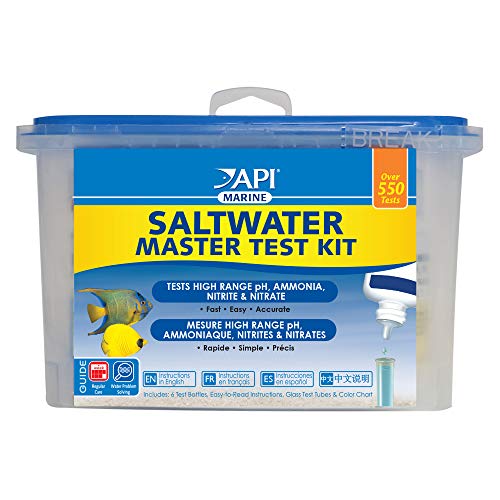
- Up to 550 tests
- Marine-focused liquid testing
- Checks four key parameters
Best For: Weekly monitoring of large saltwater aquariums
Most Comprehensive Strip Pack

- Tests 11 parameters
- Includes 150 strips
- Freshwater and saltwater use
Best For: Broad, frequent testing across large or multiple aquariums
Best Weekly Monitor

- Checks five core water parameters
- Works in fresh and salt water
- Includes 100 fast-dip strips
Best For: Routine weekly aquarium monitoring
Most Comprehensive Strips

- Covers 12 water parameters
- Provides 170 total strips
- Works for fresh and salt water
Best For: Frequent, broad aquarium water testing
Best Ammonia Specialist
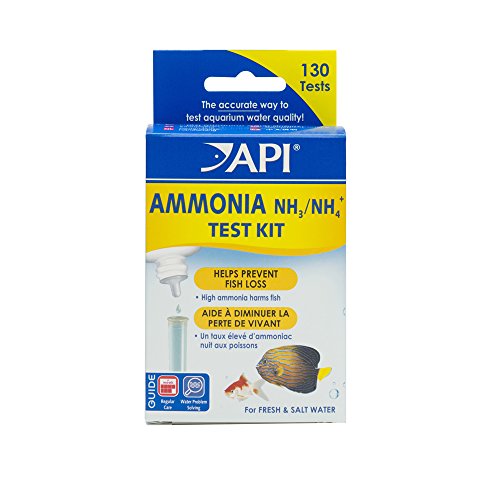
- Reads ammonia from 0 to 8 ppm
- Provides up to 130 tests
- Works with fresh and salt water
Best For: Dedicated ammonia monitoring and troubleshooting
Best Value Strip Kit

- Tests seven parameters with one strip
- Includes 100 individually packaged strips
- Includes chart, tube, thermometer, and ebook
Best For: Routine freshwater testing and larger tanks
Best Digital Monitoring
App-Enabled 10-in-1 Aquarium Test Kit

- Covers ammonia, nitrate, nitrite, pH, GH, KH, and more
- Scans strips with the DROPLYTIX mobile app
- Designed for freshwater, saltwater, reef, and specialty tanks
Best For: Digital testing across varied aquarium setups
Best High-Count Kit
AAwipes 8-in-1 Aquarium Test Strips

- Includes 150 strips for frequent testing
- Covers ammonia nitrogen, nitrate, nitrite, pH, and hardness
- Suitable for freshwater, saltwater, ponds, and shrimp tanks
Best For: Frequent testing and multi-tank maintenance
Best Freshwater Master Kit – API Freshwater Master Test Kit
API Freshwater Master Test Kit 800-Test Freshwater Aquarium Water Kit, White, Single, Multi-Colored
Check Price On AmazonFor aquarists comparing aquarium test kits for large tanks, the API Freshwater Master Test Kit is a practical liquid-testing option for routine freshwater monitoring. It checks five key parameters—pH, high-range pH, ammonia, nitrite, and nitrate—with testing solutions, tubes, caps, and a color card included.
Best For: Freshwater aquarium owners who want a dedicated liquid test kit for weekly monitoring and troubleshooting water or fish problems.
Pros:
- Includes supplies for up to 800 tests.
- Measures five important freshwater water-quality parameters.
- Includes seven testing-solution bottles, four capped tubes, and a color card.
Cons:
- Designed for freshwater aquariums only.
- Liquid testing requires following the instructional booklet for each parameter.
Its high stated test count makes this a sensible choice for larger freshwater systems that need regular checks. Choose it when core cycling-related parameters matter more than broad multi-parameter coverage.
Best Easy-Read Strips – EASYTEST 8-Way Aquarium Test Strips
For aquarium test kits for large tanks, EASYTEST 8-Way strips offer a quick way to screen several water conditions without extra testing equipment. The 50 strips measure pH, hardness, alkalinity, chlorine, nitrate, nitrite, carbonate, and ammonia nitrogen across freshwater and saltwater setups.
Best For: Aquarists who want fast, broad at-home checks for multiple tanks, ponds, or mixed aquatic environments.
Pros:
- Tests eight water metrics in one strip.
- Works with freshwater, saltwater, shrimp tanks, planted tanks, and ponds.
- Simple dip-and-read process with results available in about 15 to 60 seconds depending on the index.
Cons:
- Includes 50 strips, fewer stated tests than the larger strip pack in this roundup.
- Ammonia testing requires cutting off the ammonia pad as directed.
The broad coverage and quick procedure suit frequent screening in a large tank system, especially when convenience matters. Follow the timing instructions carefully, since different readings develop at different intervals.
Best Saltwater Master Kit – API Saltwater Master Test Kit
When choosing aquarium test kits for large tanks, the API Saltwater Master Test Kit provides dedicated liquid testing for marine systems. It monitors high-range pH, ammonia, nitrite, and nitrate, with six solution bottles, four capped tubes, and a color card included.
Best For: Saltwater aquarium keepers who need a focused kit for weekly checks and investigating water or fish problems.
Pros:
- Designed specifically for saltwater aquariums.
- Checks four core marine water parameters.
- Includes supplies for up to 550 tests.
Cons:
- Not intended for freshwater aquarium use.
- Offers narrower parameter coverage than multi-parameter test strips.
The dedicated saltwater formulation and substantial test count make it a useful fit for ongoing monitoring of a larger marine aquarium. It is best suited to shoppers who prefer focused liquid tests over an all-in-one strip format.
Most Comprehensive Strip Pack – 11-in-1 Aquarium Test Strips
For aquarium test kits for large tanks, this 11-in-1 strip kit emphasizes broad coverage and a high supply count. It tests ammonia, pH, iron, chlorine, hardness, carbonate, nitrate, nitrite, alkalinity, copper, and temperature, and includes 150 strips, a color chart, testing tubes, and an eBook.
Best For: Owners of large freshwater or saltwater systems who want frequent, wide-ranging checks from one home testing kit.
Pros:
- Covers 11 listed water-quality and temperature parameters.
- Includes 150 strips, with some packaged separately to help maintain freshness.
- Suitable for freshwater tanks, saltwater aquariums, betta tanks, and ponds.
Cons:
- Opened strips are recommended for use within three months for maximum accuracy.
- Strip readings depend on matching colors with the supplied chart.
The large strip quantity and extensive parameter list make this a convenient option for high-frequency monitoring or multiple aquariums. It is particularly appealing when breadth and easy home testing take priority over a specialized liquid kit.
Best Weekly Monitor – API 5-in-1 Test Strips
API 5-IN-1 TEST STRIPS Freshwater and Saltwater Aquarium Test Strips 100-Count Box
Check Price On AmazonFor aquarium test kits for large tanks, the API 5-in-1 strips offer a fast way to check several core water conditions at once. They monitor pH, nitrite, nitrate, carbonate, and general hardness in both freshwater and saltwater aquariums, making them practical for routine weekly checks.
Best For: Aquarists who want quick, straightforward weekly monitoring of five key water parameters.
Pros:
- Tests pH, nitrite, nitrate, carbonate, and general hardness.
- Suitable for freshwater and saltwater aquariums.
- 100-count box supports repeated testing.
- Dip-and-read format provides fast results.
Cons:
- Does not test ammonia.
- Paper strips require color comparison rather than a liquid-reagent procedure.
This is a convenient baseline kit for tracking common water changes in a large aquarium. If ammonia is a particular concern, pair it with a dedicated ammonia test.
Most Comprehensive Strips – 12-in-1 Aquarium Test Kit
For aquarium test kits for large tanks, this 12-in-1 kit provides broad coverage with strips for ammonia, phosphate, iron, copper, nitrate, nitrite, hardness, chlorine, alkalinity, carbonate, and both freshwater and saltwater pH. Its 170 total strips are suited to frequent home testing across different aquarium setups.
Best For: Aquarists who want broad parameter coverage and a large supply of strips for frequent testing.
Pros:
- Tests 12 key water parameters.
- Includes 170 strips: 100 multi-parameter, 50 ammonia, and 20 phosphate strips.
- Suitable for freshwater, saltwater, ponds, and shrimp tanks.
- Sealed bottles help protect strips from moisture.
Cons:
- Results depend on correctly matching color blocks in natural daylight.
- Users must keep wet fingers away from the bottle and close the cap tightly.
This is the broadest option in the lineup for frequent checks, especially when you want ammonia and phosphate coverage alongside standard readings. Its strip-based format keeps testing convenient without sending samples to a lab.
Best Ammonia Specialist – API Ammonia Test Kit
For aquarium test kits for large tanks, the API Ammonia Test Kit focuses on one especially important parameter: ammonia. It reads from 0 to 8 ppm in freshwater and saltwater and provides enough solution for up to 130 tests, making it useful for new setups and ongoing troubleshooting.
Best For: Aquarists who need dedicated, repeated ammonia testing in freshwater or saltwater tanks.
Pros:
- Measures ammonia from 0 to 8 ppm.
- Supports freshwater and saltwater testing.
- Provides up to 130 tests.
- Useful several times weekly during aquarium startup.
Cons:
- Tests ammonia only.
- Requires measured drops, shaking, a five-minute development time, and color-card comparison.
This is a focused companion for tanks where ammonia monitoring is the priority. Choose it alongside a broader kit if you also need routine readings for pH, nitrite, nitrate, or hardness.
Best Value Strip Kit – 7-in-1 Aquarium Test Strips
For aquarium test kits for large tanks, this 7-in-1 strip kit is a practical choice for frequent freshwater checks. Each strip measures pH, chlorine, general hardness, carbonate hardness, nitrate, and temperature, while the 100 individually packaged strips support regular monitoring at home.
Best For: Freshwater aquariums, planted tanks, shrimp tanks, ponds, and routine water checks.
Pros:
- Tests seven key water parameters with one strip.
- Includes 100 individually packaged strips for repeated testing.
- Provides a color chart, testing tube, thermometer function, and an instructional ebook.
- Suitable for cold-water, tropical, betta, shrimp, planted, and other freshwater setups.
Cons:
- The supplied parameters do not include ammonia or nitrite.
- Color-based readings require comparison with the included chart.
- Opened strips are recommended for use within three months.
This kit offers broad routine screening and a generous strip count, making it useful for larger aquariums where consistent checks are needed. However, aquarists managing cycling or ammonia concerns may need a separate test for those parameters.
Best Digital Monitoring – App-Enabled 10-in-1 Aquarium Test Kit
For aquarium test kits for large tanks, this app-enabled 10-in-1 kit stands out when you want broader parameter coverage and digital result interpretation. The strips are designed for freshwater, saltwater, reef, shrimp, planted, and other aquarium types, with app scanning intended to reduce color-chart guesswork.
Best For: Freshwater, saltwater, reef, planted, shrimp, turtle, and axolotl aquariums requiring app-based monitoring.
Pros:
- Measures ammonia, nitrate, nitrite, pH, GH, KH, chlorine, and more.
- Uses the DROPLYTIX app for scanned digital results.
- Works across freshwater, saltwater, reef, shrimp, planted, and several specialty setups.
- Useful for aquarium cycling, water changes, and routine maintenance.
Cons:
- Requires the mobile app to use its digital scanning feature.
- The supplied notes list a 10-count unit, providing fewer strips than the other kits here.
- The product details do not specify a tank size above 30 gallons.
This is the most feature-oriented option of the three, particularly for aquarists who want ammonia and nitrite coverage alongside hardness and pH testing. Its app-based workflow may be convenient, though larger-tank owners should consider the listed tank-size compatibility and strip quantity.
Best High-Count Kit – AAwipes 8-in-1 Aquarium Test Strips
For aquarium test kits for large tanks, the AAwipes 8-in-1 kit is appealing when you prioritize a high strip count and regular testing. Its 150 strips measure free chlorine, nitrate, nitrite, hardness, sodium chloride, total alkalinity, pH, and ammonia nitrogen for freshwater, saltwater, ponds, and shrimp tanks.
Best For: Frequent aquarium, pond, saltwater, freshwater, and shrimp-tank testing.
Pros:
- Includes 150 strips for ongoing testing.
- Covers ammonia nitrogen, nitrate, nitrite, pH, hardness, alkalinity, chlorine, and sodium chloride.
- Uses high-quality fiber paper with non-bleeding colors.
- Sealed bottle packaging helps protect strips from moisture.
Cons:
- Ammonia nitrogen requires a separate five-second dip and a 180-second wait.
- Results depend on comparing strip colors with the chart.
- The directions involve different timing for pads one through seven and pad eight.
With the largest stated strip supply and broad coverage that includes ammonia nitrogen, this kit suits aquarists who test often or manage multiple water environments. The more involved timing for the ammonia pad is worth noting when speed and simplicity are priorities.
How We Picked the Best Aquarium Test Kits for Large Tanks
We focused on kits that can support frequent testing across larger water volumes, where ongoing maintenance may require more checks than a small aquarium. Our evaluation considered the number of tests included, parameters covered, freshwater or saltwater compatibility, result readability, testing speed, and replacement convenience.
Liquid reagent kits generally offer more precise readings for core parameters such as ammonia, nitrite, nitrate, and pH. Test strips are faster and simpler, making them useful for routine screening or checking several parameters at once. Digital and app-enabled systems can improve recordkeeping, but their value depends on sensor quality, calibration, and ongoing supply costs.
Quick Comparison
- Best for detailed freshwater testing: A comprehensive liquid master kit with high test capacity and dedicated reagents.
- Best for saltwater aquariums: A saltwater-specific master kit designed around marine pH and nitrogen-cycle testing.
- Best for frequent screening: Multi-parameter strips with a large count and quick results.
- Best for ammonia monitoring: A dedicated ammonia kit for cycling tanks, new livestock, or suspected water-quality problems.
- Best for tracking trends: An app-enabled digital kit that stores or organizes test results.
Key Buying Factors for Aquarium Test Kits for Large Tanks
Test Capacity and Replacement Cost
Choose a kit with enough tests for your maintenance schedule. A lower-priced box may become expensive if it runs out quickly or requires replacing several separate strips or reagents. For large tanks, high-count kits are often more practical.
Parameters Covered
At minimum, most aquariums benefit from monitoring ammonia, nitrite, nitrate, and pH. Saltwater systems may also require salinity, alkalinity, calcium, phosphate, or other reef-specific tests. Do not pay for parameters you will not use, but avoid relying on a basic kit if your livestock has specialized requirements.
Accuracy and Readability
Liquid tests can provide clearer, more graduated results when used carefully, while strips trade some precision for speed. Look for easy-to-read color charts, clear instructions, and consistent timing. Testing technique matters: use clean equipment, follow sample volumes, and read results within the stated window.
Freshwater or Saltwater Compatibility
Confirm that the kit matches your aquarium. Some products work with both water types, while others are formulated specifically for freshwater or marine systems. Reef keepers should verify that the kit measures the chemistry their animals require.
Who Should Buy Which Aquarium Test Kits for Large Tanks?
Choose a high-capacity liquid master kit if you are cycling a tank, maintaining valuable livestock, or want more detailed results. Pick multi-parameter strips if speed and convenience are your priorities, especially for frequent checks between more precise tests. A dedicated ammonia kit is useful for new tanks, quarantine systems, and troubleshooting sudden fish stress. Saltwater keepers should select a marine-compatible kit, while aquarists who want digital records may prefer an app-enabled option. For the best routine coverage, many large-tank owners combine strips for quick checks with liquid tests for confirming important readings.