Maintaining a planted aquarium often means balancing consistent feeding with water quality. The right automatic feeder can dispense small, repeatable portions while you are at work, traveling, or following a strict feeding schedule.
This roundup compares 10 options by programming flexibility, portion control, capacity, moisture protection, power, and ease of setup so you can choose a feeder that suits your tank and fish.
Best 10 Automatic Fish Feeders for Planted Tanks Picks for 2026
Best Flexible Scheduler

- Up to four feeding times daily
- 200 ml capacity with adjustable portions
- USB-C rechargeable with two mounting options
Best For: Flexible schedules and extended unattended feeding
Best Portion-Focused Classic
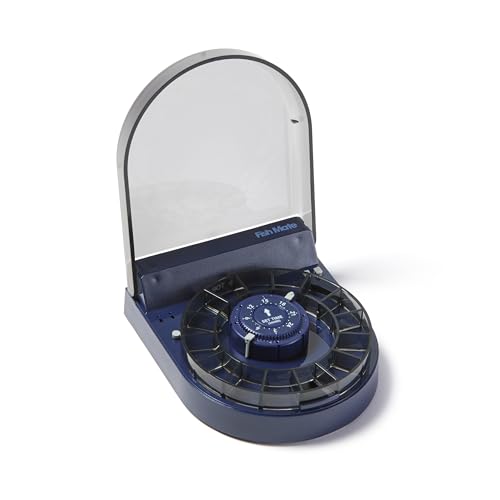
- Holds up to 14 individual meals
- Gradual dispensing supports portion control
- Runs over one year on one AA battery
Best For: Consistent portions during routines and short trips
Best Smart-Controlled Option

- App supports up to six meals daily
- USB power with AA battery backup
- Includes 100 ml and 200 ml containers
Best For: Remote scheduling and power-outage protection
Best Moisture Protection
Petbank 15-Meal Aquarium Feeder

- Stores 15 measured meals
- Sealed opening helps resist moisture
- Rechargeable battery lasts one to two months
Best For: Dry-food feeding with moisture-sensitive storage
Flexible Scheduling Pick
FISHNOSH Automatic Fish Feeder

- Up to 9 feeding cycles daily
- 200 ml capacity with portion control
- Includes clip and stand
Best For: Flexible feeding schedules for aquariums and ponds
Easy-Setup Choice
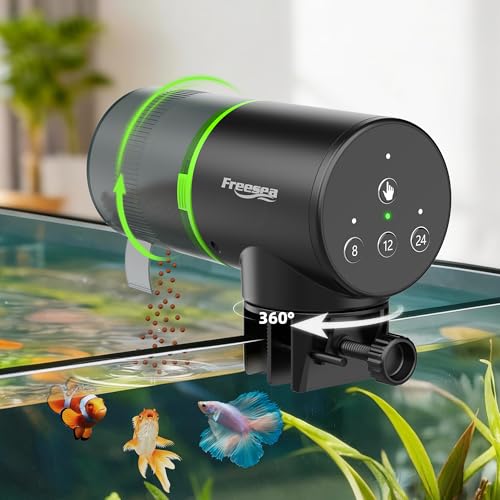
- One-touch setup with 3 timers
- Adjustable portions for powder and pellets
- Moisture-proof 200 ml dispenser
Best For: Simple scheduled feeding during vacations and daily routines
Moisture-Control Pick

- 8-, 12-, or 24-hour feeding intervals
- Moisture-proof 200 ml food chamber
- Clamp or adhesive mounting options
Best For: Flexible interval feeding with varied food types
Smart Monitoring Pick

- App scheduling and feeding logs via USB power
- Temperature monitoring with adjustable alerts
- Battery backup and flexible mounting options
Best For: Remote feeding and temperature-aware planted-tank care
Flexible Setup Pick

- 8-, 12-, and 24-hour automatic intervals
- USB and AA battery backup support
- Two containers and adjustable food volume
Best For: Simple, flexible feeding for hooded or open aquariums
Precision Portion Pick

- 15 compartments for flexible feeding schedules
- Up to three portions per session and 2 g per feeding
- Moisture-resistant ports and under-30 dB operation
Best For: Quiet, measured feeding with compatible non-flake foods
Best Flexible Scheduler – 4-Timer Automatic Fish Feeder
For planted-tank keepers who want straightforward automation, this feeder combines interval settings with up to four daily feeding times. Its adjustable portion control and two mounting options make it a practical choice among automatic fish feeders for planted tanks.
Best For: Aquarium owners who want flexible scheduling, USB-C charging, and a relatively large food container for routine feeding or vacations.
Pros:
- Supports up to four feeding times per day, with one to three feeder spins per session.
- Offers 8-, 12-, 24-, and 48-hour interval modes plus manual feeding.
- Has a 200 ml container, adjustable food slider, and clamp or adhesive mounting.
- USB charging is designed to last more than three to six months per charge.
Cons:
- The feeder is intended for dry foods, so wet foods are not an option.
- Its battery-powered operation still requires periodic recharging.
This is a versatile option if you value simple controls and long intervals between charges. The adjustable mount and feeding ring can also help adapt it to different aquarium layouts.
Best Portion-Focused Classic – Fish Mate F14 Aquarium Feeder
The Fish Mate F14 is built around pre-portioned feeding rather than a large hopper. It can schedule up to 14 individual meals, making it a dependable style of automatic fish feeder for planted tanks when consistent portions matter.
Best For: Fishkeepers who want gradual dispensing, familiar battery operation, and a compact feeder for daily routines or short trips.
Pros:
- Stores up to 14 individual portions and delivers one to four timed meals per day.
- Gradually dispenses food over several hours to help support consistent feeding.
- Works with flakes, pellets, and sticks.
- Mounts to a hood, condensation tray, or glass edge with included brackets.
Cons:
- Requires one AA battery, which is not included.
- Its 14-meal format offers less bulk capacity than hopper-style feeders.
Choose this model when portion-by-portion control is more important than app features or a large reservoir. Its compact design and one-year-plus battery runtime suit routine use and shorter absences.
Best Smart-Controlled Option – DXOPHIEX WiFi Fish Feeder
If you want to manage feeding remotely, the DXOPHIEX adds app-based scheduling to the automatic fish feeders for planted tanks category. It supports detailed recurring routines, feeding records, and backup power for greater control while away from home.
Best For: Tech-oriented aquarists who want remote scheduling, multiple daily portions, and automatic battery backup during power interruptions.
Pros:
- App control allows up to six meals per day and one to 12 portions per meal.
- Supports recurring weekly schedules and weekly, monthly, or yearly feeding records.
- Uses USB power with two AA batteries as automatic backup.
- Includes 100 ml and 200 ml containers plus mounting options for hooded or rimless tanks.
Cons:
- AA batteries are not included.
- WiFi and app functions add setup complexity compared with a basic timer.
This is the strongest fit for owners who want detailed remote control rather than a set-and-forget dial. Its dual power approach is especially useful when reliable feeding during outages is a priority.
Best Moisture Protection – Petbank 15-Meal Aquarium Feeder
The Petbank feeder emphasizes individual portions and a sealed design that helps keep stored food dry. For planted-tank owners using suitable dry foods, it offers precise scheduling without relying on a large open dispensing compartment.
Best For: Fishkeepers who prioritize moisture resistance, measured meals, and rechargeable operation for scheduled feeding.
Pros:
- Provides 15 individual meals across 16 grids, with each grid holding up to 2 g.
- Seals the opening after feeding to help reduce moisture exposure and jamming.
- Allows up to three feedings per day, with up to three grids per feeding.
- Includes clamp and suction-cup mounting, plus a rechargeable 700 mAh battery.
Cons:
- It is not designed for shrimp or flake food.
- Battery runtime is listed as one to two months, shorter than some long-runtime feeders.
- The 30 g capacity is smaller than the hopper capacity of some alternatives.
This model makes the most sense when keeping food dry and portions consistent is the main concern. Confirm that your fish food is pellet, particle, powder, or small-strip type before choosing it.
Flexible Scheduling Pick – FISHNOSH Automatic Fish Feeder
For aquarists comparing automatic fish feeders for planted tanks, the FISHNOSH offers generous scheduling flexibility and portion control. Its 200 ml capacity, battery-powered operation, and included clip and stand make it suitable for routine feeding at home or while traveling.
Best For: Fish keepers who want multiple daily feeding options for small or large aquariums, or even ponds.
Pros:
- Supports up to 9 feedings per day through three feeding times with three cup rotations.
- 200 ml capacity accommodates extended feeding routines.
- Adjustable portions and a spill-proof design help manage food delivery.
- Food can be refilled without removing the feeder.
Cons:
- Battery-powered operation requires monitoring battery availability.
- The larger feature set may be more than needed for simple once-daily feeding.
The FISHNOSH stands out when scheduling flexibility matters. It is a practical choice for planted-tank owners who need more than one daily feeding time and want a relatively straightforward refill routine.
Easy-Setup Choice – Freesea Automatic Fish Feeder
The Freesea is a convenient option for shoppers seeking automatic fish feeders for planted tanks without a complicated setup process. It combines one-touch setup, three programmable timers, adjustable portions, and a 200 ml dispenser for daily or vacation feeding.
Best For: Aquarium owners who prioritize quick setup, compact installation, and feeding support for freshwater or saltwater tanks.
Pros:
- One-touch setup is designed to be completed quickly.
- Three programmable timers support scheduled feeding.
- Adjustable portion control works with powder and pellet food.
- Moisture-proof lid is designed to block 90% of humidity.
Cons:
- Its 200 ml capacity may require more frequent refilling for multiple or heavily stocked tanks.
- Battery operation means spare batteries may be useful for travel.
With its simple controls and moisture-resistant design, the Freesea is well suited to fish keepers who want uncomplicated scheduled feeding. The included double-sided tape also gives users an alternative mounting method.
Moisture-Control Pick – Aoyar 200 ml Automatic Feeder
The Aoyar automatic fish feeder is a versatile choice among automatic fish feeders for planted tanks, especially when food freshness and mounting flexibility are priorities. It offers interval-based scheduling, manual feeding, adjustable portions, and a moisture-proof lid for flakes, granules, powder, and strips.
Best For: Fish keepers who want flexible interval feeding and multiple mounting options for aquarium covers.
Pros:
- Three automatic intervals feed every 8, 12, or 24 hours.
- Adjustable slider helps control portions and reduce overfeeding.
- Moisture-proof design is intended to reduce water vapor entry by more than 90%.
- Clamp and double-sided tape mounting options support covers up to 1 inch thick.
Cons:
- Fixed interval choices provide less scheduling customization than fully programmable timers.
- The plastic unit requires hand washing for care.
The Aoyar is a strong fit when you want straightforward interval feeding rather than a complex schedule. Its rotating design, broad food compatibility, and two installation methods make positioning easier around planted-tank covers and equipment.
Smart Monitoring Pick – WiFi Aquarium Feeder
For planted tanks where consistent feeding and water awareness matter, this WiFi model combines scheduled dispensing with app-based control and temperature monitoring. It supports flakes, pellets, powder, and small sticks, with portion adjustment to help limit excess food.
Best For: Planted-tank owners who want remote feeding control, feeding logs, and temperature alerts.
Pros:
- App control, customized schedules, and feeding logs when powered by USB
- Real-time temperature monitoring with adjustable high and low alerts
- USB power with automatic battery backup during outages
- Clamp and adhesive mounting, plus a 360-degree rotating base
Cons:
- App remote control is unavailable in battery mode
- Temperature alerts require the included probe and app setup
Choose this feeder if remote access and tank-condition notifications are more valuable to you than a simple timer. Its adjustable outlet and multiple mounting options also make it adaptable to different planted-tank layouts.
Flexible Setup Pick – DXOPHIEX Automatic Feeder
This DXOPHIEX model is a practical option among automatic fish feeders for planted tanks, offering straightforward timed feeding every 8, 12, or 24 hours. Its dual-power design and two mounting methods suit tanks with or without hoods.
Best For: Aquarium owners who want simple scheduled feeding with backup power and adjustable capacity.
Pros:
- Automatic feeding at 8-, 12-, or 24-hour intervals, plus manual feeding
- USB power and two-AA battery backup can operate together
- Includes 100 ml and 200 ml containers for different food needs
- Adjustable food volume works with flakes, crisps, pellets, and granules
Cons:
- AA batteries are not included
- It lacks app control and temperature monitoring
- Its basic interval choices offer less scheduling flexibility than programmable models
This is a sensible value-focused choice for planted tanks that need dependable vacation or daily feeding without smart features. Check the mounting method and container size against your tank before buying.
Precision Portion Pick – Papettly LCD Feeder
For planted tanks where measured feeding and low noise are priorities, the Papettly feeder uses 15 food compartments and an LCD timer. It can dispense up to three portions per session and delivers up to three scheduled feedings per day.
Best For: Fishkeepers seeking precise, quiet feeding for pellet-based or other compatible foods.
Pros:
- 15 compartments support scheduled, alternating-day feeding plans
- Dispenses up to three portions per session, with up to 2 g per feeding
- Auto-closing ports help keep food dry
- Quiet operation is rated below 30 dB
Cons:
- Not suitable for flake or shrimp food
- Its 30 g capacity is smaller than some larger-container feeders
- Scheduling and settings are managed through the LCD rather than an app
This feeder stands out when portion consistency and quiet operation matter more than remote control. Its food limitations make it important to confirm that your planted-tank fish eat compatible food before choosing it.
How We Picked the Best Automatic Fish Feeders for Planted Tanks
We focused on features that matter in planted aquariums: dependable scheduling, controllable portions, resistance to humidity, secure mounting, and compatibility with common foods such as flakes, pellets, and granules. We also considered practical differences between battery-powered, USB-powered, LCD-equipped, and Wi-Fi-connected designs.
Because planted tanks vary widely, capacity was not treated as the only measure of quality. A compact feeder may be preferable for a small betta or nano aquarium, while a larger hopper can reduce refills on community tanks or during vacations.
Quick Comparison
| Best For | Features to Prioritize | Models to Consider |
|---|---|---|
| Small planted tanks | Compact size, small portions, simple controls | Freesea, Fish Mate F14, compact timer models |
| Longer trips | Large capacity, dependable power, moisture control | 200ml dispenser, portion-control models |
| Remote monitoring | Wi-Fi access, alerts, app controls | DXOPHIEX Wi-Fi and temperature-monitoring models |
| Flexible programming | Multiple daily timers and adjustable dispensing | Papettly, FISHNOSH, LCD-equipped models |
Key Buying Factors for Automatic Fish Feeders for Planted Tanks
Portion Control and Food Compatibility
Overfeeding can increase waste and encourage algae, which is especially undesirable in a planted tank. Look for adjustable dispensing and test the output before relying on the feeder. Check whether the opening handles your preferred pellet size or flakes without clogging.
Humidity Protection
Open-top aquariums, aquarium lights, and water movement create a damp environment. A sealed or moisture-resistant hopper helps keep food flowing consistently. Position the feeder away from direct splashes and avoid placing it where condensation can collect inside the dispenser.
Schedules, Power, and Capacity
Multiple timers are useful for fish that need small meals, while a large hopper is valuable for travel. Battery operation can provide backup during outages; USB models may be convenient but should be connected to a reliable power source. Confirm how long the selected capacity lasts at your intended portion size.
Mounting and Maintenance
Choose a feeder that sits securely on the rim or attaches firmly to the aquarium. Easy access for cleaning and refilling is important because old food can absorb moisture and spoil. Test the unit for several days before leaving fish unattended.
Who Should Buy Which Automatic Fish Feeders for Planted Tanks?
Choose a basic multi-timer feeder if you want reliable scheduled feeding without app setup. Select a moisture-resistant, portion-control model for planted tanks where minimizing waste and algae is a priority. A large-capacity dispenser makes sense for frequent travelers or larger community aquariums. If you want remote adjustments or environmental information, a Wi-Fi model with temperature monitoring offers the most connected control, provided your network and power setup are dependable.