The best cat doors for small spaces give cats more freedom without taking over a room, weakening a door, or creating an oversized opening. Compact interior models, locking flaps, and no-flap designs can suit apartments, closets, laundry rooms, and other tight layouts.
This roundup compares 10 options by pet size, installation location, security features, and ease of use so you can choose a practical fit for your home and cat.
Best 10 Cat Doors for Small Spaces Picks for 2026
Best No-Flap Pick

- No-flap, no-training design
- Fits cats up to 20 pounds
- Screw-in fit for 1.25–1.75-inch doors
Best For: Quiet indoor access for larger cats
Best Flexible Installation
PetSafe Small Plastic Cat Door
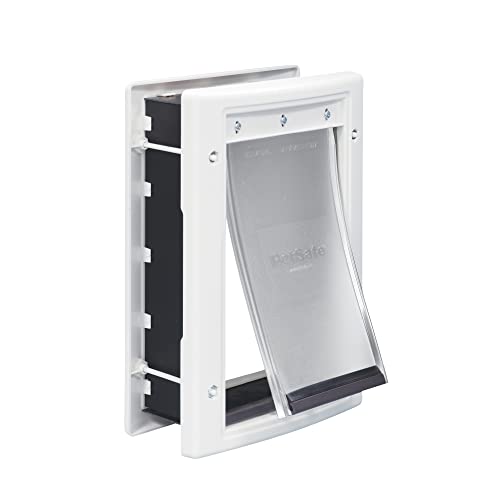
- Fits pets up to 15 pounds
- Works with multiple door materials
- Includes a closing panel
Best For: Small pets needing indoor or exterior access
Best Roomy Passage

- Supports pets up to 25 pounds
- 6.89-inch internal passage
- Fits doors 0.8–2.75 inches thick
Best For: Larger cats using interior rooms
Best Locking Option
PetSafe Two-Way Interior Cat Door

- Sliding two-way access lock
- Fits 0.5–2-inch interior doors
- Supports cats up to 15 pounds
Best For: Controlled access to food or litter areas
Best Telescoping-Frame Pick
Perfect Pet Soft Flap Cat Door

- Fits 1.25- to 2-inch-thick doors
- Compact 5-by-7-inch flap
- Tamper-proof mounting system
Best For: Cats up to 25 pounds and standard compatible doors
Best Flexible-Access Pick

- Four access settings for better control
- Quiet magnetic flaps and low threshold
- Fits doors or walls up to 2.17 inches
Best For: Homes needing adjustable indoor or outdoor pet access
Best Screen-and-Wall Pick
Hakuna Pets Essential Pet Door

- Works with screens, doors, walls, and glass
- Magnetic, UV-resistant flexible flap
- For pets up to 11 pounds
Best For: Small cats or dogs needing multi-surface installation
Best Overall Control
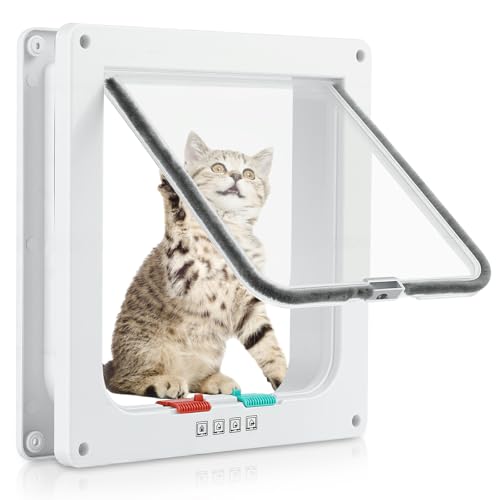
- Four adjustable access modes
- Weather-resistant seals and flap
- For medium cats and small dogs
Best For: Homes needing flexible indoor or outdoor pet access
Best Flush-Mount Design

- Fits cats up to 25 pounds
- Works with 1.25- to 1.75-inch doors
- Discreet flush-mount ABS design
Best For: Interior doors where a subtle, no-training passage is wanted
Best for Thin Panels

- Fits thin panels up to 0.78 inches
- Four lock modes for access control
- Includes templates and installation hardware
Best For: Windows, sliding glass doors, and thin wooden panels
Best No-Flap Pick – Meow Manor Indoor Cat Door
For cat doors for small spaces, the Purrfect Portal Meow Manor is an indoor-focused option that gives cats access to a litter box, food, or private room while the main door stays closed. Its no-flap design and screw-in installation make it especially practical for interior doors.
Best For: Cats up to 20 pounds needing quiet, private access through an interior door.
Pros:
- No-flap opening requires no training and avoids flap noise.
- Fits solid and hollow-core doors from 1.25 to 1.75 inches thick.
- Large 9.25-by-9-inch opening accommodates cats up to 20 pounds.
- Screw-based installation is more secure than tape mounting.
Cons:
- Designed for interior doors rather than exterior access.
- Pets weighing 20 pounds or more may need the XL version.
- The opening is not intended to keep dogs away without additional access control.
Choose this model when a quiet, open passage matters more than a locking flap. Its generous opening is useful for larger cats, while the compact indoor format suits rooms such as laundry areas and spaces containing litter boxes.
Best Flexible Installation – PetSafe Small Plastic Cat Door
Among cat doors for small spaces, this PetSafe model offers a compact flap opening for cats up to 15 pounds and works with several door materials. Its snap-on closing panel also gives you a simple way to limit access when needed.
Best For: Small cats or pets needing access through interior or exterior doors.
Pros:
- Designed for pets up to 15 pounds with a 5 1/8-by-8 1/4-inch flap opening.
- Compatible with wood, PVC, metal, and paneled doors from 1/16 to 2 inches thick.
- Snap-on closing panel helps control access and keep stray animals out.
- Includes a cutting template, hardware, and installation instructions.
Cons:
- The flap opening is smaller than options designed for larger cats.
- A flap may require more adjustment or acceptance from some cats than a no-flap passage.
- Its broad door compatibility may involve cutting through an exterior door for some installations.
This is a versatile choice if you want one small pet door that can work indoors or outdoors. The paintable frame can also be matched to your door, while the closing panel adds useful access control.
Best Roomy Passage – Large Indoor Cat Door
ikuso Indoor Cat Door, Cat Door for Interior Door, Pet Doors for Cat, Kitties and Kittens
Check Price On AmazonThis large indoor model is worth considering when cat doors for small spaces still need a comfortable passage. Its ABS construction, smooth edges, and screw-mounted design suit interior doors leading to laundry rooms, bedrooms, basements, or other dedicated pet areas.
Best For: Cats up to 25 pounds needing a roomy, durable interior passage.
Pros:
- Supports pets up to 25 pounds.
- 6.89-inch internal passage provides comfortable movement.
- Compatible with hollow and solid interior doors from 0.8 to 2.75 inches thick.
- Screw installation helps prevent gaps and falling off associated with tape mounting.
Cons:
- The larger design may take more wall or door space than a small flap door.
- The supplied notes do not specify a locking feature for controlling pet access.
- Its listed dimensions and large size may be excessive for very small cats.
Pick this door when passage width and broad door-thickness compatibility are priorities. It provides a sturdy, open route for larger cats, though shoppers wanting a closeable or tightly restricted opening may prefer a locking model.
Best Locking Option – PetSafe Two-Way Interior Cat Door
For cat doors for small spaces where access control matters, the PetSafe Interior Cat Door combines a compact flap with a sliding two-way lock. It is designed for interior wood, storm, PVC, paneled, or metal doors and can provide private access to food, litter boxes, closets, or laundry areas.
Best For: Cats up to 15 pounds needing controllable access through interior doors.
Pros:
- Sliding lock lets you choose when the pet area is accessible.
- Fits doors from 0.5 to 2 inches thick.
- Designed for cats and small dogs up to 15 pounds.
- Includes a cutting template, foam tape, screws, and installation instructions.
Cons:
- The flap opening and 15-pound limit are less suitable for larger cats.
- Installation requires cutting the door.
- Unlike a no-flap design, the flap may make access less seamless for some pets.
This is a strong fit for households that want to open or restrict a cat’s private area on demand. Its broad interior-door compatibility and sliding lock make it particularly useful for managing access to food or litter-box spaces.
Best Telescoping-Frame Pick – Perfect Pet Soft Flap Cat Door
Perfect Pet Soft Flap Cat Door with Telescoping Frame, Small, 5" x 7" Flap Size
Check Price On AmazonFor cat doors for small spaces, this compact Perfect Pet model offers a small 5-by-7-inch flap and a telescoping frame designed for doors between 1.25 and 2 inches thick. Its straightforward installation and lock-out slide make it a practical choice for standard doors.
Best For: Cats up to 25 pounds needing a compact door for a compatible interior or exterior door.
Pros:
- Telescoping frame fits doors from 1.25 to 2 inches thick.
- Small 5-by-7-inch flap suits space-conscious installations.
- Tamper-proof mounting system helps prevent removal from outside.
- Includes parts and instructions for a stated four-step installation.
Cons:
- Compatibility is limited to doors within the listed thickness range.
- The small flap may not suit larger pets.
- Its lock-out slide provides fewer access modes than a four-way lock.
This is a focused, compact option when the door thickness matches and a simple lock-out function is enough. The clear thermoplastic flap also lets pets see through the opening while closed.
Best Flexible-Access Pick – Four-Way Locking Cat Door
Among cat doors for small spaces, this medium model stands out for flexible access control in a white ABS frame. Its four-way locking system supports in-only, out-only, locked, or free-passage settings, while the magnetic flaps are designed to close quietly.
Best For: Homes needing adjustable access for cats, small dogs, or other small animals on doors or walls up to 2.17 inches thick.
Pros:
- Four-way lock provides more control than a basic open-or-closed flap.
- Soft magnetic flaps close gently and securely.
- Low step-over threshold is suitable for kittens and senior cats.
- Weather stripping brush helps block drafts, rain, and dust.
Cons:
- Its medium size may require more installation space than a small-flap model.
- Maximum compatible thickness is 2.17 inches.
- The supplied notes describe DIY installation for standard doors, walls, and windows but do not specify an installation time.
This is a versatile choice when controlling whether a pet enters, exits, or stays in is more important than choosing the smallest possible opening. Confirm the available installation area and wall or door thickness before buying.
Best Screen-and-Wall Pick – Hakuna Pets Essential Pet Door
For cat doors for small spaces that may need to work across different surfaces, the Hakuna Pets Essential is designed for screens, doors, walls, and glass. Its 6.7-by-9.45-inch flexible flap, magnetic closure, and included locking panel provide a practical setup for smaller pets.
Best For: Cats or dogs up to 11 pounds needing a door for screens, doors, walls, or glass.
Pros:
- Designed for screens, doors, walls, and glass.
- Flexible UV-resistant flap and ABS frame support durability.
- Strong magnets help keep the flap centered after use.
- Included locking panel offers open or locked access.
Cons:
- The supplied details list a 0.76-kilogram maximum weight capacity, approximately 11 pounds.
- The locking system offers two modes rather than four-way control.
- Specifications contain inconsistent thickness information: the product bullet lists up to 2.76 inches, while the details list a 9-millimeter maximum.
This model is especially appealing for installations beyond a conventional door, but shoppers should verify the thickness specifications with the manufacturer before cutting an opening. Its stated weight limit also makes it best suited to genuinely small pets.
Best Overall Control – 4-Way Locking Cat Door
For shoppers comparing cat doors for small spaces, this model offers flexible access control in a compact frame that can work on doors, windows, cupboards, or sliding glass panels. Its 7.1-by-6.7-inch clear passage is suited to medium-sized cats and small dogs.
Best For: Homes that need indoor or outdoor installation with adjustable pet access.
Pros:
- Four modes: in only, out only, both directions, or fully locked.
- Water-resistant construction, brush seals, and a transparent flap help reduce drafts, moisture, insects, and noise.
- Includes a template, guide, and installation hardware.
- Reinforced ABS plastic has a scratch-resistant finish.
Cons:
- The 9.8-by-9.3-inch exterior frame may require more wall or door clearance than slimmer designs.
- It is compatible with panels measuring 2.1 inches thick.
This is a practical pick when locking flexibility and weather resistance matter more than having the smallest possible outer frame.
Best Flush-Mount Design – No-Flap Indoor Cat Door
When choosing cat doors for small spaces inside the home, this flush-mount ABS design keeps a clean, discreet appearance on standard interior doors. It fits solid or hollow-core doors between 1.25 and 1.75 inches thick and accommodates cats up to 25 pounds.
Best For: Indoor rooms where a subtle white door-mounted cat passage is preferred.
Pros:
- No-flap design requires no training and is suitable for kittens through larger cats.
- Fits standard interior doors from 1.25 to 1.75 inches thick.
- Scratch-resistant ABS construction is designed for daily use and easy cleaning.
- Flush, modern white styling is intended to blend with interior decor.
Cons:
- Designed for standard interior doors rather than exterior, window, or sliding-panel installation.
- It does not offer the four-way flap control described for some other models.
Its main advantage is understated indoor integration, making it a strong choice for giving cats room-to-room access without a prominent flap.
Best for Thin Panels – Compact Magnetic Cat Door
For especially tight installations, this compact option is designed for windows, wooden doors, and sliding glass doors. Its 6.7-by-6.3-inch flap and thin 0.78-inch panel profile make it a useful choice among cat doors for small spaces.
Best For: Cats and small dogs using thin doors, windows, or sliding glass panels.
Pros:
- Four lock modes provide free in-and-out, fully locked, out-only, and in-only access.
- Thin panel design needs no tunnel part and supports compatible thicknesses from 0.1 to 0.78 inches.
- Sealing strips and a magnet help align the flap and reduce insects, odors, and air loss.
- Installation package includes instructions, templates, screws, caps, and double-sided tape.
Cons:
- The 6.7-by-6.3-inch flap is smaller than the passage on the larger models.
- Its thin-panel compatibility may not suit thicker standard doors.
This model stands out for narrow panel applications and straightforward access control, particularly where a traditional thick-door tunnel would be inconvenient.
How We Picked the Best Cat Doors for Small Spaces
We focused on doors designed for smaller cats and limited installation areas, then compared the features that matter most in daily use. The selection includes interior-door models, flap doors, no-flap openings, screen and wall-compatible options, and products with locking controls. We also considered stated pet-weight limits, opening dimensions, frame depth, installation flexibility, and whether the design appears suited to DIY fitting.
Because product dimensions and compatibility can vary, confirm the manufacturer’s measurements before cutting a door or wall. A cat’s weight is only one consideration: shoulder width, body length, and comfort using the opening matter too.
Quick Comparison
| Best For | Look For | Options in This Roundup |
|---|---|---|
| Interior rooms | Compact frame, simple installation, optional locking | Purrfect Portal, Indoor Cat Door, PetSafe Interior |
| Small cats and kittens | Lower weight rating and appropriately sized flap | PetSafe Small, Hakuna Pets, Perfect Pet Small |
| Flexible placement | Door, wall, or screen compatibility | Cat Door M, Hakuna Pets, Lessmon |
| No-flap access | Open passage and no swinging flap | Purrfect Portal, Large Interior No-Flap |
| Access control | Two-way or four-way locking system | PetSafe Interior, Four-Way Locking Flap |
Key Buying Factors for Cat Doors for Small Spaces
Measure the Cat and the Opening
Measure your cat’s widest point, usually around the chest or shoulders, and compare it with the usable flap or passage dimensions. Leave enough clearance for comfortable movement, but avoid choosing a substantially oversized door when space is limited.
Match the Installation Surface
Interior doors are usually the simplest option, while exterior doors and walls may require greater frame depth, special tools, or weatherproofing. Screen doors need a design that can distribute pressure without tearing the mesh. Check the maximum thickness before buying.
Choose the Right Access Control
A no-flap passage is convenient for rooms where privacy and containment are not concerns. For bedrooms, feeding areas, or homes with multiple pets, two-way or four-way locks provide more control. A flap can also help limit drafts and unwanted access.
Consider Training and Everyday Noise
Some cats immediately use a flap, while timid cats may prefer an open, no-flap passage. If the door will be used at night, consider how loudly the flap closes and whether the design may catch fur or tails.
Who Should Buy Which Cat Doors for Small Spaces?
Choose a compact interior model if you need access between rooms and want the least complicated installation. Pick a locking flap when you need to control when your cat enters or exits. A screen-compatible door is better for patios or screened windows, while a wall-rated model makes sense when there is no suitable door. For kittens or especially small cats, prioritize the actual passage size over a broad weight rating. If your cat is near the upper limit, select a larger opening only if the installation area and surrounding structure can safely accommodate it.