Choosing the right CO2 setup for a shrimp tank is a balance between plant growth and livestock safety. Shrimp are sensitive to rapid changes in dissolved CO2, pH, and oxygen, so controllable delivery matters as much as output.
This roundup compares compact disposable-cartridge kits, refillable and DIY generators, and liquid plant treatments to help you match your aquarium size, maintenance preferences, and experience level.
Best 10 Aquarium Co2 Systems for Shrimp Tanks Picks for 2026
Best Complete Kit

- Ready-to-run first cycle with included reaction materials
- SUS304 reactor with pressure gauge and safety relief
- Adjustable output with diffuser, tubing, and spare bubble counter
Best For: Refillable planted-tank CO2 setups
Best No-Pressurized Option
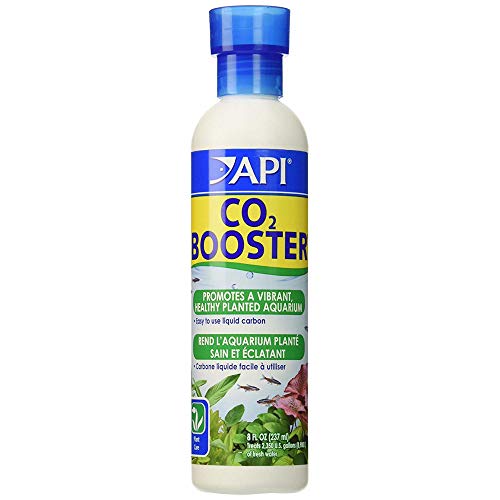
- Liquid carbon supplement for freshwater aquarium plants
- Can be used alone or with a CO2 system
- Daily-use 8 fl oz bottle designed not to alter pH
Best For: Simple plant-carbon supplementation
Best Large-Capacity Generator

- 5.5L reaction vessel for high-capacity CO2 generation
- Solenoid, needle valve, gauge, and dual safety features
- Includes setup accessories; raw materials sold separately
Best For: Larger DIY planted-tank installations
Best for Nano Tanks

- Compact 9.8-by-2-inch regulator for tight spaces
- Disposable 45g cartridge minimizes maintenance
- Includes two thread formats, bubble counter, and diffuser
Best For: Small aquariums and simple cartridge-based CO2
Best Compact Starter
Hagen FL Mini Pressurized 20g CO2 Kit
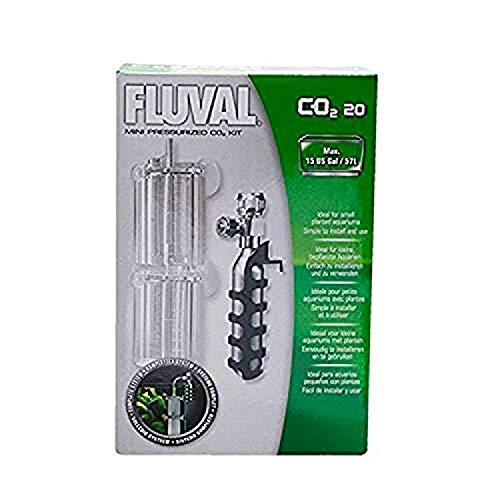
- For planted aquariums up to 15 gallons
- Includes regulator and ceramic diffuser
- Mounting bracket keeps the cartridge secure
Best For: Small planted shrimp aquariums
Best Desktop Design
FZONE 45g Desktop Aquarium CO2 System

- Slim system for desktop aquariums
- Includes 45g cartridge and bubble counter
- Supports 5/8-inch and 3/8-inch threads
Best For: Small indoor or desktop shrimp tanks
Best for Larger Small Tanks
Fluval Pressurized 1.6oz CO2 Kit

- Suitable for aquariums up to 30 gallons
- Simple installation-focused design
- Pressurized 1.6oz CO2 kit
Best For: Planted shrimp aquariums up to 30 gallons
Long-Run DIY Pick

- Thick SUS304 stainless-steel bottle
- Precision needle valve and bubble counter
- Includes 12V timed solenoid and safety valve
Best For: Larger planted shrimp tanks needing refillable, scheduled CO2 dosing
All-in-One Upgrade
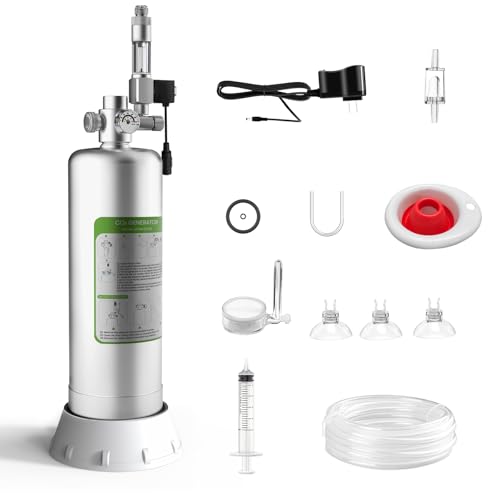
- Available in 2.5 L and 5 L capacities
- Integrated solenoid and bubble counter
- Includes a broad accessory package
Best For: Users wanting a compact, flexible DIY CO2 setup
Compact Safety Choice

- Compact 2 L SUS304 stainless-steel bottle
- Automatic pressure relief and 12V solenoid
- Includes regulator, needle valve, and bubble counter
Best For: Smaller planted shrimp tanks with limited equipment space
Best Complete Kit – 2L CO2 Generator System
For shoppers comparing aquarium co2 systems for shrimp tanks, this 2L generator offers a ready-to-run setup with adjustable output, monitoring hardware, and included starter materials. Its stainless-steel reactor, pressure gauge, needle valve, diffuser, and check valve create a relatively complete package for a planted aquarium.
Best For: Aquarists who want a refillable, reaction-based CO2 system with included materials and precise bubble-rate adjustment.
Pros:
- Includes pre-measured reaction materials for the first cycle.
- Two bubble counters provide a spare for replacement use.
- SUS304 stainless-steel reactor includes pressure relief above 35kg.
- Includes a needle valve, pressure gauge, diffuser, tubing, and check valve.
Cons:
- Requires adding water and replenishing reaction ingredients for continued use.
- The 6.16-pound reactor setup is less compact than a disposable-cartridge system.
This is a practical choice when steady, adjustable CO2 delivery and longer runtime matter more than the smallest possible footprint. The included first-cycle materials also make initial setup simpler.
Best No-Pressurized Option – API CO2 Booster Treatment
Among aquarium co2 systems for shrimp tanks, this liquid treatment is the simplest carbon-supplement option. It adds carbon in a form plants can absorb, can be used alone or alongside a CO2 system, and is designed for daily use without altering aquarium pH according to the supplied notes.
Best For: Aquarists seeking a straightforward liquid plant-carbon supplement rather than a pressurized generator and regulator setup.
Pros:
- Supplies carbon in a plant-absorbable liquid form.
- Can be used alone or with a separate CO2 system.
- Designed for daily use and supplied in an 8 fl oz bottle.
Cons:
- It is a liquid treatment, not a complete pressurized CO2 system.
- Daily application is required for ongoing use.
This bottle suits buyers who want the lowest-complexity way to supplement plant carbon. It is better viewed as an alternative or add-on treatment than as a replacement for equipment that provides adjustable gas injection.
Best Large-Capacity Generator – FZONE 5.5L CO2 Kit
For aquarium co2 systems for shrimp tanks that need a larger reaction vessel, the FZONE 5.5L generator combines a citric-acid and sodium-bicarbonate reaction with a regulator, bubble counter, diffuser, and all-in-one solenoid. It includes the setup accessories, but raw materials must be purchased separately.
Best For: Planted-aquarium owners who want a higher-capacity DIY generator with solenoid control and built-in safety features.
Pros:
- 5.5L generator uses a citric-acid and sodium-bicarbonate reaction.
- Includes a manual shut-off and automatic pressure-relief valve.
- All-in-one solenoid, needle valve, bubble counter, and pressure gauge support controlled delivery.
- Includes diffuser, check valve, tubing, funnel, syringe, seals, and power adapter.
Cons:
- Citric acid and sodium bicarbonate are not included.
- The larger generator may require more space than compact cartridge systems.
This model is appealing when capacity, maintenance access, and integrated control are priorities. Its external-thread design and fill port are intended to simplify cleaning and refilling, though the initial materials shopping is an extra step.
Best for Nano Tanks – Desktop 45g CO2 System
For compact aquarium co2 systems for shrimp tanks, this desktop regulator uses a 45g disposable cartridge and measures 9.8 by 2 inches. It includes a bubble counter, diffuser, tubing, and adapters for 5/8-inch and 3/8-inch threaded cylinders, making it suited to space-constrained nano aquariums.
Best For: Nano-aquarium owners who prefer a compact, low-maintenance disposable-cartridge setup.
Pros:
- Slim, lightweight design fits tight spaces.
- Includes a 45g cartridge and reports up to 50 days at 1 BPS for 8 hours daily in internal testing.
- Supports 5/8-inch and 3/8-inch threaded cylinders with the included adapter.
- Includes bubble counter, diffuser, tubing, suction cup, and sealing components.
Cons:
- Disposable cartridges require replacement rather than reaction-material refilling.
- Thread and seal compatibility should be checked before installation.
This is the most space-conscious option in the group and avoids mixing refill ingredients. Its cartridge format and included quick-connect hardware make it a convenient fit for smaller tanks where a full-size generator would be excessive.
Best Compact Starter – Hagen FL Mini Pressurized 20g CO2 Kit
For aquarists comparing aquarium co2 systems for shrimp tanks, the Hagen FL Mini is a compact, pressurized option designed for planted aquariums up to 15 gallons. Its regulator valve, ceramic diffuser, and included mounting bracket provide the basic components needed for a tidy installation.
Best For: Small planted shrimp aquariums up to 15 gallons where a compact, straightforward CO2 setup is preferred.
Pros:
- Designed for aquariums up to 15 gallons.
- Regulator valve helps control CO2 output.
- Includes a ceramic diffuser, cartridge bracket, hose, and disposable cartridge.
Cons:
- Limited to smaller aquariums.
- Uses a disposable 20g cartridge.
The included components make this a convenient entry-level choice for a small shrimp tank. Its main limitation is the compact cartridge size and 15-gallon coverage, so larger setups will need a different system.
Best Desktop Design – FZONE 45g Desktop Aquarium CO2 System
Among aquarium co2 systems for shrimp tanks, the FZONE Desktop Aquarium CO2 System stands out for its slim, portable format. It includes a 45g cartridge, bubble counter, quick-connect tubing feature, and adapters for 5/8-inch and 3/8-inch cartridge threads.
Best For: Desktop or small indoor aquariums where compact dimensions, simple setup, and disposable cartridges are priorities.
Pros:
- Compact design measures 9.84 inches tall and 1.96 inches wide.
- Compatible with 5/8-inch and 3/8-inch threaded cartridges.
- Includes a 45g cartridge and bubble counter.
- Quick-connect tubing is designed for fast installation.
Cons:
- Disposable cartridges require replacement rather than refilling.
- Designed primarily for small or desktop aquariums.
This system is a practical fit when cabinet space is limited and portability matters. The included adapters broaden cartridge compatibility, while the disposable design keeps setup simple but creates an ongoing replacement requirement.
Best for Larger Small Tanks – Fluval Pressurized 1.6oz CO2 Kit
The Fluval Pressurized 1.6oz CO2 Kit is a simple option for planted aquariums up to 30 gallons, making it relevant for shoppers evaluating aquarium co2 systems for shrimp tanks with more room than a nano setup. Its straightforward design is intended for easy installation.
Best For: Planted shrimp aquariums up to 30 gallons that need a basic pressurized CO2 kit.
Pros:
- Suitable for aquariums up to 30 gallons.
- Designed to be simple and easy to install.
- Uses a 1.6oz pressurized CO2 format.
Cons:
- The supplied notes do not list a regulator, bubble counter, or cartridge contents.
- Its simple design may offer fewer documented accessories than some competing kits.
Choose this Fluval kit when the 30-gallon coverage and uncomplicated installation match your aquarium plans. Because the supplied details do not specify all included components, confirm package contents before purchasing.
Long-Run DIY Pick – Fzone 2.5 L CO2 System
For aquarists comparing aquarium co2 systems for shrimp tanks, the Fzone 2.5 L kit emphasizes a durable stainless-steel bottle, adjustable output, and timed injection. It can produce CO2 for about one month at 1 bubble per second for eight hours daily when filled with 300–400 g of raw materials.
Best For: Planted shrimp tanks needing a refillable DIY system with a larger bottle and timed solenoid control.
Pros:
- Thick 1.5 mm SUS304 stainless-steel bottle designed for high pressure.
- Precision needle valve and bubble counter support fine output adjustment.
- Built-in check valve, safety valve, diffuser, tubing, and 12V solenoid are included.
- Solenoid can be connected to a timer for scheduled CO2 injection.
Cons:
- Citric acid and sodium bicarbonate powders must be purchased separately.
- The 2.5 L bottle may take more space than a compact setup requires.
Its durable bottle and complete control hardware make this a practical choice when longer operating intervals matter. As with any CO2 system for shrimp, careful adjustment is important, and this kit provides the needle valve and timer control to help manage dosing.
All-in-One Upgrade – MagTool 2.5–5 L DIY CO2 Kit
The MagTool is a flexible option among aquarium co2 systems for shrimp tanks, offering 2.5 L and 5 L bottle sizes with an integrated solenoid and bubble counter. Its external-thread bottle and included accessories are designed to simplify refilling and setup.
Best For: Shrimp-tank owners who want an organized DIY kit with a choice of capacity and fewer external connections.
Pros:
- Food-grade 304 stainless-steel bottle is described as 50% thicker in the upgraded model.
- Integrated solenoid and bubble counter create a compact setup with fewer connections.
- Manual shut-off and automatic pressure-relief valves provide two safety controls.
- Includes diffuser, check valve, tubing, suction cups, funnel, syringe, ceramic disc, and sealing rings.
Cons:
- Raw material for generating CO2 is not included.
- The 5 L version may be unnecessarily large for smaller shrimp aquariums.
The integrated design is the main attraction: it reduces visible components while retaining timed control and pressure protection. Choose the bottle size according to tank space and refill needs, and plan to source the required raw materials separately.
Compact Safety Choice – 2 L Aquarium CO2 Generator
This 2 L generator is a compact option for aquarium co2 systems for shrimp tanks, combining a SUS304 stainless-steel bottle with a regulator, precision needle valve, bubble counter, and 12V solenoid. Its timed valve and built-in check valve support controlled delivery while helping prevent backflow.
Best For: Smaller planted shrimp tanks needing a space-conscious DIY CO2 system with timer compatibility.
Pros:
- 1.2 mm SUS304 stainless-steel bottle is designed for durability and high-pressure use.
- Automatic pressure relief activates when pressure exceeds 30–35 kg.
- 12V solenoid, precision needle valve, bubble counter, filter, and accessories are included.
- Built-in check valve helps prevent aquarium water from flowing back into the tank.
Cons:
- Citric acid and sodium bicarbonate powders are not included.
- The solenoid is not waterproof and must be kept away from water.
- The diffuser should be soaked for 24 hours before use.
With its smaller 2 L bottle and complete regulation hardware, this kit suits aquarists who want a relatively compact setup. The included safety features are useful, but installation should follow the care notes, especially around diffuser preparation and keeping the motorized valve dry.
How We Picked the Best Aquarium Co2 Systems for Shrimp Tanks
We focused on systems that can deliver carbon consistently while giving aquarists practical control over injection rate. Our selection includes pressurized cartridge kits, larger generator systems, and liquid alternatives because shrimp tanks vary widely in size and planting density.
We considered regulator and needle-valve adjustability, solenoid operation, bubble-counter visibility, diffuser or reactor compatibility, container capacity, refill convenience, footprint, and suitability for nano aquariums. Safety features and the ability to make gradual adjustments were especially important for shrimp keepers.
Quick Comparison
| System type | Best for | Main advantage | Watch for |
|---|---|---|---|
| Disposable cartridge | Nano and small tanks | Compact, simple setup | Ongoing cartridge cost |
| DIY generator | Medium planted tanks | Longer runtime and refill flexibility | More setup and pressure management |
| Liquid carbon treatment | Low-tech tanks | No pressurized equipment | Not equivalent to injected CO2 |
Key Buying Factors for Aquarium Co2 Systems for Shrimp Tanks
Adjustability and Stability
Choose a regulator with a precise needle valve and use a bubble counter to make small changes. Avoid chasing a target bubble rate without testing the actual tank response. A drop checker, pH monitoring, and observation of shrimp behavior provide better feedback.
Tank Size and Output
Small shrimp aquariums generally need less CO2 than heavily planted community tanks. Oversized generators can make it harder to maintain gentle, stable dosing, while undersized disposable kits may require frequent replacement. Match the system’s capacity to the aquarium volume and plant load.
Solenoid and Timing
A solenoid connected to a timer can shut CO2 off when the aquarium lights are off. This helps reduce waste and limits overnight accumulation. If a kit lacks a solenoid, use extra caution with manual scheduling and verify that oxygenation remains adequate.
Diffusion, Circulation, and Safety
Efficient diffusion reduces the amount of gas needed, but strong circulation can spread CO2 unevenly if the outlet is poorly positioned. Secure tubing, inspect connections for leaks, and keep a surface ripple or other reliable gas exchange. Never increase injection rapidly in a shrimp tank.
Who Should Buy Which Aquarium Co2 Systems for Shrimp Tanks?
Choose a disposable-cartridge kit if you have a nano aquarium, want a compact installation, and prefer minimal assembly. These systems are convenient, though replacement cartridges can cost more over time.
Choose a DIY generator if you run a larger planted shrimp tank, want extended runtime, and are comfortable checking pressure, seals, and refill materials. Models with integrated solenoids and bubble counters offer more control.
Choose a liquid treatment if you want a simple low-tech option without pressurized gas. It may support certain plants, but it should not be treated as a direct substitute for stable injected CO2, especially in demanding planted layouts.
Whichever system you select, begin conservatively, monitor shrimp closely, and make only one adjustment at a time. Stable water parameters and adequate oxygen are more important than maximizing plant growth.