Choosing the right CO2 diffuser can make a noticeable difference in bubble consistency, gas dissolution, and aquarium maintenance. Stainless steel models are popular for planted tanks because they offer a durable alternative to fragile glass.
This roundup compares 10 options across sizes, ceramic designs, adjustable fittings, hook styles, and built-in features so you can match the diffuser to your aquarium and CO2 system.
Best 10 Stainless Steel Aquarium Co2 Diffusers Picks for 2026
High-Pressure Compact Pick
304 Stainless Steel CO2 Atomizer

- Rust-resistant 304 stainless steel body
- Built-in check valve helps prevent backflow
- 20 cm design for smaller and shallow tanks
Best For: Small planted tanks with high-pressure CO2 systems
Low-Pressure Fine-Mist Pick

- Fine-mist output from customized Korean ceramic
- Operates from 20 PSI
- Three sizes cover different tank volumes
Best For: Low-pressure planted aquarium CO2 systems
Adjustable-Length Pick
DIY Stainless Steel CO2 Atomizer
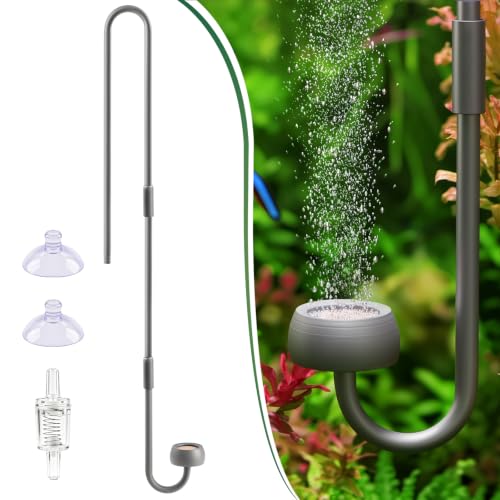
- Adjusts from 20 to 35 cm
- Removable ceramic disc for maintenance
- Integrated check valve helps stop backflow
Best For: Tanks requiring flexible diffuser placement
High-Pressure Long-Body Pick

- Durable 304 stainless steel construction
- Fine atomizing bubbles for CO2 diffusion
- John Guest fit for 4/6 mm tubing
Best For: High-pressure planted tanks with compatible CO2 tubing
Best Long-Reach Option
30 cm Stainless Steel CO2 Atomizer
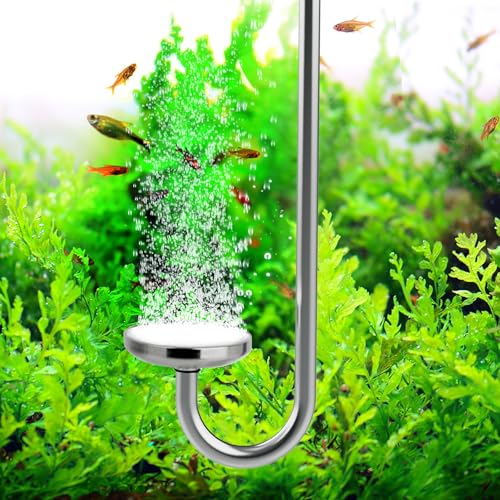
- Durable stainless steel body
- Detachable ceramic plate
- Long 30 cm curved design
Best For: Planted tanks needing extended diffuser reach
Best High-Pressure Pick
SUS 304 CO2 Diffuser with Widened Hook

- Integrated anti-backflow check valve
- Fits rims up to 3.9 cm
- Designed for super-fine bubbles
Best For: High-pressure systems with wider aquarium rims
Best Compact Option
25 cm Stainless Steel CO2 Atomizer
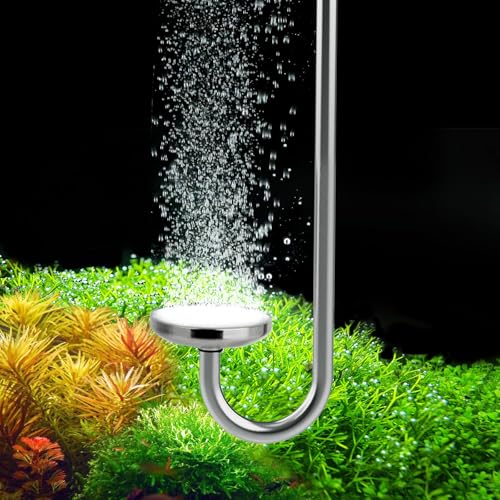
- Compact 25 cm curved design
- Detachable ceramic plate
- Fine, uniform bubble output
Best For: Smaller planted tanks with limited diffuser space
Wide-Rim Pick
DCW300-30 Stainless Steel CO2 Diffuser

- Widened 3.9 cm hook for rimmed tanks
- Integrated check valve and John Guest fitting
- Super-fine bubbles; requires high pressure
Best For: Rimmed aquariums with pressurized CO2 systems
Best Heavy-Duty Pick
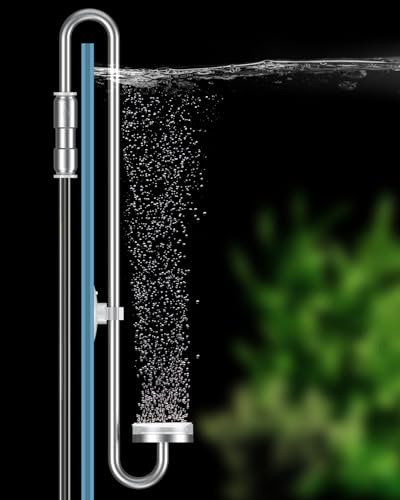
- 9.8-inch body for taller aquariums
- Built-in check valve and push-fit connector
- Replaceable ceramic disc; requires 43+ PSI
Best For: Taller planted tanks with pressurized CO2
Replaceable-Disc Option
DC300-40 Aquarium CO2 Atomizer
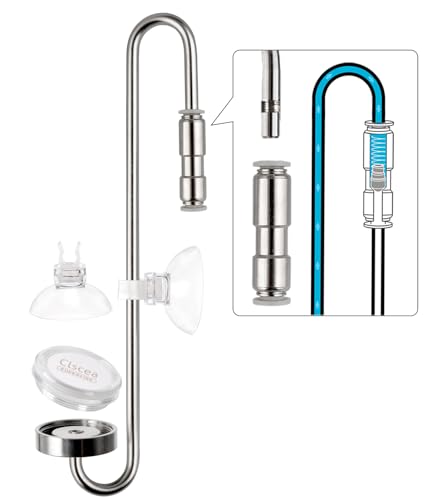
- Replaceable, crack-resistant ceramic disc
- Fine mist and integrated check valve
- 304 stainless steel; needs 43+ PSI
Best For: Pressurized planted tanks needing serviceable parts
High-Pressure Compact Pick – 304 Stainless Steel CO2 Atomizer
This compact option stands out among stainless steel aquarium CO2 diffusers for its durable 304 stainless steel body, integrated check valve, and super-fine atomizing bubbles. Its 42 PSI minimum and recommended 50–70 PSI operating range make it best suited to high-pressure CO2 systems.
Best For: Small, medium, and shallow planted tanks using a high-pressure CO2 setup.
Pros:
- 304 stainless steel body is designed to resist rust and damage.
- Built-in check valve helps prevent backflow when the gas is shut off.
- Removable ceramic disc produces fine bubbles and can be cleaned or replaced.
- Compact 20 cm length suits smaller aquarium layouts.
Cons:
- Requires at least 42 PSI to produce bubbles, with 50–70 PSI recommended.
- The stainless steel body should not be soaked in algicide during cleaning.
This is a practical choice when you want durable construction and efficient atomization in a smaller tank, provided your regulator can meet its high-pressure requirements.
Low-Pressure Fine-Mist Pick – Fzone Neo CO2 Diffuser
The Fzone Neo is a useful alternative for shoppers comparing stainless steel aquarium CO2 diffusers with lower-pressure options. Its customized South Korean ceramic produces a fine mist, while the clear acrylic construction offers a lightweight, visible design that works with standard and DIY CO2 systems.
Best For: Planted aquariums that need fine CO2 diffusion at relatively low pressure.
Pros:
- Microporous ceramic is designed to create very fine, thorough bubbles.
- Requires only 20 PSI, with pressure above 25 PSI recommended.
- Clear acrylic body is sturdy and makes the diffuser easy to monitor.
- Available in sizes for tanks up to 13 gallons, 13–32 gallons, and 32 gallons or more.
Cons:
- Its ceramic disc is permanently adhered to the acrylic bubble counter.
- This model is not made from stainless steel, unlike the other featured options.
Choose this model if low operating pressure and a fine mist matter more to you than a stainless steel body. Selecting the size according to tank volume and bubble rate is important.
Adjustable-Length Pick – DIY Stainless Steel CO2 Atomizer
This adjustable model gives stainless steel aquarium CO2 diffusers extra installation flexibility. Included connectors let you set the length from 20 to 35 cm, while the removable ceramic disc and integrated check valve support easier maintenance and safer operation.
Best For: Aquarists who need a customizable diffuser length for tanks of different sizes.
Pros:
- Stainless steel construction resists bending, warping, and breakage.
- Adjustable 20–35 cm length helps accommodate different tank layouts.
- Removable ceramic disc is easier to clean and replace.
- Built-in check valve helps prevent water backflow.
Cons:
- Exact dimensions should be checked before purchase to ensure a proper fit.
- The manufacturer recommends soaking the diffuser in aquarium water for 24 hours before first use.
- Initial large bubbles around the edges may appear before operation settles.
This is a strong fit for flexible installations, especially when a fixed-length diffuser would be awkward. Allowing for the recommended pre-soak can help prepare it for use.
High-Pressure Long-Body Pick – SUS 304 CO2 Diffuser
For larger layouts, this SUS 304 model combines a longer DC300-25 format with fine atomizing bubbles and a John Guest-style connection. Like other high-pressure stainless steel aquarium CO2 diffusers, it needs at least 42 PSI, with 50–70 PSI recommended for optimal performance.
Best For: Planted tanks needing a durable, high-pressure diffuser with convenient tubing connections.
Pros:
- 304 stainless steel construction is durable and rust resistant.
- Integrated check valve helps prevent backflow after gas shutoff.
- Produces super-fine bubbles intended to improve CO2 absorption efficiency.
- John Guest fit design works with 4/6 mm, or 3/16-inch inner-diameter, CO2 tubing.
Cons:
- Needs at least 42 PSI to activate, with 50–70 PSI recommended.
- The diffuser disc must be removed and cleaned separately; the steel body should not be soaked in algicide.
This model makes sense when you already have a high-pressure regulator and value straightforward tubing installation. Its stainless steel body and fine output are well suited to planted aquarium systems.
Best Long-Reach Option – 30 cm Stainless Steel CO2 Atomizer
For planted aquariums needing a longer diffuser, this stainless steel aquarium CO2 diffuser combines a curved hanging design with a detachable ceramic plate. Its 30 cm length suits tanks where you want the outlet positioned deeper or farther from the rim.
Best For: Planted tanks that need a durable, long-reach diffuser with fine, uniform bubbles.
Pros:
- Stainless steel construction resists bending, rust, and corrosion.
- Detachable ceramic plate simplifies cleaning and replacement.
- Conical inlet is designed for convenient air-tube connection.
- Includes a three-year quality guarantee.
Cons:
- The 30 cm length may be too long for smaller aquariums.
- Initial use may produce larger bubbles until the diffuser is soaked.
- The product should be soaked for about 24 hours for better performance.
This is a practical choice when reach and durability matter most. Check the diffuser dimensions against your aquarium before ordering.
Best High-Pressure Pick – SUS 304 CO2 Diffuser with Widened Hook
This stainless steel aquarium CO2 diffuser is designed for high-pressure systems and produces super-fine bubbles for efficient CO2 atomization. Its widened hook accommodates aquarium rims up to 3.9 cm, while the integrated check valve helps prevent backflow when the gas is shut off.
Best For: Aquariums using a high-pressure CO2 setup and tanks with wider rims.
Pros:
- 304 stainless steel construction is durable and rust resistant.
- Built-in check valve helps prevent backflow after shutoff.
- Widened hook fits rims up to 3.9 cm.
- John Guest-style fitting works with 4/6 mm CO2 tubing.
Cons:
- Requires at least 42 PSI to produce bubbles, with 50–70 PSI recommended.
- Cleaning requires removing and soaking only the diffuser disc.
- Not suited to low-pressure CO2 systems that cannot reach the required pressure.
Choose this model for its rim compatibility and integrated check valve, but confirm your regulator can meet its pressure requirements before buying.
Best Compact Option – 25 cm Stainless Steel CO2 Atomizer
For aquariums that need a shorter diffuser, this 25 cm stainless steel aquarium CO2 diffuser offers a curved hanging format and a detachable ceramic plate. It is built to deliver fine, uniform bubbles while remaining more resistant to bending, rust, and corrosion than a glass diffuser.
Best For: Smaller or moderately sized planted tanks needing a shorter hanging diffuser.
Pros:
- 25 cm length provides a more compact alternative to longer models.
- Stainless steel construction is designed for durability and corrosion resistance.
- Detachable ceramic plate supports easier cleaning and replacement.
- Includes a three-year quality guarantee.
Cons:
- May not provide enough reach for deeper or larger tanks.
- Large bubbles can appear at the edge during initial use.
- About 24 hours of soaking is recommended before use.
This model balances a shorter profile with the durability of stainless steel. Verify the 25 cm size and connection dimensions before installation.
Wide-Rim Pick – DCW300-30 Stainless Steel CO2 Diffuser
The DCW300-30 is a practical choice among stainless steel aquarium co2 diffusers when you need a secure fit on a rimmed tank. Its widened hook, integrated check valve, and fine-bubble output make it suited to pressurized planted-aquarium setups.
Best For: Rimmed aquariums using a high-pressure CO2 system and 4/6 mm tubing.
Pros:
- Widened 3.9 cm hook accommodates a broader range of aquarium rims.
- 304 stainless steel construction is durable and rust resistant.
- Integrated check valve helps prevent backflow after gas shutoff.
- Produces super-fine bubbles for improved CO2 absorption.
Cons:
- Requires at least 42 PSI, with 50–70 PSI recommended for optimal operation.
- Cleaning requires removing and soaking only the diffuser disc, not the stainless steel body.
Choose this model if mounting flexibility is a priority. It offers useful connection and backflow-prevention features, but it is intended for pressurized systems rather than low-pressure generators.
Best Heavy-Duty Pick – Pawfly 9.8-Inch CO2 Diffuser
The Pawfly diffuser is a long stainless steel option for taller planted tanks. As stainless steel aquarium co2 diffusers go, it combines a corrosion-resistant body, built-in check valve, and replaceable ceramic disc with a push-fit connector for straightforward tubing installation.
Best For: Aquariums at least 13.8 inches high that use a pressurized CO2 generator.
Pros:
- 9.8-inch length suits taller aquariums.
- 304 stainless steel resists bending, breakage, and corrosion.
- Built-in check valve helps prevent back siphoning.
- Improved, replaceable ceramic disc creates fine and dense bubbles.
Cons:
- Needs at least 43 PSI and is not suitable for low-pressure DIY bottle generators.
- Requires a 24-hour soak before first use.
- Large bubbles may appear initially before finer bubbles develop.
This is a sensible pick when diffuser reach matters and you want the added protection of an integrated check valve. Allow time for the initial soak and break-in period before judging bubble quality.
Replaceable-Disc Option – DC300-40 Aquarium CO2 Atomizer
The DC300-40 is designed for aquarists who want a durable stainless steel atomizer with a replaceable ceramic disc. It is one of the stainless steel aquarium co2 diffusers built for pressurized systems, with a quick-plug connection and integrated check valve.
Best For: Planted aquariums needing fine mist output and a replaceable diffuser disc.
Pros:
- 304 stainless steel body offers high bending resistance and corrosion resistance.
- Injection-molded ceramic plate produces fine, dense mist with good CO2 dissolution.
- Ceramic disc can be cleaned or replaced.
- Built-in check valve and quick-plug connection simplify installation.
Cons:
- Requires at least 43 PSI for optimal operation.
- Designed for pressurized CO2 systems, not low-pressure setups.
- Alcohol should not be used to clean the disc because it can damage acrylic components.
This model stands out for its serviceable ceramic disc and stable atomization design. It is a strong fit for pressurized planted tanks, especially if you prefer replacing the disc rather than replacing the entire diffuser.
How We Picked the Best Stainless Steel Aquarium Co2 Diffusers
We focused on the features that affect everyday planted-tank performance: stainless steel construction, ceramic membrane design, diffuser diameter, hose compatibility, mounting stability, and suitability for different aquarium sizes. We also included options with useful extras such as adjustable lengths, widened hooks, suction cups, and built-in check valves.
Because product specifications and aquarium layouts vary, treat the listed size as a starting point rather than a guarantee of compatibility. Confirm tubing requirements, connector dimensions, and recommended operating pressure before ordering.
Quick Comparison
| Best For | Look For | Useful Feature |
|---|---|---|
| Rimless tanks | Compact DC300-style diffuser | Low-profile placement |
| Large or deeper aquariums | 25–40 mm diffuser or wider hook | Greater bubble coverage |
| Flexible installations | Adjustable 20–35 cm design | Custom positioning |
| New CO2 users | Built-in check valve and suction cups | Simpler setup |
Key Buying Factors for Stainless Steel Aquarium Co2 Diffusers
Tank Size and Diffuser Diameter
Match the diffuser’s output and placement to your aquarium volume. Smaller models suit nano and compact planted tanks, while larger DC300-30, DC300-40, or widened-hook designs may be easier to position in larger aquariums. More surface area does not automatically mean better performance if the diffuser is oversized for your system.
Ceramic Membrane and Bubble Quality
A fine ceramic membrane should produce small, even bubbles when supplied with adequate pressure. Fine bubbles generally provide more contact time with the water, but the membrane must remain clean. A diffuser that produces uneven or large bubbles may need soaking or membrane replacement.
Material, Mounting, and Hose Compatibility
SUS 304 stainless steel is a practical choice for corrosion resistance and long-term durability. Check whether the model uses a standard CO2 tube connection and whether its hook, suction cups, or adjustable body will fit your tank rim. Rimless aquariums may need a slim, stable mounting design.
Pressure, Maintenance, and Safety
Verify that your regulator can supply the diffuser’s required working pressure. Clean the ceramic section periodically to remove algae and mineral buildup, and inspect all connections for leaks. A check valve can help prevent aquarium water from traveling backward into the CO2 line.
Who Should Buy Which Stainless Steel Aquarium Co2 Diffusers?
Choose a compact rimless-tank model if you prioritize discreet placement. Pick a widened-hook or larger diffuser for deeper tanks and easier positioning. An adjustable-length design is useful when the aquarium’s depth or hardscape makes fixed mounting inconvenient. If you want the simplest installation, the Pawfly model with suction cups and a built-in check valve is worth considering. For general planted-tank use, select a SUS 304 model with a compatible ceramic membrane and a size appropriate for your aquarium rather than choosing solely by appearance.