Adding CO2 efficiently can make a major difference in a planted aquarium, but the diffuser you choose affects bubble size, distribution, visibility, and daily maintenance. Glass models are popular for their clean appearance and precise ceramic atomization.
Our selection includes compact diffusers for nano tanks, larger models for high-volume aquariums, spiral and multi-spiro designs, plus options with built-in check valves or bubble-counting features. Use the guide below to match each style to your setup.
Best 10 Glass Aquarium Co2 Diffusers Picks for 2026
Fine-Mist Starter Pick

- Fine-mist ceramic diffusion
- For tanks up to 13 gallons
- Includes suction cup
Best For: Small planted aquariums using 1–2 bubbles per second
Large-Tank U-Tube Choice

- Efficient ceramic atomization
- Includes U-shaped tube
- Designed for 50–75 gallon tanks
Best For: Larger planted tanks needing a flow-conscious connection
Balanced Mid-Size Pick

- Fine-mist ceramic output
- Sized for 13–32 gallon tanks
- Works with DIY systems
Best For: Medium planted aquariums using 2–3 bubbles per second
Extra-Large Display Pick
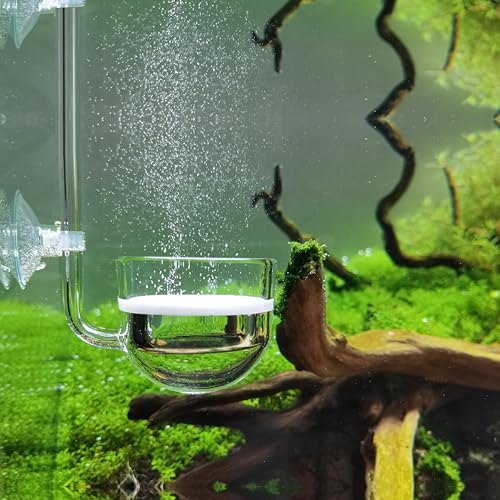
- For tanks beyond 75 gallons
- Ceramic-membrane atomization
- Modern glass styling
Best For: Very large planted aquariums where appearance matters
Fine-Mist Performance Pick

- Customized ceramic creates a fine CO2 mist.
- Clear acrylic body is sturdy during maintenance.
- Three sizes cover different tank volumes.
Best For: Medium to large planted aquariums needing fine diffusion
Glass Reactor Pick
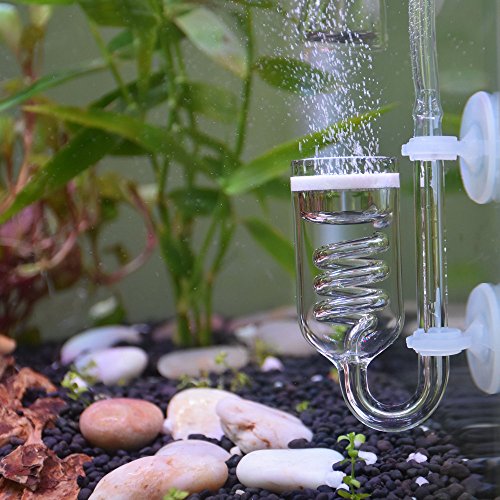
- Fine ceramic pores produce slow-rising bubbles.
- Transparent glass has a discreet aquarium appearance.
- Fits pressurized 15–50 gallon tanks.
Best For: Mid-sized planted tanks using standard tubing
Shatter-Resistant Small-Tank Pick

- Fine bubbles support even CO2 distribution.
- Built-in check valve helps prevent backflow.
- Bubble counter and installation accessories included.
Best For: Planted aquariums up to 13 gallons
Large-Tank Glass Reactor

- Fine bubbles from a ceramic diffuser disc
- Designed for 50–75 gallon pressurized tanks
- Includes U-tube and two suction cups
Best For: Larger planted aquariums using pressurized CO2
Spiral Glass Atomizer

- Clear glass design for planted aquariums
- Smooth cylinder helps slow water flow
- Includes two suction cups
Best For: Compact planted and tropical-fish tanks
Heavy-Duty Stainless Steel
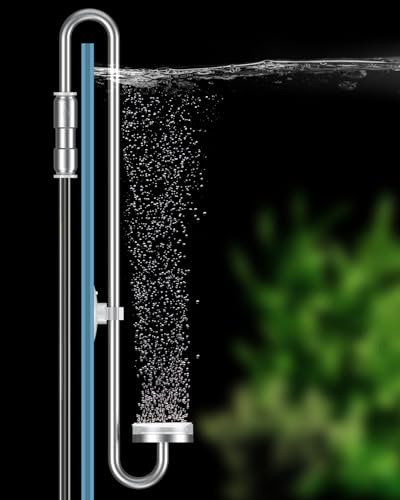
- 304 stainless steel resists breakage and corrosion
- Built-in check valve helps prevent back siphoning
- Fine mist from a replaceable ceramic disc
Best For: Tall aquariums with pressurized CO2 systems
Fine-Mist Starter Pick – Fzone Neo CO2 Diffuser S-13mm
If you are comparing glass aquarium co2 diffusers for a smaller planted tank, the Fzone Neo S-13mm focuses on fine bubble output, straightforward placement, and low operating pressure. Its South Korean ceramic is designed to produce a fine mist, while the clear acrylic construction offers a sturdy alternative for routine maintenance.
Best For: Aquariums up to 13 gallons using roughly 1–2 bubbles per second.
Pros:
- Microporous ceramic produces fine CO2 bubbles for thorough diffusion.
- Designed to work with CO2 systems, including DIY setups, at 20 PSI minimum.
- Includes a suction cup for secure corner placement.
- Clear acrylic body is lightweight and described as resistant to breaking during maintenance.
Cons:
- The S model is intended for smaller tanks and lower bubble rates.
- The manufacturer recommends pressure above 25 PSI, which may exceed the stated minimum.
Choose this version when tank size and CO2 demand fit its S rating. Its main advantage is a fine mist in a compact, easy-to-position design.
Large-Tank U-Tube Choice – Pollen Glass CO2 Diffuser
For larger planted setups, this Pollen model is one of the glass aquarium co2 diffusers designed around efficient ceramic-membrane atomization and a practical U-shaped connection. The included tube is intended to help avoid CO2-flow blockage while keeping the diffuser secured inside the tank.
Best For: Tanks in the approximately 50–75 US gallon range.
Pros:
- Ceramic membrane provides efficient CO2 atomization.
- U-shaped connecting tube is designed to help avoid blocked flow.
- Package includes two suction cups for installation support.
- Supports a sufficient CO2 supply for plant growth and health.
Cons:
- The supplied size is specifically intended for larger tanks.
- The notes describe the diameter as 2 inches and the intended range as 50–75 gallons, so it may not suit smaller aquariums.
This is a practical choice when you want a large diffuser paired with a U-shaped connection. Confirm your tubing and tank size before buying, since the listed format targets bigger planted aquariums.
Balanced Mid-Size Pick – Fzone Neo CO2 Diffuser M-17mm
The Fzone Neo M-17mm is a mid-size option among glass aquarium co2 diffusers, combining a fine-mist ceramic disk with a clear acrylic body and bubble-counter design. It is sized for moderate planted tanks and can work with standard or DIY CO2 systems.
Best For: Aquariums from about 13 to 32 gallons using 2–3 bubbles per second.
Pros:
- Customized South Korean ceramic is designed for very fine bubble diffusion.
- Permanent ceramic-to-acrylic fit is intended to hold under high pressure.
- Clear body and included suction cup support convenient placement and monitoring.
- Works with all CO2 systems, including DIY setups, according to the supplied notes.
Cons:
- Its M rating is not intended for tanks below or substantially above the listed 13–32 gallon range.
- The recommended operating pressure is higher than the stated 20 PSI minimum.
For a medium planted aquarium, this model offers a useful balance of fine diffusion, compact installation, and visible construction. Match the diffuser to the aquarium volume and bubble rate for the intended performance.
Extra-Large Display Pick – Music Glass CO2 Diffuser
JARDLI Music Glass CO2 Diffuser for Aquarium Plant (2'' for Tank Beyond 75 gallons)
Check Price On AmazonDesigned for very large aquariums, the Music Glass model combines a visually appealing glass form with ceramic-membrane CO2 atomization. Among glass aquarium co2 diffusers, it stands out for its modern styling and included suction cups, while its stated capacity targets tanks beyond 75 gallons.
Best For: Planted aquariums larger than 75 gallons.
Pros:
- Efficient CO2 atomization through a ceramic membrane.
- Glass construction has a visually appealing, modern style.
- Designed for tanks beyond 75 gallons.
- Includes two suction cups for installation.
Cons:
- The 2-inch size is intended for extra-large tanks and may be excessive for smaller setups.
- Glass construction requires careful handling during aquarium maintenance.
This diffuser is best suited to aquascapers who need a large-format unit and value appearance as well as CO2 atomization. Its stated tank range makes size compatibility the key buying consideration.
Fine-Mist Performance Pick – Fzone Neo CO2 Diffuser
For planted-tank keepers comparing glass aquarium co2 diffusers, the Fzone Neo emphasizes very fine bubble diffusion through a customized South Korean ceramic disk. Its clear acrylic body is designed to stay visible and sturdy during routine maintenance.
Best For: Medium to large planted aquariums needing high CO2 saturation and adjustable sizing.
Pros:
- Microporous ceramic produces a fine CO2 mist for thorough diffusion.
- Clear acrylic construction is less prone to breakage than glass during maintenance.
- Includes a suction cup and comes in sizes for tanks up to 13 gallons, 13–32 gallons, or 32 gallons and more.
- Works with pressurized and DIY CO2 systems, with operation beginning at 20 PSI.
Cons:
- The large model is intended for tanks of 32 gallons or more and higher bubble rates.
- The notes recommend pressure above 25 PSI, which may not suit every low-pressure setup.
The Neo is a practical choice when bubble fineness, visible operation, and impact resistance matter more than a traditional glass appearance. Select the size that matches your tank volume and CO2 output.
Glass Reactor Pick – 3 Spiro Glass CO2 Diffuser
Among glass aquarium co2 diffusers, this 3 Spiro model combines a transparent glass design with a ceramic disk intended to produce slow-rising, fine bubbles. Its cylindrical shape is designed to help dissolve CO2 efficiently in compatible planted aquariums.
Best For: Pressurized CO2 systems serving aquariums from 15 to 50 gallons with standard 6 mm or 1/4-inch tubing.
Pros:
- Atomic ceramic pores produce fine bubbles for gradual diffusion.
- Transparent glass blends discreetly into an aquarium layout.
- Includes a suction cup for secure, adjustable placement.
- Supports pressurized tanks from 15 to 50 gallons and requires standard tubing.
Cons:
- Glass is fragile and may break during shipping or maintenance.
- It should be soaked for more than 48 hours before first use to help prevent rupturing.
- The ceramic surface should not be brushed or wiped, and dirty disks may require special cleaner or replacement.
This diffuser suits aquarists who prefer the clean look of glass and need coverage for a mid-sized tank. Its required soaking period and delicate cleaning instructions make careful setup and handling important.
Shatter-Resistant Small-Tank Pick – FZONE Acrylic CO2 Diffuser
This FZONE model is an alternative to glass aquarium co2 diffusers for smaller planted tanks. Its micro-pore ceramic disk creates evenly dispersed bubbles, while the acrylic body provides glass-like clarity with greater resistance to shattering.
Best For: Aquariums up to 13 gallons that need a compact diffuser with built-in backflow protection.
Pros:
- Micro-pore ceramic produces fine, evenly dispersed CO2 bubbles.
- Built-in check valve helps prevent reverse water flow into the CO2 system.
- The chamber doubles as a bubble counter when filled with water.
- Includes a syringe, suction cup, and tubing for installation.
Cons:
- The S-19mm size is intended for tanks up to 13 gallons rather than larger aquariums.
- Acrylic has glass-like clarity but is not a true glass diffuser.
For a compact setup, this diffuser adds useful monitoring and backflow protection without the fragility associated with glass. Its small-tank sizing makes it best suited to nano and other modestly sized planted aquariums.
Large-Tank Glass Reactor – Flat-Bottomed CO2 Diffuser
If you need glass aquarium co2 diffusers for a larger planted setup, this flat-bottomed reactor is designed for pressurized tanks from 50 to 75 US gallons. Its ceramic disc produces fine bubbles, while the cylindrical glass body helps slow water flow for more effective CO2 dissolution.
Best For: Pressurized 50–75 gallon aquariums needing a discreet, firmly mounted glass diffuser.
Pros:
- Fine ceramic-disc bubbles rise slowly to support efficient CO2 diffusion.
- U-shaped connecting tube is designed to help avoid CO2-flow blockage.
- Includes a suction cup and two cups for convenient, adjustable installation.
- Transparent glass blends unobtrusively into an aquarium layout.
Cons:
- Its stated compatibility is limited to pressurized tanks between 50 and 75 gallons.
- Glass construction requires more care than a metal alternative.
This is a practical choice when tank size and low-visibility placement matter. The included tubing and suction cups make setup straightforward, while the flat-bottomed, 2-inch design is tailored to larger aquariums.
Spiral Glass Atomizer – Aquarium CO2 Diffuser
This spiral glass option is one of the more compact glass aquarium co2 diffusers for planted tanks. Its smooth cylindrical form is intended to slow water movement around the diffuser, helping CO2 dissolve while supplying aquatic plants with carbon dioxide.
Best For: Aquarium keepers who want a compact glass diffuser with suction-cup mounting for planted or tropical-fish tanks.
Pros:
- Glass construction offers a clear, unobtrusive appearance.
- Cylindrical, smooth-line design helps slow water speed around the diffuser.
- Includes two suction cups for aquarium installation.
- Designed to create rich CO2 for aquatic plants.
Cons:
- Must be soaked for more than 48 hours before first use.
- The fragile glass requires careful handling, and replacement may be needed if damaged in transit.
- It is intended for carbon dioxide only.
The extended initial soaking requirement makes preparation important, but this diffuser offers a simple glass design for planted aquariums. Softening the tubing end with boiling water before insertion can also make installation easier.
Heavy-Duty Stainless Steel – Pawfly CO2 Diffuser
Although many glass aquarium co2 diffusers are popular for their discreet appearance, this Pawfly model uses corrosion-resistant 304 stainless steel for greater resistance to bending and breakage. Its improved ceramic disc produces a fine mist and is replaceable, while a built-in check valve helps prevent back siphoning.
Best For: Taller aquariums using a pressurized CO2 system and needing a durable diffuser with secure tubing connections.
Pros:
- 304 stainless steel resists bending, breakage, and corrosion.
- Built-in check valve helps protect CO2 equipment from back siphoning.
- Push-fit connector supports 3/16-inch ID CO2 tubing.
- Replaceable ceramic disc creates fine, dense bubbles after conditioning.
Cons:
- Requires at least 43 psi working pressure and is not suitable for low-pressure DIY bottle generators.
- At 9.8 inches long, it requires an aquarium at least 13.8 inches high.
- Needs a 24-hour soak before first use, and fine bubbles may take several days to form.
This is the strongest fit for users who prioritize durability and equipment protection over a glass appearance. Confirm the aquarium height and CO2 system pressure before buying, then allow time for the ceramic disc to condition.
How We Picked the Best Glass Aquarium Co2 Diffusers
We evaluated these Glass Aquarium Co2 Diffusers based on the features that matter most in real planted-tank setups: rated aquarium size, connector dimensions, ceramic membrane design, bubble distribution, installation hardware, and ease of cleaning. We also considered whether each diffuser includes practical extras such as a check valve, suction cups, a bubble counter, or a shaped connecting tube.
Because diffuser performance depends on water depth, CO2 pressure, tubing size, and water quality, product specifications should be treated as a starting point rather than a guarantee. A properly sized model with consistent maintenance will usually outperform an oversized or neglected diffuser.
Quick Comparison
| Best For | Look For | Why It Matters |
|---|---|---|
| Nano and small tanks | Compact ceramic diffuser and smaller connector | Fits limited space and avoids excessive hardware inside the aquarium |
| Medium planted tanks | Mid-size ceramic surface and stable suction cups | Balances bubble output with manageable installation |
| Large aquariums | Large flat-bottomed, spiral, or multi-spiro design | Supports broader CO2 distribution and higher output |
| Simple installation | U-shaped tube or built-in check valve | Reduces tubing clutter and helps protect equipment from backflow |
Key Buying Factors for Glass Aquarium Co2 Diffusers
Tank Size and CO2 Output
Choose a diffuser designed for your aquarium volume, but also consider planting density and water circulation. Heavily planted or densely scaped tanks may need a larger ceramic surface or a design that spreads bubbles more effectively. An undersized diffuser can struggle to deliver the desired amount of CO2, while an oversized model may be difficult to position discreetly.
Ceramic Membrane and Bubble Size
The ceramic disk or atomizing surface determines how finely CO2 is released. Finer bubbles generally stay suspended longer and can dissolve more efficiently, provided circulation is strong enough to distribute them. Ceramic membranes gradually collect algae and mineral deposits, so select a design that can be removed or cleaned without damaging the glass.
Glass Shape, Tubing, and Installation
Clear glass blends into aquascapes, but it is more fragile than acrylic or stainless steel. Check the connector diameter before ordering, especially when choosing among small, medium, and large FZONE-style models. U-shaped tubes can make routing cleaner, while suction cups help keep the diffuser at a consistent depth. Built-in check valves add convenience and reduce the risk of aquarium water traveling back toward the regulator.
Maintenance and Safety
Inspect the diffuser regularly for clogged pores, loose tubing, or damaged glass. Cleaning the ceramic element with an appropriate aquarium-safe method can restore bubble output, but avoid forcefully scraping the membrane. Position the diffuser where bubbles can circulate through the tank without directly stressing fish or delicate plants.
Who Should Buy Which Glass Aquarium Co2 Diffusers?
Choose a compact S-size diffuser for a nano or smaller planted aquarium with modest CO2 demand. Medium models suit many standard community tanks, while L-size, flat-bottomed, spiral, and multi-spiro designs are better choices for larger aquariums or heavily planted layouts. If you want fewer separate components, consider a model with a built-in check valve, bubble counter, or included suction cups. For a clean, integrated installation, a U-shaped connecting tube can be especially useful. Regardless of style, match the connector to your tubing, verify the recommended tank range, and monitor fish behavior when adjusting CO2 injection.