Choosing the right CO2 diffuser can make carbon supplementation more consistent, efficient, and easier to manage in a planted aquarium. The options in this roundup cover ceramic, acrylic, glass, and stainless-steel designs for nano tanks through large aquascapes.
We compare practical differences such as bubble visibility, pressure compatibility, durability, installation style, and cleaning needs so you can select a diffuser that matches your equipment and maintenance routine.
Best 10 Aquarium Co2 Diffusers Picks for 2026
Fine-Mist Performance

- Fine-pore ceramic creates thorough mist diffusion
- Acrylic body resists breakage during maintenance
- Rated for aquariums 32 gallons and larger
Best For: Large planted aquariums using higher CO2 bubble rates
High-Pressure Stainless Steel
DC300-40 Stainless Steel CO2 Diffuser
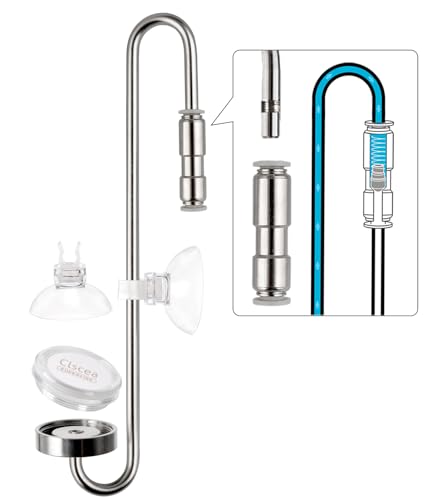
- 304 stainless steel body resists corrosion and breakage
- Built-in check valve helps prevent backflow
- Replaceable ceramic disk produces fine mist
Best For: High-pressure, pressurized CO2 aquarium systems
Balanced Tank Coverage

- Fine ceramic pores create thorough CO2 diffusion
- Sized for 13- to 32-gallon aquariums
- Clear acrylic body is sturdy and easy to position
Best For: Medium planted tanks using 2 to 3 bubbles per second
Integrated Bubble Monitoring
Acrylic CO2 Diffuser L with Bubble Counter

- Built-in bubble counter records CO2 output
- Replaceable ceramic plate supports long-term use
- Includes check valve and mounting accessories
Best For: Pressurized systems needing convenient bubble monitoring
High-Pressure Pick
DC300-25 Stainless Steel Diffuser

- Integrated check valve helps stop backflow
- Super-fine bubbles support efficient diffusion
- 304 stainless steel construction
Best For: High-pressure planted aquarium CO2 systems
Easy-Monitoring Pick

- Built-in check valve and bubble counter
- Fine bubbles from a micro-pore ceramic disc
- Clear, shatter-resistant acrylic body
Best For: Planted tanks up to 13 gallons
Large-Tank Glass Pick
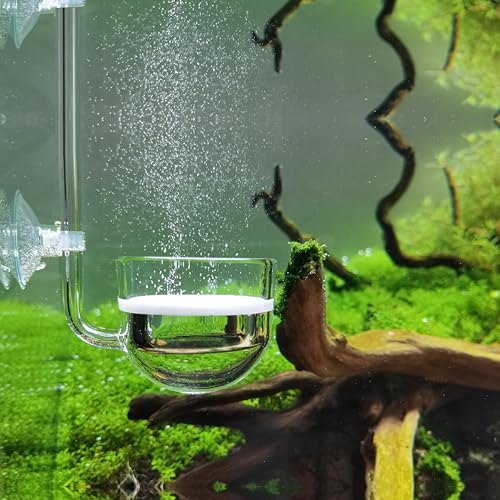
- Sized for tanks beyond 75 gallons
- Ceramic membrane atomizes CO2
- Visually appealing glass construction
Best For: Large planted aquariums over 75 gallons
Wide-Rim Stainless Steel Pick
Built-In Check Valve CO2 Diffuser

- 304 stainless steel body resists rust
- Widened hook fits rims up to 3.9 cm
- Needs 42+ PSI; best at 50–70 PSI
Best For: Pressurized systems with wide-rim aquariums
Easy-Care Acrylic Option
Low-Pressure Nano-Bubble Diffuser

- Creates small, dense CO2 bubbles
- Durable, corrosion-resistant acrylic body
- Includes suction cup for easy mounting
Best For: Simple aquarium and aquaponic setups
Best Simple Pick
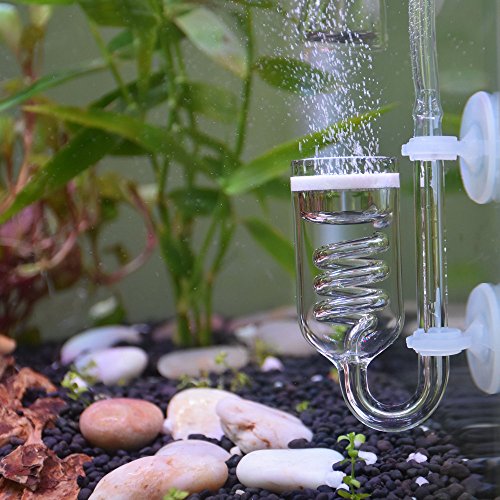
- Designed for 15–50 gallon tanks
- Fine-bubble ceramic diffuser disc
- Clear glass appearance blends with aquascapes
Best For: Pressurized planted aquariums using 6 mm tubing
Fine-Mist Performance – Fzone Neo CO2 Diffuser L
For larger planted aquariums, this aquarium co2 diffuser pairs a South Korean customized ceramic disk with a sturdy, transparent acrylic body. Its fine mist is designed to disperse CO2 thoroughly, while the included suction cup helps secure it in a tank corner.
Best For: Planted aquariums of 32 gallons or more using more than 3 bubbles per second.
Pros:
- Microscopically small ceramic pores produce a fine CO2 mist.
- Designed for high CO2 saturation and plant absorption.
- Durable acrylic construction is less fragile during maintenance.
- Works with pressurized and DIY CO2 systems at relatively low pressure.
Cons:
- The large model is intended for bigger tanks and higher bubble rates.
- Higher than 25 PSI is recommended for operation.
This is a practical choice when fine diffusion and a larger tank rating matter more than a compact footprint. Its three available sizes also make the Fzone design adaptable across aquarium setups.
High-Pressure Stainless Steel – DC300-40 Stainless Steel CO2 Diffuser
This aquarium co2 diffuser is built for pressurized systems that need a durable alternative to glass. Its 304 stainless steel body, replaceable ceramic disk, built-in check valve, and quick-plug connection support a secure installation with fine CO2 atomization.
Best For: Pressurized CO2 systems where durability, high-pressure operation, and a corrosion-resistant body are priorities.
Pros:
- 304 stainless steel resists corrosion and breakage.
- Fine ceramic mist is designed for strong CO2 dissolution.
- Built-in check valve helps prevent backflow.
- Quick-plug connection and hanging bend simplify installation.
Cons:
- Requires at least 43 PSI for optimal operation.
- Not intended for low-pressure or DIY CO2 systems.
- Alcohol should not be used to clean the ceramic disk.
The DC300-40 stands out for demanding pressurized setups. Choose it when a metal body and integrated backflow protection are more important than low-pressure compatibility.
Balanced Tank Coverage – Fzone Neo CO2 Diffuser M
For medium planted tanks, this aquarium co2 diffuser uses a customized South Korean ceramic disk to create a fine mist that disperses through the water column. The transparent acrylic body is sturdy and includes a suction cup for corner placement.
Best For: Aquariums from 13 to 32 gallons using approximately 2 to 3 bubbles per second.
Pros:
- Fine-pore ceramic supports thorough bubble diffusion.
- Designed to promote high CO2 saturation.
- Clear acrylic construction is less fragile than glass during maintenance.
- Requires only 20 PSI and is recommended above 25 PSI.
Cons:
- The medium size is less suited to tanks outside its stated range.
- It does not include a separately noted replaceable ceramic disk.
This medium Fzone model offers a straightforward fit for common planted-tank sizes. Its fine mist and low stated pressure requirement make it a flexible option for compatible pressurized or DIY systems.
Integrated Bubble Monitoring – Acrylic CO2 Diffuser L with Bubble Counter
Clscea Acrylic CO2 Diffuser with Integrated Bubble Counter for Aquarium Plants (L)
Check Price On AmazonThis aquarium co2 diffuser combines an acrylic diffuser with an integrated bubble counter, allowing added water in the cup to serve as a bubble recorder. Its injection-molded ceramic plate is replaceable and designed to produce fine bubbles for pressurized aquarium CO2 systems.
Best For: Aquarium keepers who want built-in bubble monitoring and a durable, replaceable-plate diffuser.
Pros:
- Integrated bubble counter helps monitor CO2 output.
- Transparent acrylic is less fragile than glass.
- Injection-molded ceramic plate is replaceable.
- Includes suction cups, a check valve, and an anti-slip rubber ring.
Cons:
- Requires at least 14 PSI for optimal operation.
- Designed for pressurized CO2 systems rather than DIY setups.
- Alcohol can damage the acrylic and should not be used for cleaning.
The built-in bubble counter is the main reason to consider this model. It is a useful all-in-one choice for pressurized systems where monitoring output and replacing the ceramic plate are priorities.
High-Pressure Pick – DC300-25 Stainless Steel Diffuser
For aquascapers comparing aquarium CO2 diffusers, the SUS 304 DC300-25 is a high-pressure option designed to produce very fine, atomized bubbles. Its integrated check valve, John Guest-style tubing fit, and stainless-steel construction make it practical for pressurized CO2 systems.
Best For: Planted tanks using a high-pressure CO2 setup and 4/6mm tubing.
Pros:
- Built-in check valve helps prevent backflow when gas is shut off.
- Produces super-fine bubbles for efficient CO2 absorption.
- Durable, rust-resistant 304 stainless steel body.
- Includes suction cups and an anti-slip rubber ring.
Cons:
- Requires at least 42 PSI to begin producing bubbles, with 50–70 PSI recommended.
- Cleaning requires removing and soaking only the diffuser disc, not the stainless body.
This diffuser is a strong fit when your regulator can meet its pressure requirements. Buyers wanting simpler, lower-pressure operation may prefer a different aquarium CO2 diffuser.
Easy-Monitoring Pick – FZONE S-19mm Acrylic Diffuser
The FZONE S-19mm combines aquarium CO2 diffusion with a visible bubble-counting chamber. Its micro-pore ceramic disc creates fine bubbles, while the built-in check valve and clear acrylic body make operation easier to monitor.
Best For: Smaller planted aquariums up to 13 gallons that need compact installation and visible CO2 flow monitoring.
Pros:
- Micro-pore ceramic disc produces fine, evenly dispersed bubbles.
- Built-in check valve helps protect the system from reverse water flow.
- Water-filled chamber can function as a bubble counter.
- Shatter-resistant acrylic offers glass-like clarity.
Cons:
- The S size is intended for tanks up to 13 gallons.
- The permanently bonded ceramic disc may be less convenient to replace separately.
Choose this model if you value a clear view of the diffuser and bubble rate in a small planted setup. Its included syringe, suction cup, and tubing also simplify installation.
Large-Tank Glass Pick – Music 2-Inch CO2 Diffuser
JARDLI Music Glass CO2 Diffuser for Aquarium Plant (2'' for Tank Beyond 75 gallons)
Check Price On AmazonFor larger aquascapes, this Music Glass CO2 diffuser uses a ceramic membrane to atomize CO2 and is sized for tanks beyond 75 gallons. Its glass construction and modern appearance make it a visually appealing option for aquarium CO2 diffuser setups.
Best For: Aquariums beyond 75 gallons where a large, glass diffuser is appropriate.
Pros:
- Designed specifically for tanks beyond 75 gallons.
- Ceramic membrane supports efficient CO2 atomization.
- Glass design offers a visually appealing modern look.
- Includes two suction cups for mounting.
Cons:
- Glass construction may require more careful handling than acrylic or stainless steel.
- Its 2-inch size is likely excessive for smaller aquariums.
This is a straightforward choice for large planted tanks where appearance and a larger diffuser format matter. Consider the tank-size recommendation before choosing it for a smaller aquarium.
Wide-Rim Stainless Steel Pick – Built-In Check Valve CO2 Diffuser
For aquarium CO2 diffusers that need to handle wider tank rims, this 304 stainless steel model combines a widened hook with an integrated check valve. It produces super-fine bubbles, but it is a high-pressure diffuser requiring at least 42 PSI and working best around 50–70 PSI.
Best For: Pressurized CO2 aquarium systems with wider rims and 4/6 mm tubing.
Pros:
- Built-in check valve helps prevent backflow when the gas is shut off.
- Widened 3.9 cm hook can accommodate tanks with rims.
- Durable, rust-resistant 304 stainless steel construction.
- Creates super-fine bubbles for efficient CO2 absorption.
Cons:
- Requires high pressure: at least 42 PSI, with 50–70 PSI recommended.
- Cleaning requires removing and separately treating only the diffuser disc.
This is a practical choice when rim compatibility, durable construction, and backflow protection matter. Confirm that your regulator can reach the required pressure before buying.
Easy-Care Acrylic Option – Low-Pressure Nano-Bubble Diffuser
This acrylic option is a straightforward choice among aquarium CO2 diffusers for fish tanks, home aquariums, and aquaponic setups. It is designed to create small, dense bubbles, attaches with an included suction cup, and can be cleaned by soaking and lightly brushing the stone.
Best For: Home, office, and aquaponic tanks where simple installation and routine cleaning are priorities.
Pros:
- Produces small, dense bubbles to improve CO2 dissolution.
- Acrylic construction is durable and corrosion-resistant.
- Included suction cup provides simple tank installation.
- Stone can be soaked and lightly brushed for monthly cleaning.
Cons:
- Includes only one diffuser and one suction cup.
- Requires regular cleaning to help prevent clogging.
Choose this model for a compact, easy-to-maintain diffuser with uncomplicated mounting. Its acrylic body also offers a practical alternative to more fragile glass designs.
Best Simple Pick – 3 Spiro CO2 Reactor Diffuser
This glass model is designed for larger planted aquariums and pressurized systems, with compatibility listed for 15–50 gallon tanks and standard 6 mm tubing. Its ceramic disc creates fine bubbles, while the transparent cylindrical design blends into the aquarium.
Best For: Pressurized planted tanks from 15 to 50 gallons that can accommodate a delicate glass diffuser.
Pros:
- Atomic-pore ceramic disc produces fine, slowly rising bubbles.
- Transparent glass design blends neatly into the aquarium.
- Suitable for pressurized tanks from 15–50 gallons.
- Included suction cup simplifies installation and repositioning.
Cons:
- Glass is fragile and may be damaged during shipping.
- First use requires soaking for more than 48 hours.
- Ceramic surface should not be brushed or wiped; special cleaner or replacement is recommended.
This diffuser suits aquascapers who value discreet glass hardware and fine bubble production. Factor in the extended setup soak and more careful maintenance before choosing it.
How We Picked the Best Aquarium Co2 Diffusers
We organized these Aquarium Co2 Diffusers around the factors that most affect everyday use: diffuser material, ceramic or reactor design, tank-size suitability, tubing connection, bubble visibility, and installation. We also considered useful features such as built-in check valves, bubble counters, widened hooks, and high-pressure construction.
Because aquarium setups vary widely, there is no single best diffuser for every planted tank. A compact acrylic model may suit a nano aquarium, while a larger ceramic, stainless-steel, or multi-spiro glass design may distribute CO2 more effectively in a bigger tank.
Quick Comparison
- For nano and small tanks: Choose an S- or M-size diffuser with a compact profile and fine bubble output.
- For larger planted tanks: Consider an L-size, DC300-40, DCW300-40, or multi-spiro design with greater diffusion capacity.
- For easy monitoring: Acrylic models and designs with integrated bubble counters make gas flow easier to observe.
- For durability: SUS 304 stainless steel resists corrosion and is less fragile than glass.
- For a clean aquascape: Glass and slim ceramic diffusers can blend into the aquarium with less visual bulk.
Key Buying Factors for Aquarium Co2 Diffusers
Tank Size and Diffusion Capacity
Match the diffuser to the aquarium volume and your target CO2 output. An undersized diffuser may require excessive pressure or produce uneven distribution, while an oversized model can be unnecessarily prominent in a small tank. Always verify the manufacturer’s recommended tank range.
Material and Durability
Glass offers a discreet appearance but can break during cleaning or installation. Acrylic is lightweight and generally more forgiving, while stainless steel provides a strong, corrosion-resistant option for high-pressure systems. Ceramic membranes can create fine bubbles, but they need periodic cleaning to maintain flow.
Pressure, Tubing, and Safety Features
Confirm that the diffuser works with your regulator and tubing diameter. Low-pressure and high-pressure descriptions are not interchangeable. A built-in check valve can help prevent aquarium water from traveling backward through the CO2 line, although a separate quality check valve may still be appropriate for your setup.
Maintenance and Bubble Control
Fine bubbles are desirable only when they dissolve effectively and circulate through the tank. Inspect the bubble pattern after installation, keep the membrane clean, and replace worn tubing or seals. Integrated bubble counters are useful for adjustment, but a drop checker remains important for monitoring aquarium CO2 levels.
Who Should Buy Which Aquarium Co2 Diffusers?
Nano-tank owners should prioritize compact S- or M-size diffusers that do not dominate the aquascape. Large planted-tank owners should look for L-size, widened-hook, DC300-40, or multi-spiro options suited to greater water volume. Beginners may prefer acrylic models with visible bubbles, integrated counters, or check valves. High-pressure users should favor purpose-built stainless-steel or ceramic designs rated for their equipment. Design-focused aquascapers may prefer glass or slim ceramic diffusers, provided they are comfortable handling and cleaning more fragile components.