Adding carbon dioxide can help aquarium plants grow more vigorously, develop better color, and compete with algae—but a good system should also be easy to adjust and maintain.
We compared 10 affordable options, including disposable-cartridge kits, DIY generators, replacement cartridges, and liquid carbon alternatives, to help you choose a practical setup for your planted tank.
Best 10 Aquarium Co2 Systems Under 50 Picks for 2026
Compact Pick
FZONE Desktop Aquarium CO2 System

- Slim design for small aquariums
- 45g cartridge with extended runtime
- Includes 5/8-inch and 3/8-inch compatibility
Best For: Small or desktop planted aquariums
Liquid Carbon Option
API CO2 Booster Freshwater Treatment

- Adds absorbable carbon for freshwater plants
- Works alone or with a CO2 system
- 16-ounce bottle for daily use
Best For: Freshwater planted aquariums
Replacement Supply
FZONE 45g Disposable CO2 Cartridges

- Two 45g disposable cartridges
- 5/8-18 UNF threaded connection
- Pre-filled and ready to install
Best For: Compatible 5/8-inch aquarium CO2 systems
DIY Value System
Aquarium DIY CO2 Generator Kit G200

- Generates CO2 with citric acid and baking soda
- Includes gauge and pressure-relief valve
- Designed for low-cost planted tanks
Best For: DIY-minded planted aquarium hobbyists
Plant Carbon Booster
- Liquid carbon for freshwater aquarium plants
- Use alone or alongside a CO2 system
- Does not alter aquarium pH levels
Best For: Daily liquid carbon support in freshwater planted aquariums
Nano Tank Pick

- Compact regulator for nano aquariums
- Includes disposable 45g cartridge and diffuser
- Adapters support two common thread sizes
Best For: Low-maintenance CO2 injection in small desktop tanks
DIY Refillable Choice
- 304 stainless steel DIY generator bottle
- Integrated solenoid and bubble counter
- Includes dual safety controls and accessories
Best For: Hands-on planted tank keepers using DIY CO2 generation
Best with Extra Features

- Complete kit with solenoid, diffuser, tubing, and adapters
- 80g cartridge offers extended runtime for nano tanks
- Compact aluminum design with adjustable bubble monitoring
Best For: Nano aquariums and desktop aquascapes
Best DIY Value
2L Stainless Steel CO2 Generator

- Durable 2L SUS304 stainless steel reaction bottle
- Solenoid supports timed CO2 injection
- Refill powders are economical but sold separately
Best For: DIY-minded planted-tank owners
Best Ready-to-Run Option

- Includes one cycle of pre-measured reaction materials
- Comes with dual bubble counters and pressure gauge
- Stainless steel reactor supports controlled, steady output
Best For: Planted tanks needing a convenient 2L system
Compact Pick – FZONE Desktop Aquarium CO2 System
For aquarium CO2 systems under 50, this FZONE desktop kit is a practical choice for small planted tanks where space and simple setup matter. Its slim 45g disposable cartridge system supports quick installation and is designed for low-maintenance indoor use.
Best For: Small or desktop aquariums needing a compact, portable CO2 setup.
Pros:
- Compact 9.84-inch-tall design fits small spaces.
- Works with 5/8-inch cartridges and includes a 3/8-inch adapter.
- 45g cartridge may last up to 50 days at 1 BPS on an eight-hour daily schedule.
- Quick-connect tubing and disposable cartridges simplify setup and maintenance.
Cons:
- Disposable cartridges require replacement rather than refilling.
- Its compact capacity is intended more for small tanks than high-demand installations.
This is a convenient budget-friendly option when you want a tidy CO2 system without the bulk of a standard large cylinder. Confirm that the included cartridge size and adapter match your aquarium equipment.
Liquid Carbon Option – API CO2 Booster Freshwater Treatment
Among aquarium CO2 systems under 50, the API CO2 Booster offers a liquid alternative for freshwater plant care rather than a pressurized gas setup. It adds carbon in a form plants can absorb and can be used alone or alongside a CO2 system.
Best For: Freshwater aquarium keepers seeking a simple daily liquid carbon treatment.
Pros:
- Supplies carbon for freshwater aquarium plants.
- Can be used alone or with a CO2 system.
- Designed for daily use to support lush, vibrant plants.
- Notes indicate it does not alter aquarium pH levels.
Cons:
- It is a liquid treatment, not a gas-injection CO2 generator.
- Daily application is required.
- The supplied notes do not specify a dosing amount.
This bottle is best viewed as a straightforward plant-care supplement for freshwater tanks. Choose it when you prefer liquid dosing or want an additional carbon source alongside an existing CO2 system.
Replacement Supply – FZONE 45g Disposable CO2 Cartridges
For shoppers comparing aquarium CO2 systems under 50, these FZONE cartridges are a useful replacement-supply option for compatible equipment. The two-pack uses 5/8-18 UNF threaded connections and provides pre-filled, disposable 45g cylinders.
Best For: Aquarium owners with compatible 5/8-inch CO2 equipment who want spare cartridges.
Pros:
- Two-pack provides replacement cartridges for ongoing use.
- 45g capacity offers more gas than standard 16g or 25g cylinders, according to the supplied notes.
- 5/8-18 UNF threaded interface supports compatible devices.
- Pre-filled, single-use design avoids refilling and maintenance.
Cons:
- Compatible equipment with a 5/8-inch connection is required.
- Disposable cartridges must be replaced when empty.
- High-pressure contents require cool, ventilated storage away from direct sunlight.
This two-pack makes sense as a convenient reserve for a compatible portable aquarium setup. Check your regulator or device specifications before buying, and follow the supplied high-pressure storage warning.
DIY Value System – Aquarium DIY CO2 Generator Kit G200
This DIY generator is a strong alternative for aquarium CO2 systems under 50 when low-cost planted-tank operation matters more than cartridge convenience. It uses citric acid and baking soda, with a pressure gauge, pressure-relief valve, and controls intended to make output easier to manage.
Best For: Budget-conscious planted aquarium keepers comfortable mixing their own CO2 solution.
Pros:
- Uses readily prepared citric acid and baking soda reactions for CO2 generation.
- Includes a quick reaction test tube and acid-absorbing ball for control.
- Features a pressure gauge and pressure-relief valve.
- Pressure-resistant, acid-resistant tubing and durable ABS caps are included.
Cons:
- Two additional 2-liter carbonated beverage bottles are required.
- Citric acid and baking soda reaction materials are not supplied.
- Output management requires following the recommended valve and setup instructions.
The G200 can reduce ongoing cartridge dependence, but it demands more preparation than a disposable system. It is a good fit for hobbyists who want a lower-cost DIY approach and are willing to source bottles and reaction materials.
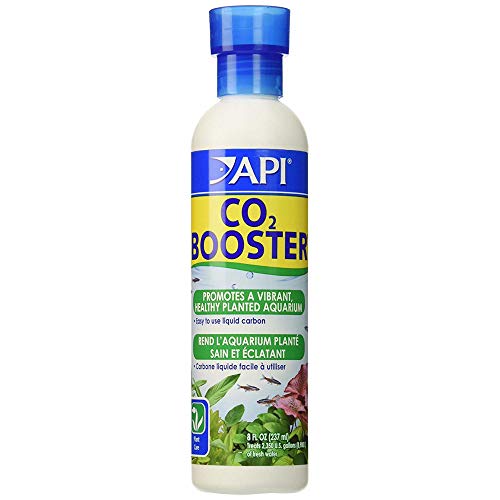
Plant Carbon Booster – API CO2 Booster
For shoppers comparing aquarium co2 systems under 50, the API CO2 Booster offers a simple liquid alternative for freshwater planted aquariums. It supplies carbon in a form plants can absorb and can be used on its own or alongside a CO2 system without altering aquarium pH levels.
Best For: Freshwater aquarium owners who want daily liquid carbon support rather than a pressurized CO2 setup.
Pros:
- Promotes plant growth in freshwater aquariums.
- Can be used alone or with an existing CO2 system.
- Designed for daily use and does not alter aquarium pH levels.
Cons:
- It is a liquid plant treatment rather than a complete regulator-and-cylinder CO2 system.
- The 8 fl oz bottle provides one 237 ml unit, so regular daily use will require ongoing product replacement.
This is the most straightforward option in the group for adding carbon without installing equipment. Choose it when convenience and compatibility with a freshwater planted tank matter more than automated gas injection.
Nano Tank Pick – Hygger 45g Desktop CO2 System
Among aquarium co2 systems under 50, this compact Hygger regulator is built for nano aquariums and tight spaces. It includes a disposable 45g cartridge, bubble counter, diffuser, tubing, and adapters for 5/8-inch and 3/8-inch threaded cylinders.
Best For: Nano aquarium keepers who want a compact, low-maintenance disposable-cartridge CO2 setup.
Pros:
- Compact 9.8 x 2 inch design fits tight desktop spaces.
- Includes a 45g disposable CO2 cartridge and accessories needed for setup.
- Supports both 5/8-inch and 3/8-inch threaded cylinders with the included adapter.
- Internal testing reports up to 50 days of operation at 1 BPS for 8 hours daily.
Cons:
- Disposable cartridges must be replaced rather than refilled.
- Thread and seal compatibility should be checked before installation.
- The compact format is intended for nano aquariums, not larger planted tanks.
This is a practical starter system when you want quick installation and minimal maintenance. Its included diffuser and adapters add flexibility, while the small footprint suits desktop aquariums.
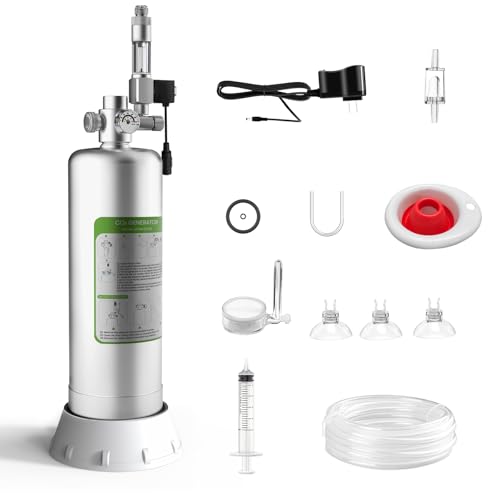
DIY Refillable Choice – MagTool CO2 Generator Kit
For buyers exploring aquarium co2 systems under 50, the MagTool DIY generator kit provides a reusable stainless steel bottle with an integrated solenoid and bubble counter. It includes the main accessories for a planted tank, but raw material for generating CO2 is not included.
Best For: Planted aquarium owners who prefer a DIY generator with built-in controls and refillable bottle options.
Pros:
- Food-grade 304 stainless steel bottle is designed for durability and pressure resistance.
- Integrated solenoid and bubble counter reduce connections and help simplify the setup.
- Manual shut-off valve and automatic pressure relief valve provide two safety controls.
- Includes diffuser, check valve, tubing, suction cups, funnel, syringe, sealing rings, and power adapter.
Cons:
- Raw material is not included, so the DIY system is not ready to generate CO2 immediately.
- The 2.5L and 5L bottle options are substantially larger and heavier than compact cartridge systems.
- DIY preparation and refilling require more involvement than a disposable-cylinder setup.
This kit suits aquarists who want integrated electrical control and a more substantial DIY generator. Its safety features and included hardware are useful, but factor in the need to source the raw material separately.
Best with Extra Features – FZONE 80g Desktop CO2 Kit
For shoppers comparing aquarium co2 systems under 50, the FZONE 80g Desktop Aquarium Complete CO2 Kit is a compact, ready-to-install option for nano planted tanks. It includes the regulator, solenoid valve, bubble counter, diffuser with check valve, tubing, and adapters for 5/8-inch and 3/8-inch CO2 threads.
Best For: Nano aquariums, desktop aquascapes, and planted tanks where compact size and simple CO2 scheduling matter.
Pros:
- Complete kit includes the main installation accessories.
- 80g cartridge is designed to last up to 90 days at 1 BPS with an eight-hour daily schedule, according to internal testing.
- Integrated solenoid and bubble counter support scheduled, adjustable CO2 delivery.
- Compact aluminum body measures about 10.63 inches tall and 2.76 inches wide.
Cons:
- Uses 80g or 45g threaded cartridges rather than a larger refillable cylinder.
- Cartridge runtime varies with bubble rate and schedule.
The FZONE stands out when you want an all-in-one system with minimal setup and a small footprint. Its cartridge-based design is convenient for nano tanks, though ongoing cartridge replacements should be considered.
Best DIY Value – 2L Stainless Steel CO2 Generator
Among aquarium co2 systems under 50, this 2L Aquarium CO2 Generator System offers a refillable DIY approach for planted tanks. Its SUS304 stainless steel bottle is paired with a regulator, 12V solenoid, precision needle valve, filter, bubble counter, and check valve, but the required citric acid and sodium bicarbonate powders must be purchased separately.
Best For: Aquarists who want a durable 2L generator with timer-based control and are comfortable preparing their own reaction materials.
Pros:
- Thick 1.2mm SUS304 stainless steel bottle is designed for durability and pressure resistance.
- 12V solenoid can be placed on a timer for scheduled CO2 injection.
- Precision needle valve and bubble counter support more controlled dosing.
- Automatic pressure relief valve activates when pressure exceeds 30–35KG.
Cons:
- Citric acid and sodium bicarbonate powders are not included.
- The motorized valve is not waterproof and must be kept away from water.
- The initial diffuser setup may require soaking and leak checks.
This system is a sensible choice for buyers prioritizing a sturdy bottle and refillable operation over cartridge convenience. Factor in the extra preparation and ingredient purchase before choosing it.
Best Ready-to-Run Option – 2L CO2 Reactor Kit
This 2L Aquarium CO2 Generator System is a strong contender among aquarium co2 systems under 50 for buyers who want to start quickly. It includes pre-measured reaction materials for one cycle, a SUS304 stainless steel reactor bottle, regulator, solenoid valve, precision needle valve, pressure gauge, tubing, diffuser, check valve, and two bubble counters.
Best For: Planted-tank keepers who want included starter materials, adjustable output, and a backup bubble counter.
Pros:
- Pre-measured starter materials allow setup after adding water without separate ingredient shopping.
- Includes two bubble counters, providing a spare for maintenance or replacement.
- Thick-walled SUS304 bottle includes an automatic pressure relief valve that activates above 35kg.
- Precision needle valve and pressure gauge support stable, visible output control.
Cons:
- Starter reaction materials cover one full cycle; future refills require additional ingredients.
- Its 2L reactor format is less compact than a small cartridge-based desktop system.
The included reaction materials make this one of the more convenient 2L options to get running, while the spare bubble counter adds practical backup value. It is best suited to buyers with room for a larger reactor bottle.
How We Picked the Best Aquarium Co2 Systems Under 50
We focused on value, compatibility, adjustability, and the needs of planted-aquarium owners. The lineup includes complete kits, compact desktop systems, DIY bottle generators, replacement cartridges, and liquid carbon treatments. We also considered whether each option includes useful components such as a regulator, needle valve, solenoid, bubble counter, or diffuser.
Because aquarium CO2 equipment varies widely, we separated true pressurized or generated CO2 systems from cartridge replacements and liquid treatments. This makes it easier to compare products by their intended use rather than treating every carbon supplement as the same type of solution.
Quick Comparison
| Type | Best For | Main Advantage | Potential Limitation |
|---|---|---|---|
| 45g or 80g cartridge kit | Nano and desktop tanks | Compact and simple | Cartridges need replacement |
| DIY generator | Budget-conscious planted tanks | Lower ongoing refill cost | Requires mixing and maintenance |
| Replacement cartridges | Existing compatible systems | Convenient backup supply | Not a complete CO2 setup |
| Liquid carbon treatment | Simple plant supplementation | No regulator or tubing required | Not equivalent to injected CO2 |
Key Buying Factors for Aquarium CO2 Systems Under $50
Tank Size and CO2 Capacity
Small disposable cartridges can suit nano aquariums and lightly planted tanks, while larger 2L to 5L DIY generators may be more practical for bigger setups. Check the expected runtime and avoid choosing a system solely by bottle size.
Compatibility
Confirm thread dimensions before buying cartridges or replacement parts. Several compact FZONE systems support 5/8-inch and 3/8-inch connections, but compatibility should still be verified with your existing regulator and tubing.
Control and Safety
A needle valve allows finer bubble-rate adjustments, while a bubble counter helps monitor output. A solenoid can automate CO2 shutoff with a timer, which is useful because CO2 is generally best delivered during the aquarium’s light period. Look for secure fittings, pressure-resistant components, and a reliable diffuser.
Maintenance and Running Cost
Cartridge systems are usually cleaner and faster to set up, but recurring replacements can cost more over time. DIY generators may reduce refill expenses, though they require preparation, cleaning, and occasional replacement of ingredients or seals.
Who Should Buy Which Aquarium Co2 Systems Under 50?
Choose a compact cartridge system if you have a nano tank, want minimal setup, or prefer predictable installation. Choose a DIY generator kit if you want more capacity and are comfortable managing the mixture and fittings. Choose a system with a solenoid and bubble counter if consistent control and timed operation matter most.
Choose replacement cartridges only when you already own a compatible desktop CO2 system. Choose liquid carbon when you want a simple supplement without pressurized equipment, but remember that it does not provide the same type of CO2 injection as a generator or cartridge-based system. For any option, start conservatively, monitor livestock and plant response, and adjust output gradually.