Watching your dog’s breathing is one of the fastest ways to spot stress, pain, or a developing health issue. A reliable dog respiratory rate monitor can help you catch changes early and share clearer data with your vet.
From smart collars to handheld veterinary monitors and pulse oximeters, the best options balance accuracy, comfort, and ease of use. Here’s how to choose the right one for your dog and your routine.
Best 10 Dog Respiratory Rate Monitor Picks for 2026
Smart GPS + Vital Signs Tracker
Tractive Smart Dog GPS Tracker

- Monitors heart and respiratory rate changes
- Live GPS updates every 2–3 seconds
- Lightweight, waterproof, up to 14 days battery
Best For: Owners wanting health trends and real-time GPS in one tracker
Portable SpO2 Reader
AM1000A-Vet Tongue Probe Monitor

- Shows SpO2, pulse rate, and bar graph data
- Bluetooth app storage for analysis and records
- Audible and visual alarms with adjustable limits
Best For: Portable oxygen and pulse checks with app-based recordkeeping
Compact Health Scan Tracker

- Scans heart and respiratory rates at rest
- Real-time GPS with movement history
- Tracks activity, meals, and sleep quality
Best For: Compact wellness tracking with respiratory scans and GPS
Veterinary Vital Signs Monitor

- Measures respiration, ECG, SpO2, BP, and temperature
- Animal-specific algorithms and accessories
- Large 12.1-inch display with stored history
Best For: Clinics and vets needing full animal vital-sign monitoring
Daily Wellness Tracking
Smart Dog Health Monitoring Collar, Heart Rate, Respiratory & Activity

- Tracks respiratory patterns, heart rate, HRV, and activity
- App reports show trends for rest, walks, and playtime
- No monthly subscription required
Best For: Routine wellness tracking with respiratory trend visibility
Vet-Style Spot Checks
Veterinary Handheld Pulse Oximeter

- Measures SpO2, heart rate, and rectal temperature
- Animal-specific modes help improve measurement accuracy
- Rechargeable with data export support
Best For: Handheld vital-sign checks in clinic or home settings
AI Health Watch
NEW Dog Health Monitor V3.0 by PetPace

- Monitors breathing, heart rate, temperature, sleep, and HRV
- AI flags subtle illness, pain, stress, or discomfort
- Includes telehealth and vet data sharing
Best For: Ongoing health monitoring with telehealth support
Pet-Friendly Respiratory Check
Fingertip Oximeter with RR & SpO2
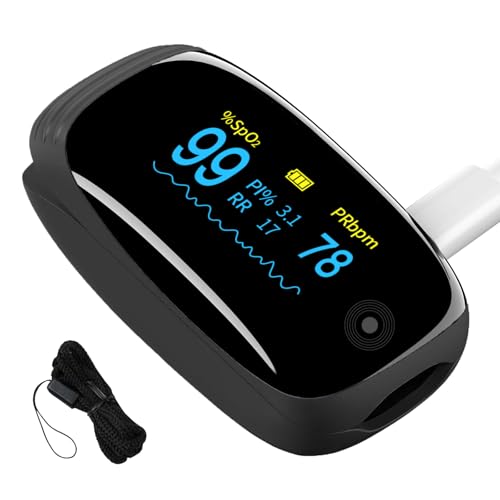
- Reads RR, SpO2, pulse rate, and PI
- Fast 5-second readings with one-button use
- Rechargeable with 6 display modes
Best For: Portable non-medical respiratory spot checks
Veterinary Spot Monitor
Handheld Oximeter for Dogs and Cats

- Vet-use oximeter for dogs, cats, and small animals
- Measures SpO2 and heart rate
- One-button handheld design with LED display
Best For: Quick veterinary oxygen and heart-rate checks
Connected Pet Vital Signs
Bluetooth Veterinary Patient Monitor

- Tracks heart rate, NIBP, SpO2, and pulse rate
- Bluetooth 5.0 works with phones and PCs
- 2.8-inch color display with waveform graphs
Best For: Multi-parameter pet monitoring with app syncing
Smart GPS + Vital Signs Tracker – Tractive Smart Dog GPS Tracker
If you’re looking for a dog respiratory rate monitor that also helps you keep tabs on location and behavior, Tractive combines those needs in one lightweight tracker. It measures changes in heart and respiratory rates, adds bark and activity alerts, and gives live GPS updates every 2–3 seconds with no range limits.
Best For: Dog owners who want health monitoring plus real-time GPS tracking in a waterproof, lightweight collar tracker.
Pros:
- Monitors heart and respiratory rate changes for early health awareness
- Live GPS tracking updates every 2–3 seconds with unlimited range
- Health, sleep, activity, and barking alerts help spot unusual patterns
- Lightweight, waterproof design with up to 14 days of battery life
Cons:
- Requires cellular connectivity for tracking features
- Only suitable for dogs over 8 pounds
Tractive is a strong choice if you want one device that handles location tracking and vital-sign trend monitoring. It is best for owners who value convenience, long battery life, and early alerts rather than a dedicated clinical respiratory sensor.
Portable SpO2 Reader – AM1000A-Vet Tongue Probe Monitor
For buyers focused on oxygenation and pulse rather than a full wearable, this handheld veterinary device offers a practical way to monitor a dog’s breathing-related status. It displays SpO2 and pulse rate, pairs with a phone or tablet via Bluetooth, and stores data in the app for review and analysis.
Best For: Pet owners or clinics that need a compact handheld SpO2 and pulse monitor with app-based data storage.
Pros:
- Displays SpO2 value, pulse rate value, and bar graph information
- Bluetooth connection to phone or tablet with app data storage
- Audible and visual alarms when readings exceed adjustable limits
- Small, lightweight, and easy to carry
Cons:
- Measures SpO2 and pulse, not respiratory rate directly
- Requires AA batteries, which are not included
This is a useful veterinary-style handheld if your goal is portable oxygen saturation monitoring with app records. It is not a direct dog respiratory rate monitor, but it can still support broader breathing-health checks when used appropriately.
Compact Health Scan Tracker – invoxia Minitailz Dog Tracker
If you want a dog respiratory rate monitor in a small, wearable form, the invoxia Minitailz focuses on cardiac and respiratory scanning alongside GPS and activity analysis. It tracks heart and respiratory rates at rest, records movement history, and adds sleep and meals monitoring for a fuller picture of well-being.
Best For: Dog owners who want compact respiratory and heart scanning with GPS and activity tracking.
Pros:
- Measures heart and respiratory rates at rest
- Real-time GPS tracking with full movement history
- Tracks activity, meals, and sleep quality
- Compact, lightweight, and easy to install
Cons:
- Subscription is required for integrated SIM service
- Designed for resting scans rather than continuous respiratory monitoring
Minitailz is a strong option if you want respiratory-rate insights in a compact tracker that also covers location and behavior. The subscription cost is the main tradeoff, but the feature set is broad for everyday wellness monitoring.
Veterinary Vital Signs Monitor – DAWEI HM10 12.1" Pet Monitor
For clinics or care centers that need a full veterinary respiratory rate monitor, the HM10 is built for animal use and covers respiration, ECG, SpO2, blood pressure, heart rate, and temperature. Its 12.1-inch screen and animal-specific algorithms make it more suited to professional monitoring than a consumer pet wearable.
Best For: Veterinary professionals and animal care facilities needing multi-parameter monitoring for dogs and other small animals.
Pros:
- Measures respiration, ECG, SpO2, blood pressure, heart rate, and temperature
- Animal-specific algorithms and accessories are tailored for veterinary use
- Large 12.1-inch display is easy to read during exams and procedures
- Supports continuous tracking and stores alarms and measurement history
Cons:
- Bulky and heavy compared with portable pet wearables
- Designed for professional settings rather than home use
The HM10 is the most clinic-ready option in this roundup and the clearest fit if respiratory measurement is the priority. It is overkill for casual pet owners, but it offers the most complete vital-signs toolkit for veterinary work.
Daily Wellness Tracking – Smart Dog Health Monitoring Collar, Heart Rate, Respiratory & Activity
If you want a dog respiratory rate monitor for everyday use, this smart collar focuses on trends rather than one-off readings. It tracks respiratory patterns, heart rate, HRV reference data, body movement, and daily activity in the Clvior app, making it easier to spot changes in your dog’s normal routine over time.
Best For: Pet owners who want a lightweight, app-based wellness collar with respiratory tracking and no monthly fee.
Pros:
- Tracks respiratory data alongside heart rate, HRV, movement, and activity
- App wellness reports help you review trends during rest, walks, and playtime
- No required monthly subscription
- Waterproof build designed for daily wear
Cons:
- Not a stand-alone medical device
- Relies on app connectivity for review and insights
- Battery life is listed at about 54 hours, so it needs regular charging
Overall, this collar is a practical fit if you want ongoing respiratory and wellness tracking in one wearable. It is strongest for routine monitoring and habit tracking, not emergency diagnostics.
Vet-Style Spot Checks – Veterinary Handheld Pulse Oximeter
This handheld option works well when you need a dog respiratory rate monitor adjacent to broader vital-sign checks, especially for vet-style spot monitoring. It measures SpO2, heart rate, and rectal temperature, and includes pet-specific modes plus customizable alarms for abnormal readings.
Best For: Owners, clinics, or rehab settings that need handheld vital-sign checks with temperature and oxygen saturation.
Pros:
- Measures SpO2, heart rate, and rectal temperature in one device
- Animal-specific modes are designed to reduce interference from hair or skin pigment
- Large color display is easy to read
- Rechargeable battery and data export support ongoing record keeping
Cons:
- It is not a collar or continuous wearable monitor
- Designed for spot checks rather than all-day tracking
- Respiratory rate is not listed as a direct measurement
In practice, this is a good choice if you prefer a handheld tool for periodic health checks instead of passive monitoring. It is especially useful when oxygen, heart rate, and temperature matter most.
AI Health Watch – NEW Dog Health Monitor V3.0 by PetPace
If you need a more advanced dog respiratory rate monitor, this PetPace collar goes beyond simple tracking with 24/7 vital-sign monitoring. It measures breathing, heart rate, temperature, pulse, activity, sleep, and HRV every two minutes, with AI designed to flag subtle changes in illness, stress, pain, or discomfort.
Best For: Dogs with ongoing health concerns, recovery needs, or owners who want vet-sharable insight and telehealth access.
Pros:
- Tracks breathing, heart rate, temperature, pulse, activity, sleep, and HRV
- AI alerts can help identify subtle shifts in condition
- Telehealth, remote consultation, and data sharing with a vet are built in
- GPS tracking and Apple Watch compatibility add convenience
Cons:
- Subscription is required for full functionality
- Ongoing cost is higher than subscription-free options
- Best features are centered on the PetPace ecosystem and supported regions
This collar makes sense when you want the most comprehensive monitoring and are comfortable paying for it. The combination of breathing data, AI insights, and vet access makes it especially useful for medically sensitive situations.
Pet-Friendly Respiratory Check – Fingertip Oximeter with RR & SpO2
If you need a dog respiratory rate monitor for quick at-home spot checks, this fingertip pulse oximeter offers RR, SpO2, pulse rate, and perfusion index in a compact rechargeable format. It is designed for sports and aviation use rather than medical use, but its fast 5-second readings and one-button operation make it practical for simple wellness tracking.
Best For: Pet owners looking for a portable RR-capable monitor for basic, non-medical respiratory spot checks.
Pros:
- Measures respiratory rate (RR), SpO2, pulse rate, and PI in one device.
- Fast 5-second readings with one-button operation.
- OLED display offers 6 visual modes and 4 auto-rotating orientations.
- Rechargeable Type-C battery supports frequent use without disposable batteries.
Cons:
- Listed for sports or aviation use only, not for medical use.
- Fingertip design is not a pet-specific veterinary monitor.
- May be less suitable if you want a dedicated animal probe or cuff system.
For buyers who want a simple, portable respiratory-rate reading alongside oxygen and pulse data, this model is useful as a quick-check tool. Just keep its non-medical positioning in mind and choose a dedicated veterinary unit if you need pet-specific monitoring.
Veterinary Spot Monitor – Handheld Oximeter for Dogs and Cats
This dog respiratory rate monitor is built for veterinary use, with SpO2 and heart rate measurement in a handheld format for dogs, cats, and other small animals. It is a straightforward choice when you want quick, non-invasive readings during recovery, anesthesia monitoring, or general pet health checks.
Best For: Dog and cat owners who want a veterinary pulse oximeter for fast oxygen and heart-rate checks.
Pros:
- Veterinary-focused monitoring for dogs, cats, and other small animals.
- Measures SpO2 and heart rate with non-invasive readings.
- One-button operation and clear LED display simplify use.
- Battery-powered, compact, and lightweight for home or clinic settings.
Cons:
- Does not provide blood pressure readings.
- Shave the site completely before applying the probe to the tail.
- Smaller feature set than full patient-monitoring systems.
For pet owners who want a practical veterinary oximeter without extra complexity, this model keeps the focus on core oxygen and heart-rate monitoring. It makes the most sense when you need a basic, portable tool for dogs and small animals.
Connected Pet Vital Signs – Bluetooth Veterinary Patient Monitor
For buyers comparing a dog respiratory rate monitor with broader clinical monitoring, this veterinary patient monitor goes beyond RR by tracking SpO2, pulse rate, heart rate, and non-invasive blood pressure. It pairs a 2.8-inch color display with Bluetooth app connectivity, making it a strong fit when you want more complete pet vital-sign tracking at home or in a clinic.
Best For: Pet care settings that need multi-parameter monitoring plus app-based data syncing.
Pros:
- Tracks four key vital signs: heart rate, NIBP, SpO2, and pulse rate.
- 2.8-inch color LCD shows crisp data and waveform graphs.
- Bluetooth 5.0 syncs with PCs, Android, and iOS devices.
- Rechargeable 1800mAh battery supports up to 12 hours of continuous use.
Cons:
- More elaborate than a simple spot-check respiratory monitor.
- Likely better suited to users comfortable with multi-parameter equipment.
- May be more than you need if you only want basic RR readings.
This is the most feature-rich option in the group, so it makes sense when respiratory monitoring is just one part of a bigger workflow. If you want a connected monitor with cuff options and broader vital-sign coverage, it stands out as the most clinic-style choice.
How We Picked the Best Dog Respiratory Rate Monitor
For this roundup, we focused on devices that can measure or estimate respiratory rate with practical value for real-world pet care. Priority went to models with strong health-tracking features, clear readouts, app support, and designs suitable for dogs of different sizes and temperaments. We also considered portability, battery life, data sharing, and whether the device is better for daily wellness tracking or more hands-on monitoring.
Quick Comparison
Smart collars and GPS trackers are best for continuous monitoring and trend awareness. Handheld pulse oximeters and veterinary monitors are better when you want direct, snapshot-style measurements at home or in a clinical setting. If you need breathing data alongside heart rate, SpO2, activity, or location, a connected wearable may be the smarter choice. If you want the most straightforward measurements, a handheld unit is often easier.
Key Buying Factors for a Dog Respiratory Rate Monitor
Measurement Method
Some products estimate respiratory trends through wearable sensors, while others measure respiration more directly with pulse oximetry or veterinary monitoring hardware. If accuracy matters most, look closely at how the device derives breathing data.
Comfort and Fit
A monitor only helps if your dog will tolerate it. Collars should fit securely without rubbing, while probe-based devices should be simple to apply and remove. For anxious dogs, comfort is often as important as feature count.
Data Access and Sharing
App dashboards, storage, and exportable reports make it easier to track changes over time and show your vet a clearer pattern. This is especially useful if you are monitoring a chronic condition or recovery.
Power, Durability, and Use Case
Choose a device that matches how you’ll use it: daily wellness checks, remote tracking, or clinic-style monitoring. Waterproofing, battery life, and charging convenience matter more than many buyers expect.
Who Should Buy Which Dog Respiratory Rate Monitor?
Pet parents wanting everyday trend tracking: choose a smart collar or GPS tracker with respiratory monitoring and app-based insights.
Owners who need quick home spot checks: choose a handheld pulse oximeter or compact veterinary monitor.
Dogs with ongoing medical concerns: look for a system that combines respiratory rate with heart rate, SpO2, and shareable records.
Multi-pet homes or clinic users: a more flexible veterinary monitor is usually the better fit.
In short, the best Dog Respiratory Rate Monitor is the one your dog will wear or tolerate consistently and that gives you data you can actually use. Prioritize fit, clarity, and monitoring method over flashy extras.