Stable water temperature is essential for protecting saltwater fish, corals, and invertebrates from avoidable stress. The right thermometer makes routine checks faster and helps you spot dangerous fluctuations before livestock is affected.
This roundup compares 10 aquarium thermometers across digital, floating, wireless, and stick-on designs, with attention to readability, accuracy, mounting, battery needs, and saltwater-friendly practicality.
Best 10 Aquarium Thermometers for Saltwater Tanks Picks for 2026
Best Digital Value
AQUANEAT LCD Aquarium Thermometer

- Large LCD display
- Works with saltwater and marine water
- -58°F to 158°F range
Best For: Routine digital temperature checks
Best Two-Pack
Dreyoo Floating Glass Thermometers
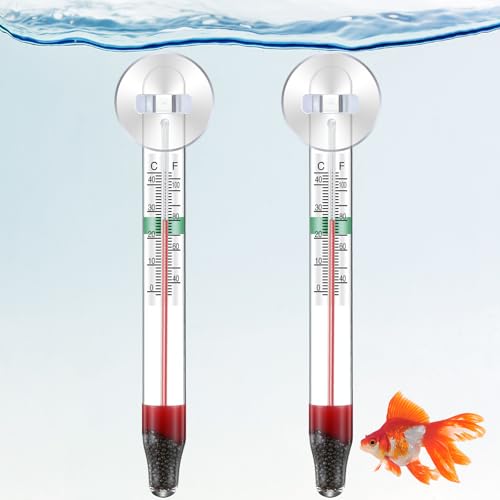
- Two thermometers included
- Celsius and Fahrenheit scales
- Mercury-free and saltwater safe
Best For: Monitoring multiple tank locations
Best High-Resolution Display
PAIZOO LED Stick-On Thermometer

- 0.1°F display resolution
- Bright external LED screen
- Replaceable CR2032 battery
Best For: Visible, frequent Fahrenheit checks
Best Floating Classic

- Mercury-free glass design
- Floating or suction-cup mounting
- Color-coded, easy-read scale
Best For: Simple traditional tank monitoring
Best Precision Pick

- Supports saltwater, freshwater, and brackish tanks
- Readable LED display with 0.1°F resolution
- Replaceable CR2032 battery and adhesive mounting
Best For: Digital, outside-tank temperature monitoring
Best Two-Pack Value

- Includes two digital thermometers
- Compatible with salty and marine water
- Large LCD and suction-cup probe setup
Best For: Multiple aquariums or a spare thermometer
Best Analog Option
LABO Floating Glass Thermometers

- Mercury-free glass construction
- Works in freshwater and saltwater tanks
- Two-pack with floating or suction-cup placement
Best For: Battery-free, in-tank monitoring
Best External-Mount Pick
Replaceable Battery Digital Thermometer

- External glass installation keeps the unit out of the water
- ±0.9°F accuracy across a 32°F–140°F range
- Replaceable CR2032 battery lasts up to one year
Best For: Saltwater tank owners wanting simple, external monitoring
Best Compact Touch Display
Wireless LED Aquarium Thermometer

- Wireless external design avoids in-tank wiring
- LED display is easy to read in low light
- Included CR2032 battery lasts up to 12 months
Best For: Compact tanks needing quick, external temperature checks
Best Submersible Probe
Large LCD Fahrenheit/Celsius Thermometer

- Wide -58°F to 158°F measurement range
- Large LCD supports Fahrenheit and Celsius
- Suction cup secures the in-water probe
Best For: Saltwater tanks needing a clear display and positioned probe
Best Digital Value – AQUANEAT LCD Aquarium Thermometer
For aquarium thermometers for saltwater tanks, the AQUANEAT offers a practical digital option with a large LCD display and a probe designed for submerged use. It measures from -58°F to 158°F with stated accuracy of ±1°C, making it suitable for a range of aquarium environments.
Best For: Saltwater aquarists who want a compact, battery-powered digital thermometer with a clear display.
Pros:
- Suitable for freshwater, salty water, and marine water.
- Large LCD display is easy to read.
- Wide -58°F to 158°F measurement range.
- Includes an LR44 battery and suction-cup probe mount.
Cons:
- Only the probe should be submerged; the main thermometer must stay out of the water.
- Stated accuracy is ±1°C, so it may not suit users seeking finer precision.
- Response time is listed as 3 seconds.
Its straightforward setup and broad temperature range make the AQUANEAT a flexible choice for routine monitoring, especially when a digital readout is easier to use than a glass scale.
Best Two-Pack – Dreyoo Floating Glass Thermometers
Among aquarium thermometers for saltwater tanks, the Dreyoo two-pack provides a simple analog way to monitor temperature in more than one location. Each mercury-free glass thermometer displays both Celsius and Fahrenheit and covers 32°F to 110°F.
Best For: Aquarists who want two reusable floating thermometers for saltwater or freshwater tanks.
Pros:
- Includes two thermometers and two suction cups.
- Designed for both freshwater and saltwater use.
- Displays Celsius and Fahrenheit with clear markings.
- Mercury-free glass construction.
Cons:
- Analog markings may be less precise to read than a digital display.
- Glass construction requires careful handling.
- Temperature range is limited to 32°F to 110°F.
The Dreyoo set is useful for comparing temperatures or keeping a spare available. Its vertical placement and colored liquid make readings uncomplicated, provided the thermometer remains upright.
Best High-Resolution Display – PAIZOO LED Stick-On Thermometer
The PAIZOO is a convenient choice among aquarium thermometers for saltwater tanks when quick, highly visible readings matter. Its LED display attaches to the outside of the aquarium glass, refreshes every five seconds, and reports temperature with 0.1°F resolution across a 0°F to 140°F range.
Best For: Aquarists who prefer an external, easy-to-read LED display for frequent temperature checks.
Pros:
- Displays readings with 0.1°F resolution.
- LED screen is designed to remain visible in dark environments.
- Installs on the outside of the aquarium with 3M adhesive.
- Includes a replaceable CR2032 battery and 12-month warranty.
Cons:
- Adhesive mounting offers less placement flexibility than a submerged probe.
- Temperature is shown in Fahrenheit according to the supplied specifications.
- Requires attachment to the aquarium glass.
Because it stays outside the tank, the PAIZOO avoids placing a thermometer in the saltwater while keeping the display readily accessible. It is a strong fit for users who prioritize visibility and fine displayed increments.
Best Floating Classic – Penn-Plax Therma-Temp
The Penn-Plax Therma-Temp is a straightforward option for aquarium thermometers for saltwater tanks, using a mercury-free floating glass design with a color-coded scale. It can float freely or attach to the tank wall with the removable suction cup and measures up to 110°F.
Best For: Aquarists who want a compact, traditional thermometer with flexible floating or mounted placement.
Pros:
- Safe for freshwater and saltwater tanks.
- Mercury-free floating design.
- Removable suction cup supports wall placement or free floating.
- Color-coded scale is designed for quick reading.
Cons:
- Glass construction needs careful handling and hand washing.
- Analog scale may be less precise than a digital display.
- Must remain upright for the colored liquid to settle and provide a reliable reading.
The Therma-Temp keeps temperature monitoring simple and adaptable. Its compact 4.25-inch form fits tanks of different sizes, while the removable mount lets you choose the most convenient viewing position.
Best Precision Pick – PAIZOO Wireless Thermometer
If you want aquarium thermometers for saltwater tanks with a compact, modern design, the PAIZOO is a convenient digital option. It supports freshwater, saltwater, and brackish aquariums, with readings to 0.1°F, a 32–140°F range, and a stated ±0.9°F error.
Best For: Aquarists who want an easy-to-read digital thermometer mounted outside the tank.
Pros:
- Designed for freshwater, saltwater, and brackish aquariums.
- Large LED display is visible from multiple angles.
- Replaceable CR2032 battery and low-power operation rated for 10,000+ hours.
- Compact adhesive-mounted design with a 10-second refresh rate.
Cons:
- The display unit stays outside the tank, so placement depends on the included adhesive.
- Its stated accuracy is ±0.9°F rather than laboratory-level precision.
The PAIZOO stands out for its readable display, replaceable battery, and straightforward installation. It is a strong choice when you prefer checking temperature without reaching into the aquarium.
Best Two-Pack Value – AQUANEAT Digital Thermometers
For shoppers comparing aquarium thermometers for saltwater tanks, the AQUANEAT two-pack offers a practical way to monitor more than one setup. Its submerged probe works with salty and marine water, while the large LCD shows readings across a broad -58°F to 158°F range.
Best For: Aquarists who need two digital thermometers or want a spare on hand.
Pros:
- Two thermometers are included, each with an LR44 battery.
- Suitable for freshwater, salty water, and marine water.
- Large LCD display is designed for clear reading.
- Submerged probe attaches with a suction cup and measures to 0.1°F resolution.
Cons:
- Only the probe should be submerged; the thermometer body must stay out of the water.
- Stated accuracy is ±1°C, less precise than some digital alternatives.
- The included LR44 batteries may require periodic replacement.
The AQUANEAT is a sensible value pick if you need coverage for multiple tanks. Its probe-and-suction-cup setup is simple, but careful placement is important to keep the display unit dry.
Best Analog Option – LABO Floating Glass Thermometers
If you prefer a simple in-tank design, the LABO pair is among the more traditional aquarium thermometers for saltwater tanks. These mercury-free glass thermometers float in the water and can also be fixed to the tank with the attached suction cup.
Best For: Aquarists who prefer analog, in-tank temperature monitoring without batteries.
Pros:
- Suitable for both freshwater and saltwater aquariums.
- Mercury-free construction is designed with aquatic safety in mind.
- Pack includes two reusable glass thermometers.
- Can float freely or attach to the tank with a suction cup.
Cons:
- Analog markings may take longer to read than a digital display.
- Glass construction requires careful handling.
- The stated upper temperature range is 40°C.
The LABO thermometers are a straightforward choice for anyone who wants a battery-free reading inside the tank. The two-pack adds flexibility, while the floating or fixed placement accommodates different setups.
Best External-Mount Pick – Replaceable Battery Digital Thermometer
For aquarium thermometers for saltwater tanks, this Carefree Fish model offers a simple way to monitor temperature without placing electronics in the water. It mounts to the outside glass and uses a touch-activated display for quick checks.
Best For: Saltwater aquarium owners who prefer a clean, external installation and replaceable battery.
Pros:
- Measures from 32°F to 140°F with an error range of ±0.9°F.
- Replaceable CR2032 battery can provide up to one year of service.
- Detachable card-slot design allows removal without peeling off the adhesive.
- Touch-to-wake LED display automatically turns off after 10 seconds.
Cons:
- Not waterproof and must remain outside the aquarium glass.
- The adhesive is difficult to reposition once firmly attached.
This is a practical choice when you want a low-maintenance temperature readout without adding a submerged device to the tank. Plan the mounting location carefully before applying the adhesive.
Best Compact Touch Display – Wireless LED Aquarium Thermometer
Among aquarium thermometers for saltwater tanks, the QZQ model stands out for its compact wireless design and easy-to-read LED display. It attaches to the outside of the tank while its sensor measures the water temperature.
Best For: Compact aquariums and fishkeepers who want a wireless thermometer with a touch-activated display.
Pros:
- Measures 0°C to 60°C with stated accuracy of 0.18°C and error of ±1°C.
- Wireless design avoids a loose wire inside the tank.
- LED display is designed for clear viewing, including in low light.
- CR2032 battery is included and may last up to 12 months.
Cons:
- The unit is not waterproof and should not be soaked.
- It relies on adhesive mounting, so placement should be chosen carefully.
With automatic sleep mode after five seconds and a compact body, this thermometer is suited to routine temperature checks without adding much visual clutter. Its external placement also keeps the electronics away from saltwater.
Best Submersible Probe – Large LCD Fahrenheit/Celsius Thermometer
For aquarium thermometers for saltwater tanks, the DaToo model offers a probe-based setup with a large LCD display and selectable Fahrenheit or Celsius readings. Its suction cup helps keep the sensing probe positioned in the aquarium.
Best For: Saltwater aquarium owners who want a large, readable display and a secured in-water probe.
Pros:
- Stainless steel sensing probe covers -58°F to 158°F.
- Stated measurement error is no more than ±1°C.
- Large LCD display supports Fahrenheit/Celsius conversion.
- Suction cup helps hold the probe against the aquarium wall.
Cons:
- Probe immersion depth is listed as 2.16 inches, so placement may be limited in some setups.
- Uses a nonstandard battery rather than a CR2032.
This thermometer is a useful fit when readability and flexible temperature units matter more than a fully external installation. The included battery, one-year warranty, and suction-cup mounting add convenience for routine monitoring.
How We Picked the Best Aquarium Thermometers for Saltwater Tanks
We focused on thermometers that make temperature monitoring simple and dependable in marine aquariums. The selection includes digital and analog models, floating and mounted designs, wireless options, and single- or multi-pack choices. We considered display readability, stated accuracy, measurement range, power requirements, mounting flexibility, and whether the design is practical for regular saltwater use.
Because product specifications can vary, treat stated accuracy as a comparison point rather than a guarantee. For sensitive reef systems, checking a new thermometer against a trusted reference is a sensible first step.
Quick Comparison
| Type | Best For | Main Advantage | Potential Trade-Off |
|---|---|---|---|
| Digital LCD | Everyday tank checks | Clear numerical readings | Requires batteries |
| Floating | Simple visual monitoring | No electronic power needed | Can move around the tank |
| Stick-On | Minimalist setups | Easy placement and quick viewing | Placement affects convenience |
| Wireless | Remote or frequent monitoring | Convenient access to readings | Battery and signal dependence |
Key Buying Factors for Aquarium Thermometers for Saltwater Tanks
Accuracy and Resolution
Look for a clearly stated accuracy figure and readings detailed enough to reveal small changes. A thermometer that displays whole degrees may be adequate for basic checks, while reef keepers may prefer finer resolution and a model that can be verified against a calibrated reference.
Marine-Suitable Construction
Choose a thermometer designed for aquarium use, with a sealed sensor or housing intended to contact water. Avoid exposing battery compartments, display electronics, or questionable metal components to saltwater. Rinse removable parts with fresh water when cleaning the tank.
Readability and Placement
Large LCD numbers are useful in crowded stands or low-light rooms. Floating thermometers are easy to reposition, while suction-cup and stick-on models keep the reading in a predictable location. Place the sensor away from heaters, return outlets, and direct pump flow for a more representative reading.
Power and Maintenance
Digital and wireless models need replacement batteries, so check battery type and accessibility before buying. Analog glass models avoid battery changes but may be harder to read. Clean salt creep promptly and inspect mounts regularly, especially in high-salinity systems.
Who Should Buy Which Aquarium Thermometers for Saltwater Tanks?
Choose a large-display digital model if you want a straightforward daily check. A floating thermometer is a practical low-maintenance choice for budget-conscious aquarists or as a backup. Stick-on designs suit small tanks and anyone who wants a thermometer that stays visible without cables. Wireless models are best when convenience, remote viewing, or reduced clutter matters most.
For reef tanks with valuable or temperature-sensitive livestock, consider keeping two independent thermometers rather than relying on one reading. A primary digital unit paired with a simple floating backup can help identify a faulty sensor before it leads to a serious temperature problem.