Cleaning a shrimp tank takes more control than simply siphoning out dirty water. A good gravel vacuum should remove waste while minimizing substrate loss, plant disturbance, and accidental shrimp intake.
We selected 10 aquarium gravel vacuums for shrimp tanks, including compact hand siphons, long-hose cleaners, and electric models. Use the guide below to match the right tool to your tank size, substrate, and maintenance routine.
Best 10 Aquarium Gravel Vacuums for Shrimp Tanks Picks for 2026
Complete Shrimp-Safe Kit
Digital Thermometer Gravel Vacuum

- Guard designed for baby shrimp and small fish
- Manual press-start siphon with flow control
- Includes thermometer and cleaning accessories
Best For: All-in-one shrimp tank maintenance
Simple Routine Maintenance
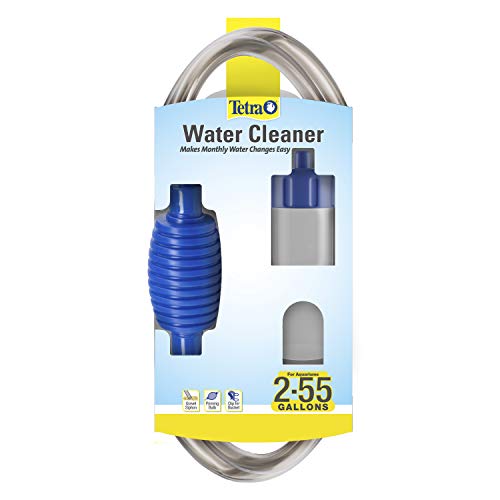
- Rated for aquariums up to 55 gallons
- Includes priming bulb and bucket clip
- Removes debris while moving through gravel
Best For: Basic scheduled water changes
Manual Multi-Tool Cleaner
QZQ Aquarium Gravel Vacuum Kit
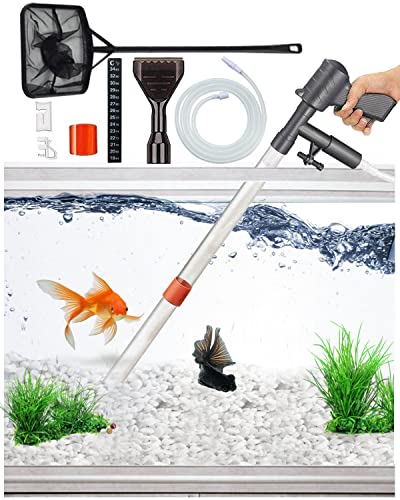
- Electricity-free and quiet manual operation
- Filter basket helps block gravel and fish
- Adds algae scraping, net, and hose accessories
Best For: Versatile manual tank cleaning
High-Flow Electric Cleaning

- 28W pump with listed 1700 L/H maximum flow
- Adjustable suction and telescopic cleaning tube
- Six functions for water and substrate maintenance
Best For: Large or deep aquariums
Simple Manual Pick
Laifoo 5ft Aquarium Siphon Vacuum

- Five-foot anti-kink clear hose
- Filter screen helps protect gravel and décor
- Siphon ball starts flow without blowing
Best For: Manual shrimp-tank maintenance with flexible reach
Compact Nano-Tank Choice
AREPK Siphon Vacuum and Water Changer

- Three cleaning heads for varied tasks
- Thin straw reaches tight planted spaces
- Compact design suits small tanks
Best For: Detailed cleaning in nano and small aquariums
Adjustable Electric System
AKKEE 36W Aquarium Gravel Cleaner

- Three adjustable motor power levels
- Five-layer filtration for water circulation
- Timed shutoff and multiple cleaning attachments
Best For: Feature-rich maintenance across varied tank sizes
Flexible Long-Reach Pick

- Seven-foot hose for extended reach
- Detachable screen helps protect livestock
- Works with gravel and sand
Best For: Aquarists needing a long manual siphon
Small-Tank Maintenance Pick
Carefree Fish Small Gravel Vacuum

- Sized for 3- to 8-gallon tanks
- Starts flow with three to five squeezes
- Handles gravel up to 5 mm
Best For: Small shrimp aquariums and routine water changes
Invertebrate-Safe Value Pick

- Attached filter helps protect shrimp
- Hand pump needs no manual priming
- Designed for gravel and water changes
Best For: Shrimp keepers prioritizing protected intake
Complete Shrimp-Safe Kit – Digital Thermometer Gravel Vacuum
For aquarium gravel vacuums for shrimp tanks, intake protection is a key consideration. This complete maintenance kit combines a manually primed siphon with a guard designed to help prevent baby shrimp and small fish from being drawn into the tube. It also includes tools for temperature checks and general tank cleaning.
Best For: Shrimp keepers who want one kit for gravel cleaning, water changes, temperature monitoring, and basic aquarium maintenance.
Pros:
- Intake guard is designed to protect tiny fish, baby shrimp, and delicate invertebrates.
- Starts siphoning after 3 to 5 presses without requiring electricity.
- Includes a digital thermometer, net, scraper, sponge brush, spare sponge, and hose accessories.
- Flow clamp and steady water flow support controlled water changes.
Cons:
- The many accessories may be more than needed for shoppers seeking only a basic gravel vacuum.
- The supplied notes do not specify a maximum aquarium size or hose length.
This is a versatile choice when shrimp safety and an all-in-one setup matter more than having the simplest possible siphon.
Simple Routine Maintenance – Tetra 55-Gallon Gravel Siphon
The Tetra Water Cleaner is a straightforward option among aquarium gravel vacuums for shrimp tanks, especially for routine debris removal and partial water changes. Its gravel siphon, priming bulb, and bucket clip provide the essential parts for a simple setup in aquariums up to 55 gallons.
Best For: Aquarists who want a basic siphon for regular gravel cleaning and scheduled partial water changes in tanks up to 55 gallons.
Pros:
- Designed for aquariums up to 55 gallons.
- Moves through gravel to remove debris.
- Includes a priming bulb and bucket clip for simpler setup.
- Supports the stated routine of replacing 30% of water every 30 days.
Cons:
- It is a basic siphon rather than a multifunction cleaning kit.
- The supplied notes do not mention a shrimp-specific intake guard.
- It does not include accessories such as a thermometer, scraper, or brush.
Choose this model if you value a compact, uncomplicated gravel siphon and your aquarium falls within its stated 55-gallon capacity.
Manual Multi-Tool Cleaner – QZQ Aquarium Gravel Vacuum Kit
The QZQ kit gives shoppers looking for aquarium gravel vacuums for shrimp tanks a manual, electricity-free cleaning system with several included accessories. Its filter basket is intended to help block gravel and reduce the chance of fish being pulled into the tube, while the press pump creates the siphon.
Best For: Aquarists who want a quiet, manually operated kit for gravel agitation, debris removal, algae scraping, and water changes.
Pros:
- Manual press design works without electricity and is described as quiet during operation.
- Filter basket helps block gravel and provides a barrier for fish.
- Includes two water pipes, pump, clips, hose, net, algae scraper, and temperature stickers.
- Tube can be used to agitate gravel so waste and food debris move into the siphon.
Cons:
- The supplied notes describe fish protection but do not specifically mention baby shrimp.
- Manual pumping requires repeated pressing to start the water flow.
- The kit may be more involved than necessary for simple debris removal.
This is a practical middle ground for keepers who want more functions than a basic siphon while avoiding an electric motor.
High-Flow Electric Cleaning – UPETTOOLS 28W Gravel Vacuum
For larger setups, this electric option brings high flow and adjustable suction to the aquarium gravel vacuums for shrimp tanks category. The UPETTOOLS cleaner combines water changing, sand washing, debris removal, filtration, showering, and flow control, with a telescopic tube for deeper tanks.
Best For: Aquarists maintaining larger or deeper freshwater or saltwater tanks who prefer powered cleaning and adjustable flow.
Pros:
- 28W motor is listed with a maximum flow rate of 1700 liters per hour.
- Adjustable flow valve allows suction strength to be controlled.
- Telescopic tube extends from 23.6 to 37.7 inches for varied tank depths.
- Combines six functions, including water changing, filtration, sand washing, and debris cleaning.
Cons:
- Corded 110V operation may be less convenient than a manual siphon.
- The strong powered suction requires careful flow adjustment around shrimp and delicate livestock.
- The supplied notes do not identify a shrimp-specific intake guard.
This model suits demanding maintenance jobs and deeper aquariums, but shrimp keepers should use the adjustable valve conservatively and verify safe intake placement.
Simple Manual Pick – Laifoo 5ft Aquarium Siphon Vacuum
Laifoo 5ft-S Aquarium Siphon Vacuum Cleaner for Fish Tank Cleaning Gravel & Sand
Check Price On AmazonFor aquarium gravel vacuums for shrimp tanks, the Laifoo offers a straightforward manual siphon for removing waste and cloudy water. Its sinkable gravel tube includes a detachable filter screen, helping limit disturbance to fish and décor during cleaning.
Best For: Shrimp keepers who want a simple, manually controlled siphon with a long hose.
Pros:
- Five-foot clear, flexible hose is designed to resist kinking.
- Detachable filter screen helps keep gravel and décor from being disturbed.
- Siphon ball starts water flow without blowing into the hose.
- Includes a three-month replacement or refund warranty for quality issues.
Cons:
- Manual operation requires repeatedly pinching the siphon ball.
- The supplied notes do not specify a flow-control valve for especially delicate cleanup.
This is a practical choice when you prefer a low-complexity gravel vacuum and want a long hose for flexible positioning. Use its filter-screened tube carefully around small shrimp and loose substrate.
Compact Nano-Tank Choice – AREPK Siphon Vacuum and Water Changer
The AREPK is a compact option among aquarium gravel vacuums for shrimp tanks, particularly when working in small or nano aquariums. Its interchangeable heads support gravel and sand cleaning, tight-spot access, decoration scrubbing, and water changes.
Best For: Nano, betta, and small fish tanks that need a compact multi-purpose cleaning kit.
Pros:
- Three independent cleaning heads handle siphoning, brushing, and sponge cleaning.
- Thin cleaning straw reaches between rocks, wood, and plants.
- Compact design is intended for tanks under 10 gallons and larger aquariums above 10 gallons.
- Includes two sets of replaceable sponges and a tube-fixing clamp.
Cons:
- Its small format may be less efficient for extensive cleaning in large tanks.
- Multiple heads and accessories require storage and switching during maintenance.
With its narrow straw and compact build, this kit is well suited to detailed maintenance around planted areas and hardscape. The detachable pump head also makes cleaning and unclogging more convenient.
Adjustable Electric System – AKKEE 36W Aquarium Gravel Cleaner
The AKKEE brings powered filtration and adjustable suction to aquarium gravel vacuums for shrimp tanks. Its three motor settings, fine- and coarse-sand tubes, and timed shutoff provide more control than a basic manual siphon, though the switch must be kept away from water.
Best For: Aquarists who want an electric cleaner with adjustable power, filtration, and multiple maintenance attachments.
Pros:
- Three power levels—19W, 27W, and 36W—offer adjustable suction for different fish sizes.
- Five-layer filter materials support water filtration and circulation.
- Timed shutoff can stop the unit after 10, 30, or 60 minutes.
- Includes sand-washing tubes, manure head, algae blade, extension tube, and water pipe.
Cons:
- The 2.9-pound electric system is less compact than a basic hand siphon.
- The switch is not waterproof and must be kept away from water.
- Its stronger suction should be used cautiously around shrimp and young fish.
This is the most feature-rich option here for larger or more demanding maintenance routines. Adjustable power can help with gentler cleaning, but careful positioning remains important in a shrimp tank.
Flexible Long-Reach Pick – Laifoo 7ft Aquarium Siphon
Laifoo 7ft Aquarium Siphon Vacuum Cleaner for Fish Tank Cleaning Gravel & Sand
Check Price On AmazonFor aquarium gravel vacuums for shrimp tanks, the Laifoo offers a long, clear hose and a sinkable gravel tube designed to help remove waste and cloudy water without unnecessarily disturbing livestock or décor.
Best For: Aquarists who want extended reach and simple manual siphoning for gravel or sand cleaning.
Pros:
- Seven-foot, clear and elastic hose is designed to resist kinking.
- Detachable filter screen helps limit the risk of siphoning fish or shrimp.
- Pinch the siphon ball several times to start water flow without blowing into the hose.
- Includes a three-month replacement or refund warranty for quality issues.
Cons:
- The notes do not specify a tank-size range or maximum working depth.
- Manual siphoning requires repeated squeezing to initiate flow.
The long hose is the main advantage here, especially for tanks positioned away from a drain or bucket. Its internal screen and gentle, controllable operation also make it a practical option when cleaning around shrimp and décor.
Small-Tank Maintenance Pick – Carefree Fish Small Gravel Vacuum
Among aquarium gravel vacuums for shrimp tanks, this compact Carefree Fish model is sized for 3- to 8-gallon aquariums and combines substrate cleaning with water changes in a straightforward hand-pump design.
Best For: Small aquarium owners who need a dedicated gravel cleaner for particles up to 5 mm.
Pros:
- Designed for 3- to 8-gallon tanks with a maximum working depth of 16 inches.
- Wide gravel tube can clean substrate and remove hidden waste.
- Silicone bulb starts continuous flow after three to five squeezes.
- Includes a flow-control valve, hose clamp, and six-foot drain hose.
Cons:
- Its stated tank range makes it less suitable for larger aquariums.
- It is specified for gravel particles up to 5 mm, not unrestricted substrate sizes.
This is a focused choice for nano and small tanks where a full-size siphon may be excessive. The included flow-control hardware and defined substrate limit make it easier to match the cleaner to a small shrimp setup.
Invertebrate-Safe Value Pick – Luigi's Fish Tank Cleaner
For shoppers comparing aquarium gravel vacuums for shrimp tanks, Luigi’s Fish Tank Cleaner emphasizes a protective attached filter, hand-pump operation, and quick water changes without messy drips.
Best For: Shrimp and invertebrate keepers seeking a simple gravel-cleaning siphon with an integrated intake filter.
Pros:
- Attached filter is designed to help prevent small fish, shrimp, and invertebrates from being sucked up.
- Hand pump eliminates the need for manual priming.
- One-way valve is intended to improve suction and reduce messy drips.
- Can clear about 30 liters in approximately five minutes, according to the supplied notes.
Cons:
- The supplied details do not list hose length, tank-size range, or particle-size compatibility.
- The notes do not specify whether the filter is removable or adjustable.
Luigi’s stands out when livestock protection and easy startup matter most. Its straightforward pump-and-go design should suit routine gravel filtration and water changes, though shoppers with unusual tank dimensions should confirm fit before buying.
How We Picked the Best Aquarium Gravel Vacuums for Shrimp Tanks
We focused on practical features that matter in shrimp aquariums: controlled suction, a narrow or adjustable cleaning head, substrate compatibility, hose reach, ease of priming, and the ability to manage water changes without creating excessive turbulence. We also included both manual and electric options because tank size, maintenance frequency, and personal preference vary.
For shrimp keepers, safety and control matter more than maximum suction power. A vacuum that removes debris slowly and predictably is often more useful than a powerful model designed for large, heavily stocked tanks.
Quick Comparison
| Best For | Recommended Type | What to Look For |
|---|---|---|
| Small nano shrimp tanks | Compact manual siphon | Low suction, narrow nozzle, short hose |
| Planted tanks | Controlled manual or adjustable electric vacuum | Precise flow and a manageable cleaning head |
| Larger shrimp setups | Long-hose or electric model | Reach, flow control, and convenient water handling |
| Frequent maintenance | Reusable electric or easy-prime siphon | Simple setup and washable components |
Key Buying Factors for Aquarium Gravel Vacuums for Shrimp Tanks
Suction Control
Look for a model that lets you slow the flow. Strong suction can pull in baby shrimp, uproot plants, or remove valuable substrate. When cleaning around moss, cholla wood, and hardscape, intermittent siphoning is usually safer than continuous full-strength flow.
Nozzle and Substrate Compatibility
Fine sand and small gravel require a narrow, gentle cleaning head. Larger gravel allows deeper cleaning, while bare-bottom tanks can benefit from a wider nozzle. If the cleaner includes a filter or removable head, check whether it is easy to inspect for trapped shrimp.
Tank Size and Hose Length
A short hose may be convenient for a desktop aquarium but awkward for a stand-mounted tank. Measure the distance from the aquarium to the bucket before buying. Longer hoses improve reach, though they can require stronger priming and more storage space.
Manual Versus Electric Operation
Manual siphons are inexpensive, quiet, and often easier to control in small tanks. Electric models can simplify repeated water changes and may include filtration or pumping functions, but they add cords, moving parts, and a greater need to monitor flow.
Maintenance and Shrimp Safety
Choose a cleaner that disassembles for rinsing and has no hard-to-reach debris traps. Never use untreated tap water to wash aquarium equipment, since chlorine and chloramine residue can harm livestock. Inspect the intake during every cleaning session, especially when the tank contains shrimplets.
Who Should Buy Which Aquarium Gravel Vacuums for Shrimp Tanks?
Choose a Compact Manual Vacuum for Nano Tanks
If your shrimp aquarium is small or heavily planted, prioritize a compact siphon with gentle flow and precise placement. It gives you better control over how much water and substrate you remove at once.
Choose a Long-Hose Siphon for Straightforward Water Changes
Manual models with extra hose length suit keepers who want a simple, low-maintenance tool for routine cleaning. They are especially useful when the aquarium sits far from the drainage bucket.
Choose an Electric Cleaner for Convenience
An electric vacuum makes sense for larger tanks, frequent maintenance, or anyone who prefers a pump-assisted setup. Select one with adjustable flow or a suitable intake guard rather than choosing solely by motor power.
Choose an All-In-One Kit for Occasional Maintenance
Multi-piece kits can be useful when you need brushes, tubing, siphon components, or water-changing accessories in one package. Before using one in a shrimp tank, test its suction in a bucket and confirm that small shrimp cannot reach the intake.