Automatic Microchip RFID Cat Feeder review is a good fit for households that need controlled access more than a basic timed feeder.
If you want one feeder to open only for a specific cat, this model is built around that problem.
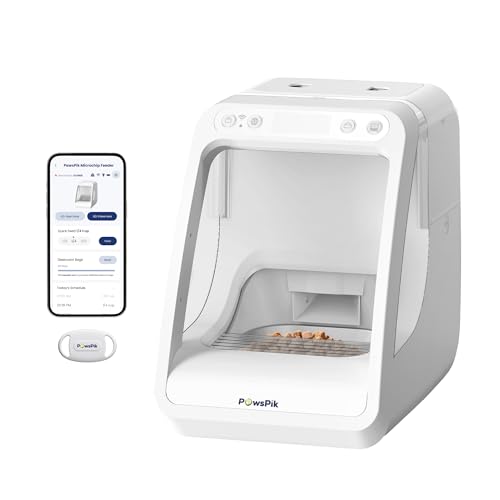
Automatic Microchip RFID Cat Feeder Review Summary
The Automatic Microchip RFID Cat Feeder makes the most sense for buyers who are tired of food stealing, uneven diets, or pets crowding each other at mealtime.
Its main appeal is simple: it uses microchip or RFID recognition to limit access, while still adding app-based scheduling and portion control for day-to-day management.
Verdict: this is a specialized feeder for controlled, individualized feeding, not a general-purpose multi-pet station.
It suits owners who already know that access control matters more than open convenience.
Review Scorecard
| Category | Score | Rationale |
|---|---|---|
| Access control | 10/10 | Built around assigned microchip or RFID recognition to block food stealing. |
| Feeding flexibility | 8/10 | App scheduling, up to 10 meals per day, and portion control cover routine use well. |
| Multi-pet fit | 4/10 | Listing says each feeder works for one pet only, so scaling requires more units. |
| Power reliability | 8/10 | Backup battery support is useful for uninterrupted feeding during outages. |
| Daily convenience | 8/10 | App monitoring and scheduled meals reduce hands-on management. |
| Setup specificity | 6/10 | Compatible only with ISO microchips and PawsPik RFID tags, which narrows compatibility. |
Key Features and Specifications of Automatic Microchip RFID Cat Feeder
This feeder centers on selective access.
According to the listing, it prevents food stealing by opening only for the pet linked to the assigned microchip or RFID tag.
It is also explicit about the compatibility rules: it supports ISO-compliant 15-digit microchips and includes a PawsPik RFID tag for pets without a compatible microchip.
The capacity is 16 cups, which is substantial enough for routine feeding without constant refilling.
The app adds meal scheduling, portion sizing, and feeding activity monitoring, with support for up to 10 meals per day.
That combination matters because it turns the feeder from a simple door into a managed feeding system.
The power backup is another practical detail.
The listing says the battery backup helps maintain feeding during outages, which is important for anyone who cannot risk a missed meal because of home power issues.
Key points from the listing:
- Smart access with RFID and microchip recognition
- Compatible with ISO-compliant 15-digit microchips
- Includes a PawsPik RFID tag
- Closed Mode and Open Mode feeding behavior
- App scheduling and monitoring
- Up to 10 meals per day
- Portion control
- 16-cup capacity
- Backup battery support
- Designed for cats of all sizes and small dogs
What stands out is how narrowly the feeder is designed.
The system is not trying to be everything to everyone.
It is trying to solve access control first, then add scheduling and capacity around that core task.
Pros and Cons of Automatic Microchip RFID Cat Feeder
Pros
- Strong access control for homes where one pet keeps stealing another pet’s food
- Microchip and RFID support broadens the number of pets that can use it
- App scheduling makes meal timing easier to manage
- Portion control helps with routine feeding discipline
- Backup battery adds resilience during outages
- 16-cup capacity reduces refill frequency
Cons
- Only works for one pet per feeder, so multi-pet homes need multiple units
- Compatibility is limited to ISO-compliant 15-digit microchips and PawsPik RFID tags
- Open Mode still has caveats, since the listing recommends RFID tags for unauthorized pets in that mode
- Not a simple set-and-forget feeder if your household wants broad shared access
Who Should Buy Automatic Microchip RFID Cat Feeder?
Buy this if you need controlled, pet-specific feeding.
The clearest use case is a home where one cat needs dietary separation or where a second pet tends to steal food.
The microchip/RFID gate is the feature that justifies the product.
It also makes sense if you want more structure than a standard feeder.
The ability to schedule up to 10 meals per day and set portions gives you finer control than the usual timer-only approach.
That matters for cats that do better with smaller, repeated feedings.
The feeder is also a reasonable choice if you value power backup and remote oversight.
The app monitoring and backup battery are practical, not flashy, and they reduce the chance that a routine feeding schedule falls apart because of a minor disruption.
Skip it if you want shared access for multiple pets from one bowl.
The listing is clear that each feeder works for one pet only, so this is not the right answer for a free-feeding household or a pair of animals that should eat from the same unit.
Skip it too if your pet does not fit the stated compatibility rules.
The feeder is tailored to ISO-compliant 15-digit microchips and PawsPik RFID tags, so households outside that lane should verify compatibility before buying.
How the RFID Access and App Controls Shape Daily Use
Selective Access Solves the Real Problem
The biggest advantage here is not the app or the capacity.
It is the fact that the feeder is designed to stop the wrong pet from eating.
For households with a food thief, that can be more valuable than any convenience feature.
The feeder’s entire structure makes more sense once you view it as a control device rather than a basic dispenser.
Scheduling Adds Discipline Without Making It Complicated
Being able to schedule up to 10 meals per day is useful because it supports more granular feeding routines.
That can help owners who want smaller meals spread through the day instead of one or two large servings.
The portion control feature supports that approach and makes the feeder more than just a locked bowl.
Backup Power Matters More Than It Sounds
Battery backup is one of those details buyers may overlook until they need it.
In a feeder that is meant to manage access and timing, a power interruption is not just an inconvenience.
It can interrupt the whole feeding routine.
Backup support makes the product more dependable for regular use.
One Feeder Per Pet Is a Real Constraint
This is not a weakness so much as a design boundary, but it matters.
If you have more than one animal and each needs protected access, you are essentially buying a dedicated feeder for each one.
That increases cost and setup complexity, so the product is best for targeted problem-solving rather than whole-house feeding simplification.
Alternatives to Automatic Microchip RFID Cat Feeder
If you want other credible options, look at these Amazon search pages:
- SureFeed Microchip Pet Feeder
- PETLIBRO automatic cat feeder
- PetSafe automatic feeder
- WOPET automatic cat feeder
The first option is the closest conceptual comparison if your top priority is selective pet access.
The other brands are worth comparing if you care more about standard automatic feeding than RFID-based locking.
Is Automatic Microchip RFID Cat Feeder Worth It?
Yes, if your main problem is keeping the right pet on the right diet.
The Automatic Microchip RFID Cat Feeder is worth considering because it focuses on access control first and adds the other features that matter most: scheduling, portion control, app monitoring, and backup power.
It is not the best buy if you just want a simple automatic feeder for a household that shares food freely.
But if one pet needs protected feeding and you want a feeder built specifically around that problem, this is a practical, well-targeted option.