A large dog’s bark can carry, but the right collar depends on more than volume. Fit, reliable bark detection, and adjustable feedback matter more than a long list of modes.
These 10 options cover automatic collars, beep-and-vibration models, multipacks, and a remote-assisted choice. Use the buying guide to narrow down which approach suits your dog and your routine.
Best 10 Bark Control Device for Large Dogs Picks for 2026
Best for Remote Training
2-in-1 Bark and Training Collar

- Automatic and remote training modes
- Beep, vibration, static, and no-shock options
- Fits 5–120 lb dogs; IPX7 receiver
Best For: Owners combining bark control with remote-guided training
Best for Adjustable Fit

- Fits 8–150 lb dogs and 8–25 in necks
- Four modes and five sensitivity levels
- 30-second pause after six activations
Best For: Standalone bark control with a stated large-dog fit range
Best for Sensitivity Control

- Seven sensitivity levels
- Sound and vocal-vibration detection
- One-minute pause after seven barks
Best For: No-shock automatic feedback with finer sensitivity settings
Best Two-Pack
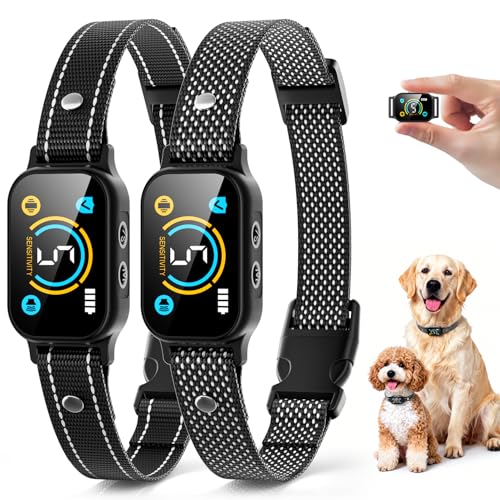
- Two automatic collars included
- Beep and vibration; five sensitivity levels
- Seamless backs and reflective straps
Best For: Two-dog households seeking no-shock bark collars
Simple Automatic Correction
PetSafe Basic Bark Control Collar
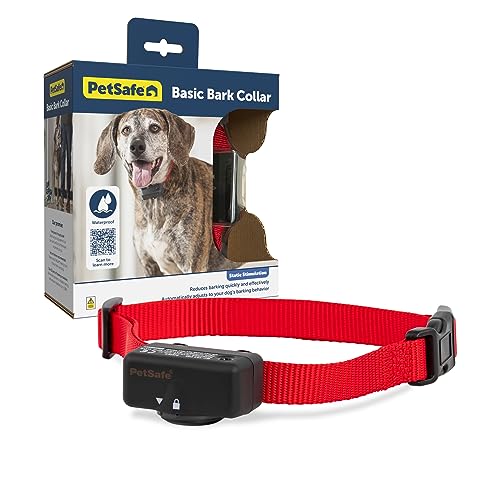
- Six automatic static levels
- Waterproof collar
- Fits necks up to 27 inches
Best For: Straightforward automatic correction
Correction Tracking

- Counts barks with Bark Odometer
- Automatic and manual correction options
- Vibration mode available
Best For: Tracking barking while adjusting training settings
Two-Collar Value

- Two adjustable collars
- Beep and vibration options
- Five sensitivity settings
Best For: Two-dog households seeking flexible modes
Best for Activity Tracking
Rechargeable Beep-and-Vibration Bark Collar

- Records daily bark counts and usage
- Three beep/vibration options; five sensitivity levels
- Fits 10- to 25-inch necks
Best For: Medium or large dogs whose owners want activity data
Best Heavy-Duty Pick
Adjustable Automatic Bark Collars
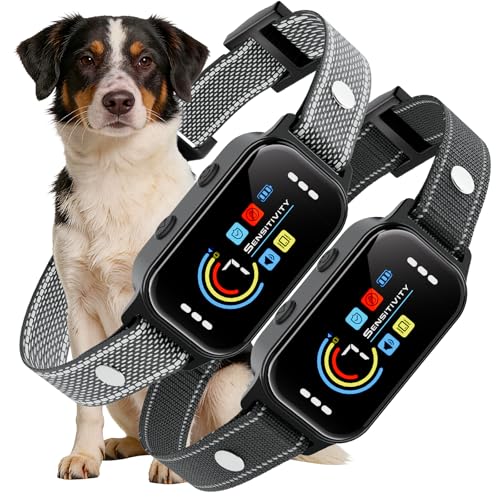
- Two collars for 11- to 120-pound dogs
- Five modes and seven sensitivity levels
- Automatic pause after repeated activations
Best For: Households training two dogs
Best On-Collar Display
Smart Bark Collar with Bark Counter

- Rotatable screen shows daily bark counts
- Eight sensitivity grades
- Stated fit: 10–100 lb; necks up to 25 in.
Best For: Owners who want on-collar settings and bark tracking
Best for Remote Training – 2-in-1 Bark and Training Collar
If you want a bark control device for large dogs that also supports hands-on training, this collar combines automatic bark detection with a remote. You can use either function separately or together.
Best For: Owners who want automatic bark control plus remote-guided training for recall and everyday behavior.
Pros:
- Offers beep, vibration, static, and a no-shock beep-and-vibration mode.
- Fits dogs from 5 to 120 pounds and offers three bark-detection sensitivity levels.
- Remote range reaches up to 3,300 feet; the receiver is IPX7 waterproof.
Cons:
- Includes static correction, which may not suit owners seeking a vibration-only collar.
- Its many settings take more attention to configure than a basic automatic collar.
The remote makes this the most flexible option here for owners who want to work on more than barking. Start with the available beep or vibration cues and choose settings that fit your dog.
Best for Adjustable Fit – FAFAFROG Smart Bark Collar
The FAFAFROG is an automatic bark control device for large dogs with a specified 8-to-150-pound weight range and 8-to-25-inch neck fit. It offers four working modes and five sensitivity levels without requiring a remote.
Best For: Owners seeking a standalone collar with a clearly stated fit range for larger dogs.
Pros:
- Uses barking recognition and vocal-cord vibration as its two activation conditions.
- Pauses for 30 seconds after six consecutive activations.
- IP67 waterproof design and a stated 15–20 days of use per two-hour charge.
Cons:
- No remote for manually timed training cues.
- Check the manual to understand the four modes before choosing one.
Its broad stated size range and automatic pause make it worth considering for everyday bark control. Measure your dog’s neck rather than relying on weight alone.
Best for Sensitivity Control – KJKZO No-Shock Bark Collar
For shoppers comparing a bark control device for large dogs without static correction, this KJKZO collar lists beep, vibration, and combined feedback. Its seven sensitivity levels provide more adjustment steps than the five-level options in this roundup.
Best For: Owners who want automatic, no-shock bark feedback with finer sensitivity adjustments.
Pros:
- Dual sensors detect sound and vocal-cord vibration.
- Three feedback modes and seven sensitivity levels.
- Pauses for one minute after seven consecutive barks; rated IP67 waterproof.
Cons:
- No remote for recall or other manual training cues.
- Supplied notes do not specify a large-dog neck-size range; check fit before buying.
This is a practical pick when sensitivity adjustment and a built-in rest period matter most. The stated 20-plus-day battery life depends on use, and the missing neck measurement is worth verifying.
Best Two-Pack – Seamless-Back Bark Collars
If you need a bark control device for large dogs in a two-dog household, this pack includes two automatic collars. Each offers beep and vibration feedback, five sensitivity settings, and a seamless back designed to reduce rubbing.
Best For: Households with two dogs that need separate, no-shock bark collars.
Pros:
- Two collars are included.
- Beep, vibration, and combined modes avoid static correction.
- Reflective nylon straps and a 30-second pause after seven activations.
Cons:
- No remote for manual training.
- Supplied notes do not give neck measurements or a waterproof rating.
The two-pack is useful when both dogs need their own collar, while the seamless contact surface is a thoughtful comfort detail. Confirm sizing for each dog before ordering.
Simple Automatic Correction – PetSafe Basic Bark Control Collar
If you need a bark control device for large dogs without choosing correction levels yourself, the PetSafe Basic Bark Control Collar automatically adjusts through six static levels. Its adjustable strap fits necks up to 27 inches, so check your dog’s neck measurement before buying.
Best For: Owners who want straightforward, automatic bark correction and a waterproof collar.
Pros:
- Six automatically adjusting static correction levels.
- Waterproof for indoor or outdoor use.
- Includes an RFA-67 battery and fits dogs weighing 8 pounds or more.
Cons:
- Uses static correction; no beep-only or vibration mode is listed.
- Requires an RFA-67 battery rather than recharging.
This is a practical choice if you prefer an automatic setup, but its correction method and 27-inch maximum neck fit are the key considerations.
Correction Tracking – Garmin BarkLimiter Deluxe
Garmin BarkLimiter Deluxe, Rechargeable Dog Training Collar with Automatic Levels for All Dog Breeds
Check Price On AmazonFor shoppers comparing a bark control device for large dogs, the rechargeable Garmin BarkLimiter Deluxe offers automatic correction plus a Bark Odometer that counts barks. Its stainless steel contact points are designed for different breeds and coat thicknesses.
Best For: Owners who want to track barking and choose between automatic correction, vibration, and manual settings.
Pros:
- Bark-differentiating technology is designed to reduce false and excessive corrections.
- Auto-rise correction adjusts automatically.
- Bark Odometer counts barks to help assess progress.
- Offers vibration and seven manual correction levels.
Cons:
- Care instructions say to keep the device dry and clean; waterproofing is not specified.
- The supplied notes do not give a neck-size range, so confirm fit before ordering.
The bark count is a useful distinction if you want a way to gauge whether training is helping, while the available modes offer more choice than an automatic-only collar.
Two-Collar Value – Smart Dog Bark Collar 2-Pack
If you need a bark control device for large dogs in a two-collar pack, this set offers beep, vibration, combined beep-and-vibration, and shock modes. Each collar has five sensitivity settings and an adjustable reflective nylon strap.
Best For: Households that need two collars and want to start with non-shock settings.
Pros:
- Two collars are included.
- Beep and vibration options allow training without selecting shock mode.
- Five sensitivity settings and bark-detection technology are intended to limit unwanted triggers.
- IP67 waterproof rating and a 30-second pause after seven consecutive triggers.
Cons:
- Shock is among the available modes, which may not suit every owner.
- The supplied notes do not specify a neck-size range for checking large-dog fit.
This pack offers flexible settings for two dogs, but measure each dog’s neck and choose the correction mode you are comfortable using.
Best for Activity Tracking – Rechargeable Beep-and-Vibration Bark Collar
If you want a bark control device for large dogs that lets you review barking patterns, this rechargeable collar records daily usage and bark counts. It responds automatically to barking, so you do not need a remote.
Best For: Owners of medium or large dogs who want bark-count tracking alongside adjustable, no-remote training.
Pros:
- Offers beep, vibration, or combined settings with five sensitivity levels.
- Tracks daily usage and bark counts to help you review activity.
- Includes a 30-second pause after repeated activations and silicone contact-point covers.
Cons:
- The 10- to 25-inch neck range requires measuring before purchase.
- No remote control for manually timed cues.
The tracking feature is its main advantage over a basic automatic collar. Measure your dog’s neck and start with a suitable sensitivity setting rather than relying on breed size alone.
Best Heavy-Duty Pick – Adjustable Automatic Bark Collars
For a household with two dogs, this two-pack offers a bark control device for large dogs without buying separate single-collar packages. Each automatic collar offers five training modes and seven sensitivity levels for adjusting the response.
Best For: Two-dog households looking for automatic collars with straightforward controls and adjustable settings.
Pros:
- Includes two collars for dogs within the stated 11- to 120-pound range.
- Offers five modes, seven sensitivity levels, and button-based adjustments.
- Has an automatic safety pause after three activations in 45 seconds.
- IP67 rating and magnetic charging suit regular outdoor use.
Cons:
- Mode and sensitivity choices may take some trial and observation for each dog.
- The supplied notes do not specify a neck-size range, so check fit before ordering.
The two-pack is the practical draw here, especially if your dogs need different sensitivity settings. Check the collar dimensions for each dog rather than using the weight range as your only fit guide.
Best On-Collar Display – Smart Bark Collar with Bark Counter
If you prefer to adjust settings on the collar itself, this bark control device for large dogs has a rotatable color display and a real-time daily bark counter. Its sound-recognition and motion sensors are designed to help filter out unrelated noise and movement.
Best For: Owners who want visible bark counts and on-collar controls for a dog within the stated 10- to 100-pound range.
Pros:
- Displays bark counts and training settings on a rotatable TFT screen.
- Offers beep, vibration, and combined settings, plus eight sensitivity grades.
- Sound and motion sensing are designed to reduce unintended activations.
- Has a strap adjustable up to 25 inches and an IP67 rating.
Cons:
- The stated 100-pound upper weight limit may exclude some extra-large dogs.
- Check neck fit carefully: the supplied notes specify a maximum of 25 inches but not a minimum.
This model stands out for showing bark counts directly on the collar. Start with a low setting, observe your dog’s response, and adjust as needed; sensor features do not eliminate the need to check for unintended activations.
How We Picked the Best Bark Control Device for Large Dogs
We focused on practical differences across the 10 selected collars: automatic versus remote-assisted operation, stated size ranges, feedback options, sensitivity settings, rechargeable designs, and multipack value. Product names and listings do not establish how well a collar detects barks in a particular home, so treat feature claims as a starting point and check current specifications before buying.
A Bark Control Device for Large Dogs should fit securely without being tight and should respond to your dog’s bark rather than nearby noise. We also favor an approach that lets you begin with the mildest effective feedback and adjust as you learn what triggers the barking.
Quick Comparison: Which Type Fits Your Routine?
- Automatic beep-and-vibration collars: Useful when barking happens while you cannot respond immediately. Compare sensitivity controls and detection features, particularly in multi-dog homes.
- Remote-assisted collar: The 2-in-1 remote and bark collar offers a way to give feedback during supervised training, alongside automatic bark control. It requires you to be present and consistent when using the remote.
- Multipacks: The two-collar options may be convenient for two dogs or for keeping a spare. Confirm each collar fits its intended dog rather than assuming one adjustment suits both.
- Established-brand options: The PetSafe Basic Bark Control Collar and Garmin BarkLimiter Deluxe are alternatives to the many similarly named smart collars. Compare their current feedback methods and replacement-part needs with your preferences.
Key Buying Factors for a Bark Control Device for Large Dogs
Fit and Weight Range
Check your dog’s neck measurement as well as the advertised weight range. A collar that shifts around can detect or deliver feedback inconsistently; one that is too tight can irritate skin. Follow the maker’s fitting and wear-time directions, and inspect the contact area regularly.
Detection and Sensitivity
Adjustable sensitivity can help you find a setting that catches your dog’s barking without reacting unnecessarily. If you have multiple dogs, a busy household, or a noisy yard, look closely at how the manufacturer says the collar distinguishes your dog’s bark from other sounds. Supervise initial use to spot false triggers.
Feedback, Power, and Weather Resistance
Decide whether beep, vibration, or another available mode fits your training plan before comparing the number of settings. Check whether the collar is rechargeable or needs batteries, and whether its stated water-resistance rating covers rain and outdoor play; water-resistant does not automatically mean suitable for swimming.
Who Should Buy Which Bark Control Device for Large Dogs?
For a first attempt, consider an adjustable automatic collar with beep and vibration so you can start gently and monitor your dog’s response. Choose the remote-assisted model if barking occurs in situations where you can actively reward quiet behavior and time your feedback. A multipack makes the most sense for two dogs whose neck sizes fit the collars. Consider PetSafe or Garmin if you prefer to compare a named brand’s support, operating instructions, and consumable or replacement-part availability before purchasing.
No collar replaces a plan for the cause of barking. If barking is driven by fear, separation distress, or sudden behavioral change, consult a veterinarian or qualified trainer before relying on a bark collar.