A small dog can have a surprisingly big bark. If barking is disrupting your day, the right device may help you interrupt the habit—but it works best alongside training and a clear understanding of what triggers the noise.
These 10 picks include wearable beep-and-vibration collars, handheld ultrasonic trainers, and stationary deterrents. Here’s how to choose a practical option for your dog and your space.
Best 10 Bark Control Device for Small Dogs Picks for 2026
Best Non-Static Collar
FAFAFROG Rechargeable Bark Collar

- Beep and vibration settings
- Fits listed weights of 8–150 lb
- 30-second pause after six activations
Best For: Hands-off collar training for dogs over 6 months old
Best Pocket-Size Deterrent
YUYQA 3-Emitter Ultrasonic Device

- Four ultrasonic modes plus beep
- Stated range up to 23 ft
- Compact with built-in flashlight
Best For: On-demand, collar-free use during walks
Best Mode Selection

- Five modes and five sensitivity levels
- LCD displays settings and battery
- Fits listed weights of 8–150 lb
Best For: Owners wanting a choice of non-static and static modes
Best Longer-Range Handheld
IZNiK Ultrasonic Bark Deterrent
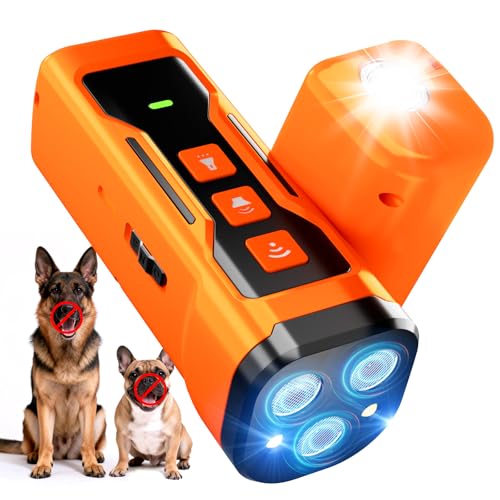
- Stated range up to 33 ft
- Four ultrasonic settings plus beep
- Flashlight and USB-C charging
Best For: Manual, collar-free use in quieter settings
Best Automatic Collar
Tittron Beep & Vibration Collar

- Automatic bark detection
- Beep, vibration, or combined feedback
- Fits stated 9–150 lb range
Best For: Hands-free feedback for dogs at least 9 lb
Best Yard-Mounted Option

- Automatic, stationary outdoor use
- Solar power plus USB-C charging
- Four modes; stated range up to 50 ft
Best For: Yards and patios with a consistent barking area
Longest Claimed Range
IZNiK Six-Mode Pocket Deterrent

- Claimed range up to 33 feet
- Six selectable modes
- LED flashlight and USB-C charging
Best For: Flexible handheld training at home and on walks
Keychain-Friendly Pick
Purple Dual-Frequency Deterrent

- Two ultrasonic modes
- Claimed 23-foot range
- Wrist strap and strobe mode
Best For: Portable, contact-free training indoors and outdoors
Training Versatility Pick
Tangerine IZNiK Bark Deterrent

- Six selectable modes
- Claimed range up to 33 feet
- Supports broader behavior training
Best For: Handheld feedback for barking and other unwanted actions
Best Non-Static Collar – FAFAFROG Rechargeable Bark Collar
If you want a wearable bark control device for small dogs, the FAFAFROG collar offers beep and vibration settings with five sensitivity levels. Its listed fit starts at 8 pounds and an 8-inch neck, so measure your dog before ordering.
Best For: Dogs over 6 months old whose owners want an automatic, rechargeable collar with adjustable beep-and-vibration feedback.
Pros:
- Uses barking and vocal-cord vibration as activation conditions.
- Pauses for 30 seconds after six consecutive activations.
- IP67-rated design; stated battery life is about 15–20 days per charge.
Cons:
- Not listed for dogs under 8 pounds or younger than 6 months.
- Works automatically without a remote, so it does not provide on-demand control.
The automatic detection and safety pause make this a practical hands-off option, provided the collar fits your dog comfortably. Check the manual to choose an appropriate mode and sensitivity.
Best Pocket-Size Deterrent – YUYQA 3-Emitter Ultrasonic Device
For shoppers seeking a handheld bark control device for small dogs instead of a collar, the YUYQA provides four ultrasonic modes plus an audible beep. Its compact design is intended for walks and other situations where you can respond to barking yourself.
Best For: Owners who prefer on-demand, collar-free training at home or on walks.
Pros:
- Three ultrasonic emitters and a stated range of up to 23 feet.
- Includes a flashlight for low-light use.
- USB-C charging takes about two hours; stated regular-use battery life is up to 30 days.
Cons:
- Requires you to be present and operate it; it does not detect barking automatically.
- The supplied notes do not specify a dog-size-based fit or guarantee that every dog will respond to ultrasound.
Choose this one if portability and manual control matter more than automatic correction. Its multiple modes give you options, but results will depend on how your dog responds during training.
Best Mode Selection – Oliry Five-Mode Bark Collar
The Oliry is a bark control device for small dogs when you want a collar with choices ranging from beep and vibration to settings that include static correction. It is listed for dogs at least 8 pounds and 6 months old, with neck sizes from 8 to 25 inches.
Best For: Owners who want adjustable automatic bark detection and are comfortable choosing among non-static and static modes.
Pros:
- Five training modes and five sensitivity levels.
- LCD shows battery level, sensitivity and active mode.
- IP67-rated; pauses after six continuous triggers.
- Stated battery life is up to 18 days after a two-hour charge.
Cons:
- Some modes use static correction, which may not suit every owner’s training preferences.
- Not listed for dogs under 8 pounds or younger than 6 months.
This collar’s main advantage is flexibility: you can select a beep-only setting or a different listed mode. For a small dog, verify the neck fit and start with a suitable sensitivity setting.
Best Longer-Range Handheld – IZNiK Ultrasonic Bark Deterrent
If you prefer a handheld bark control device for small dogs, the IZNiK uses three ultrasonic emitters and offers four ultrasonic settings plus an audible beep. The listed operating distance reaches up to 33 feet, though the notes say ultrasonic signals work best in quieter settings.
Best For: Owners seeking collar-free, on-demand feedback indoors or outdoors, especially in quieter environments.
Pros:
- Stated range of up to 33 feet.
- Multiple ultrasonic settings and an audible beep.
- Built-in flashlight; USB-C charging takes about 1.5 hours.
- Stated battery life is up to 30 days of regular use.
Cons:
- Manual operation makes it unsuitable for unattended bark monitoring.
- Performance may be less predictable in noisy settings, based on the product’s own guidance.
The longer stated range distinguishes this portable option from the other handheld device here. Consider it when you can actively reinforce training rather than relying on an automatic collar.
Best Handheld Trainer – 25kHz Ultrasonic Deterrent
If you want a bark control device for small dogs that you operate yourself, this handheld ultrasonic trainer lets you deliver a 25kHz pulse when barking starts. Its manual button makes it better suited to supervised training than unattended bark control.
Best For: Owners practicing a “quiet” cue with a small dog at home or on walks.
Pros:
- 25kHz frequency marketed for dogs under 20 pounds.
- Manual activation lets you time the signal to the behavior.
- Rechargeable, pocket-size design with a stated range of up to 50 feet.
Cons:
- Requires you to notice the barking and press the button.
- The stated 30-day battery life is a standby figure, not continuous-use time.
This is a practical pick when you want direct control over training sessions. The 50-foot range is a manufacturer claim, so expect placement and surroundings to affect real-world use.
Best Automatic Collar – Tittron Beep & Vibration Collar
For shoppers who prefer a wearable bark control device for small dogs, this Tittron collar detects barking and responds automatically with your chosen beep, vibration, or combined setting. Its specified 9–150-pound fit range includes many small breeds, but checking the strap fit matters.
Best For: Owners who want hands-free bark feedback and adjustable, shock-free settings.
Pros:
- Three feedback modes, with two beep levels and seven vibration levels.
- Automatic bark detection requires no handheld remote.
- Adjustable 6–23-inch nylon strap and built-in sleep protection.
Cons:
- Not specified for dogs under 9 pounds.
- Fit and sensitivity settings need attention to avoid unwanted activations.
The adjustable feedback makes this a more flexible choice than a single-setting collar. Start at a low setting and check the fit before relying on automatic operation.
Best Yard-Mounted Option – Solar Ultrasonic Deterrent
If you need a bark control device for small dogs in an outdoor area rather than on a collar, this ultrasonic unit can be hung on a fence, tree, or wall. It runs automatically, offers four modes, and lists coverage of up to 50 feet.
Best For: Households seeking a stationary bark deterrent for a yard, patio, or garden.
Pros:
- Solar panel with USB-C charging backup.
- Four modes and a stated range of up to 50 feet.
- Weather-resistant housing designed for outdoor mounting.
Cons:
- Stationary placement makes it less useful for walks or travel.
- Solar charging depends on available sunlight; USB-C charging may still be needed.
This is the convenient set-and-place option of the three, especially when barking happens in a consistent outdoor spot. Its stated coverage is a useful guide, not a guarantee across every yard layout.
Longest Claimed Range – IZNiK Six-Mode Pocket Deterrent
If you want a handheld bark control device for small dogs rather than a collar, this IZNiK model offers three ultrasonic emitters and six selectable modes. Its claimed 33-foot range gives you room to respond from across a yard or room.
Best For: Owners who want several sound settings and a pocket-size device for home use and walks.
Pros:
- Four ultrasonic settings and an audible beep provide training options.
- Built-in LED flashlight adds visibility on evening walks.
- USB-C charging takes approximately 1.5 hours; claimed battery life is up to 30 days of regular use.
Cons:
- Ultrasonic signals work best in quieter settings, so busy outdoor areas may be less suitable.
- The supplied age guidance covers dogs from 6 months to 8 years, not younger puppies.
The range and mode selection make this a flexible option, but expect to use it as timely training feedback rather than a set-and-forget barking solution.
Keychain-Friendly Pick – Purple Dual-Frequency Deterrent
This bark control device for small dogs is a contact-free alternative to a bark collar, with two ultrasonic modes intended for indoor training and outdoor use. Its claimed 23-foot range and included wrist strap make it practical to keep close at hand.
Best For: Owners who prioritize portability and want separate indoor and outdoor sound modes.
Pros:
- Remote activation avoids neck contact and collar-related skin irritation.
- Two sound modes let you choose between the stated indoor and outdoor settings.
- Type-C charging, a strobe mode, and up to 180 days of claimed standby add versatility.
Cons:
- The claimed 23-foot range is shorter than the 33-foot range listed for the two IZNiK options.
- Active runtime depends on the mode: the notes list 13 hours in sound mode and 1.9 hours in strobe mode.
Choose this one if carrying convenience matters more than maximum stated range. As with any handheld deterrent, you must activate it when the unwanted behavior occurs.
Training Versatility Pick – Tangerine IZNiK Bark Deterrent
For shoppers comparing a bark control device for small dogs, this tangerine IZNiK handheld model combines three ultrasonic emitters with six modes. The notes also describe using it to interrupt jumping, chasing, and other unwanted actions—not just barking.
Best For: Owners seeking one portable tool for bark interruption and broader behavior training.
Pros:
- Four ultrasonic settings and an audible beep allow you to adjust the feedback.
- Claimed range is up to 33 feet, with an LED flashlight for evening use.
- Approximately 1.5-hour USB-C charging and up to 30 days of claimed regular use.
Cons:
- The notes say it works best in quieter surroundings.
- It requires timely activation and is intended to be paired with positive reinforcement.
This is a sensible choice if you want to redirect several behaviors while training. Its contact-free design avoids a collar, but its effectiveness will depend on the dog and setting.
How We Picked the Best Bark Control Device for Small Dogs
We organized the 10 selected options by how they’re used: wearable collars, handheld ultrasonic trainers, and stationary ultrasonic deterrents. We focused on the features that matter most for a small dog, including adjustable settings, collar fit, manual versus automatic activation, power source, and the advertised operating range. Product claims are a starting point, not a guarantee: fit, bark detection, ultrasonic response, and effective range can vary in everyday use.
Quick Comparison: Which Type Fits Your Routine?
Beep-and-vibration collars travel with your dog and can respond automatically, making them worth considering when barking happens in different rooms or on walks. Check the stated neck-size and weight limits before buying.
Handheld ultrasonic devices let you decide when to press the button. They suit supervised training sessions, but they require you to be present and close enough to use them.
Stationary or solar ultrasonic devices are designed for a set area, such as a yard. Placement, weather, obstacles, and distance all matter; they are less suitable for addressing barking throughout the house.
Key Buying Factors for a Bark Control Device for Small Dogs
Fit and Comfort
For a collar, compare your dog’s actual neck measurement and weight with the manufacturer’s limits. Look for a secure fit that doesn’t rub, and remove and inspect it regularly. A device that is too bulky for a toy breed is unlikely to be a good everyday choice.
Control and Sensitivity
Adjustable sensitivity can help reduce unwanted activation from nearby dogs or background noise. If you want to reward quiet behavior immediately after an interruption, a manual device gives you more control over timing. Beep and vibration settings may also offer a more suitable starting point than stronger corrections.
Environment and Expectations
For ultrasonic models, treat stated ranges as best-case specifications rather than promises. Walls, furniture, outdoor conditions, and your dog’s response can affect results. Rechargeable models need a charging routine; solar models need suitable placement and light. No device reliably resolves barking caused by fear, separation distress, pain, or unmet needs on its own.
Who Should Buy Which Bark Control Device for Small Dogs?
Choose a properly sized beep-and-vibration collar if you need a portable, automatic option and can monitor your dog’s comfort and response. Pick a handheld ultrasonic trainer if you’re present for barking episodes and want to control each cue. Consider a stationary deterrent for a specific outdoor area, provided its placement and intended use fit your situation.
Before buying any Bark Control Device for Small Dogs, note when and why the barking starts. Pair any device with rewards for quiet behavior and appropriate exercise and enrichment. If the barking is sudden, intense, or linked to distress, consult your veterinarian or a qualified behavior professional first.