Choosing the right reptile radiant heat panel can make a big difference in temperature stability, comfort, and safety. The best options provide even overhead heat without bright light, which helps support natural day-night cycles.
In this roundup, we focus on reliable, energy-efficient heaters for a range of enclosures and species, so you can match the panel to your terrarium size, mounting needs, and thermostat setup.
Best 10 Reptile Radiant Heat Panel Picks for 2026
Tortoise Cage Heater

- Radiant heat for indoor reptile cages
- Moisture-proof, easy-to-clean housing
- Auto shutoff at 119°F for protection
Best For: Large tortoise and reptile enclosures
Adjustable Terrarium Panel

- Non-light heat source for 24-hour use
- Adjustable output via control knob
- Built-in fan spreads heat evenly
Best For: Indoor terrariums needing gentle, adjustable heat
Precise Under-Tank Heating

- PID thermostat control for stable heat
- Adjustable 68°F to 122°F range
- Waterproof, heat-resistant PVC build
Best For: Indoor under-tank heating with tight temperature control
Slim Overhead Radiant Panel

- Even heat with no hotspots
- 18.5mm slim galvanized steel design
- ETL listed and IP64 rated
Best For: Humid, bioactive enclosures needing overhead heat
Wide-Area, No-Light Heating
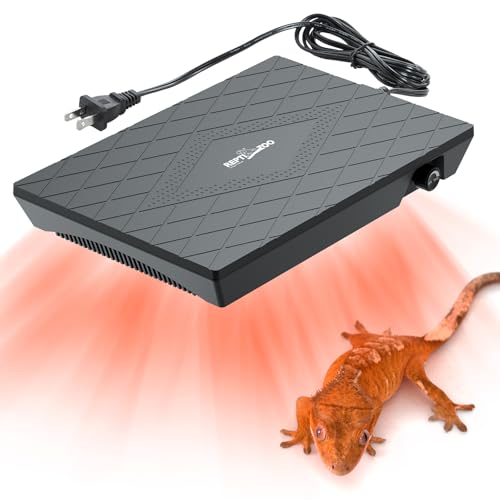
- Broader heating zone than traditional lamps
- No light emission for nighttime use
- Built-in fan helps reduce hot spots
Best For: Nocturnal reptiles and keepers wanting wider, quiet heat
Compact Under-Tank Value

- Quick, even heating with graphene technology
- Low 5W power draw for efficient use
- Thin, flexible pad installs easily
Best For: Small terrariums, travel enclosures, and low-energy heating
Mounted Large-Habitat Heat

- Under-lid mounting improves heat utilization
- Recommended for larger enclosures
- Zero-light heating preserves nighttime darkness
Best For: Large terrariums that need efficient, mounted warmth
Affordable Thermostat Combo
8" x 12" 16W Heat Pad for 30–40 Gallons

- PID thermostat with 20°C–50°C control
- Fast, even carbon film heating
- Bottom or side mounting with adhesive backing
Best For: medium terrariums, reptiles, amphibians, and seed-starting
Overhead Panel Pick
60W Adjustable Reptile Heat Panel

- No-light overhead heat for terrariums
- Built-in fan helps spread warmth evenly
- Includes mounting screws for secure installation
Best For: large enclosures needing downward heat for reptiles
Precise Digital Option

- Built-in digital thermostat with ±1°F accuracy
- IP67 waterproof design for humid enclosures
- Fast carbon-fiber heat with adhesive setup
Best For: humid terrariums and owners wanting precise temperature control
Tortoise Cage Heater – Zoo Med 40W Habitat Heater
If you need a reptile radiant heat panel-style heater for a larger enclosure, this Zoo Med option is built for steady radiant warmth in tortoise and other big reptile cages. Its moisture-proof, easy-to-clean housing and simple LED status light make it practical for everyday habitat use.
Best For: Large reptile enclosures, especially tortoises, where simple radiant heating and basic safety features matter.
Pros:
- Radiant heating method suited to indoor reptile habitats
- Moisture-proof, high-density polyethylene housing is easy to clean
- Metal cord protection adds durability and safety
- Automatic shutoff at 119°F helps reduce overheating risk
Cons:
- Fixed 40-watt output may be limiting for some setups
- Designed for indoor use only
- Less adjustable than temperature-controlled panel systems
Overall, this is a straightforward habitat heater for keepers who want a simple radiant heat source with built-in overheat protection. It fits best in larger enclosures where a basic, dependable heater is the priority.
Adjustable Terrarium Panel – Reptile Heat Panel 30W
This reptile radiant heat panel is designed to warm terrariums with gentle, even heat while avoiding light that can disturb day and night cycles. The adjustable knob makes it easy to tune output for different species and enclosure needs.
Best For: Owners who want a non-light, adjustable heating panel for indoor terrariums.
Pros:
- Provides gentle, even heat across the terrarium
- No light output, so it won’t disrupt day/night cycles
- Temperature is adjustable with a simple knob
- Built-in fan helps spread heat over a larger area
Cons:
- Cannot be used with a thermostat or timer
- Indoor use only
- Limited to 30 watts
For keepers who want a daytime-and-nighttime heat source without lamp glare, this panel offers a practical middle ground. Just make sure your setup works without external thermostat or timer control, since the product warns against that use.
Precise Under-Tank Heating – REPTI ZOO Heat Mat 8×12
While not a reptile radiant heat panel, this heat mat is a useful enclosed-habitat heating choice for owners who want stable under-tank warmth. Its adjustable thermostat and PID temperature control are aimed at consistent heating for a range of reptiles and small animals.
Best For: Under-tank heating setups for reptiles that benefit from precise, adjustable warmth.
Pros:
- PID control helps maintain stable temperatures
- Adjustable range from 68°F to 122°F
- Waterproof and heat-resistant construction
- Easy-clean surface with reinforced PVC insulation
Cons:
- Heat mat format is different from an overhead radiant panel
- Best suited to indoor use only
- Smaller 8 x 12 inch size may not fit larger enclosures
If your setup calls for belly heat rather than overhead warmth, this mat offers strong temperature control and durable construction. It is better viewed as an alternative to a reptile radiant heat panel, not a direct replacement.
Slim Overhead Radiant Panel – ReptiRad 40W Radiant Panel
This reptile radiant heat panel is built for keepers who want even overhead warmth with a slim profile and durable materials. The ETL-listed design, galvanized steel construction, and IP64 rating make it well suited to humid enclosures and long-term use.
Best For: Bioactive or humid reptile enclosures that need slim, even overhead heating.
Pros:
- Even radiant heat across the full panel surface
- Ultra-slim 18.5mm profile saves enclosure space
- Galvanized steel build adds durability and corrosion resistance
- IP64 rating supports humid or splash-prone setups
Cons:
- 40-watt output may not suit very large enclosures
- Requires fixed installation with included screws
- Higher-spec design may be more than basic setups need
For buyers focused on safety, slim fit, and efficient overhead heating, this panel stands out as the most enclosure-friendly option here. It is a strong pick when you want a clean install and stable heat without taking up much interior space.
Wide-Area, No-Light Heating – Adjustable Reptile Heat Panel
If you want a reptile radiant heat panel that can warm more of the enclosure without adding light at night, this REPTI ZOO panel is built for that job. Its broader heating zone, adjustable temperature knob, and integrated fan aim to provide steady warmth while reducing hot spots.
Best For: Keepers who want a wide, non-light heating solution for nocturnal reptiles and mixed terrarium setups.
Pros:
- Wider heating area than traditional lamps or fixtures
- No light emission, so nighttime behavior is less likely to be disturbed
- Integrated fan helps circulate warm air and reduce hot spots
- Adjustable knob makes temperature changes simple
Cons:
- At 30 watts, it may be better suited to moderate heating needs than very demanding setups
- Best temperature control will still depend on proper habitat setup
This is a practical choice if you want broad, quiet heating and prefer a panel-style option over a lamp. The design focuses on comfort, safety, and everyday adjustability for a range of reptiles.
Compact Under-Tank Value – 5W Graphene Heating Pad
This reptile radiant heat panel style pad is a compact under-tank option for keepers who want simple, efficient warming in a small footprint. The graphene heating surface is designed to heat quickly and evenly, while the low-profile build makes installation easy in terrariums, tanks, and vivariums.
Best For: Small enclosures, travel setups, and reptile keepers who want a lightweight low-energy heating mat.
Pros:
- Graphene construction heats quickly and evenly
- Low 5W energy use suits simple warming needs
- Ultra-thin, flexible design fits easily under most enclosures
- Includes a stainless steel clip and 4.9-foot power cord
Cons:
- Best used with a thermostat, which is not included
- Small 6 x 5.5-inch size limits coverage for larger habitats
For compact enclosures, this is a straightforward under-tank heater with easy setup and broad compatibility. It prioritizes even heat, low power draw, and portability over larger-area coverage.
Mounted Large-Habitat Heat – Under-Lid Reptile Heat Panel
If you need a reptile radiant heat panel for a larger enclosure, this under-lid REPTI ZOO model is designed to push warmth directly downward where it can be used more efficiently. It combines zero-light nighttime heating with an integrated fan and adjustable temperature control, making it a strong fit for bigger terrarium setups.
Best For: Larger habitats that need direct, mounted heat with dark nighttime conditions preserved.
Pros:
- Mounts under the lid for direct downward warmth and better heat utilization
- Recommended for larger enclosures up to 48″L x 24″W x 24″H
- No light output, so nighttime conditions stay dark
- Integrated fan and adjustment knob help manage heat distribution
Cons:
- Requires screw-mount installation, so setup is less plug-and-play
- Best suited to larger enclosures rather than very small tanks
This panel is a sensible upgrade when you want mounted heat that is stable, space-conscious, and aimed at larger reptile homes. The included mounting kit and direct-lid placement make it a more deliberate installation, but one that can pay off in heat efficiency.
Affordable Thermostat Combo – 8" x 12" 16W Heat Pad for 30–40 Gallons
If you want a reptile radiant heat panel alternative in a compact under-tank format, this 8″ x 12″ 16W heat pad combo is built for steady habitat warming in 30–40 gallon enclosures. It uses carbon film heating for quick, even heat and includes a PID smart thermostat for tighter temperature control.
Best For: reptile keepers who want a simple thermostat-controlled heat mat for medium tanks, plus a setup that also works for amphibians, hermit crabs, or seed-starting.
Pros:
- Includes a PID thermostat for constant temperature control from 20°C to 50°C (68°F to 122°F).
- Carbon film heating is designed for fast, even heat distribution.
- Adhesive backing makes bottom or side mounting straightforward.
- Works for reptiles, amphibians, small animals, and seeds/plants.
Cons:
- Not meant for flammable substrate surfaces like wood, plastic, or carpet.
- Should not be covered while in use.
- Best suited to 30–40 gallon tanks, so it may be too small for larger enclosures.
This is a practical pick if you want controlled under-tank warmth without moving up to a larger overhead panel. The built-in thermostat adds convenience, but safe placement and proper setup matter.
Overhead Panel Pick – 60W Adjustable Reptile Heat Panel
This reptile radiant heat panel is a 60W overhead heater made for terrariums that need consistent downward heat. It mounts beneath the lid, runs without light, and uses a built-in fan plus an adjustable knob to help distribute warmth evenly.
Best For: keepers with larger terrariums or vivariums who want a non-light heat panel for snakes, geckos, or tortoises.
Pros:
- Overhead design delivers downward-directed heat for better thermal efficiency.
- No light output, so it won’t add visible brightness to the habitat.
- Built-in fan helps spread heat more evenly and reduce hot spots.
- Includes mounting screws and is recommended for enclosures up to 48″L x 24″W x 24″H.
Cons:
- The product notes say it must never be used with a thermostat or timer.
- Designed for larger enclosures, so it may be unnecessary for small tanks.
- Requires secure lid mounting for proper installation.
For an overhead heating approach, this panel focuses on stable radiant warmth rather than under-tank contact heat. It’s a strong fit when you want a non-light heat source for a larger reptile setup.
Precise Digital Option – IP67 16W Under Tank Heat Pad
If you’re shopping for a reptile radiant heat panel style solution but prefer a mat, this 8″ x 12″ 16W under-tank heater is built around precision control. It includes an internal digital thermostat, IP67 waterproofing, and fast carbon-fiber heating for steady warmth in 10–40 gallon tanks.
Best For: reptile owners who want accurate temperature control in humid enclosures, plus a heater that can also be used for seedlings or brooders.
Pros:
- Built-in digital thermostat maintains the set temperature from 32°F to 122°F with ±1°F accuracy.
- IP67 waterproof design is suited for humid terrariums.
- Carbon fiber heating warms quickly and evenly.
- Includes 3M adhesive mounting and a long probe for easier setup and control.
Cons:
- As an under-tank mat, it isn’t an overhead radiant panel.
- Best matched to 10–40 gallon tanks, not very large enclosures.
- Power options are limited to 8W, 16W, or 24W.
This is the most control-focused option in the group, especially if humidity is part of the equation. Its built-in thermostat makes it a strong choice for keepers who want a more hands-off temperature setup.
How We Picked the Best Reptile Radiant Heat Panel
We prioritized heating performance, build quality, safety features, mounting flexibility, and compatibility with external thermostats. We also looked for options that suit common reptile setups, from small tanks to larger terrariums, while favoring models that deliver consistent, non-light heat.
Quick Comparison
The main differences come down to wattage, panel size, and installation style. Lower-watt options work best for small enclosures or supplemental warmth, while larger overhead panels are better for bigger terrariums and species that need broader heat coverage. Under-tank mats can be useful in some setups, but they are not a direct substitute for a properly sized radiant panel.
Key Buying Factors for a Reptile Radiant Heat Panel
Enclosure Size and Wattage
Match the heater output to the tank volume and ambient room temperature. Too little wattage leads to weak heat delivery, while too much can create unsafe hot spots. A correctly sized Reptile Radiant Heat Panel should provide steady warmth without forcing the enclosure to overheat.
Thermostat Compatibility
Use a thermostat whenever possible. Temperature control is essential for reptile safety and for maintaining a stable basking or ambient zone. If a panel includes adjustable temperature settings, confirm how precise the control is and whether an external controller is still recommended.
Heat Style and Coverage
Radiant panels are ideal when you want broad, even overhead heat with no visible light. That makes them a strong choice for nocturnal species and for keepers who want to avoid disrupting sleep cycles. Look for models that spread heat evenly rather than concentrating it in a tight spot.
Mounting and Build Materials
Installation matters. Choose a panel that mounts securely and fits your lid or ceiling configuration. Durable materials, slim profiles, and protective housings can improve long-term reliability, especially in higher-humidity environments.
Safety and Efficiency
Energy efficiency is important, but safety comes first. Look for features such as certified components, waterproof or moisture-resistant construction where appropriate, and clear manufacturer guidance on safe installation distances.
Who Should Buy Which Reptile Radiant Heat Panel?
Choose a compact, lower-watt Reptile Radiant Heat Panel for smaller enclosures or species with modest heating needs. Step up to a larger overhead panel for bigger terrariums, colder rooms, or reptiles that need a wider heat gradient. If your setup already relies on an under-tank heater, consider whether you need more ambient heat before adding another source.
Keepers who want simple, invisible heating usually benefit most from radiant panels, while users focused on substrate warming may prefer a heat mat for supplemental support. The best choice is the one that matches your enclosure, species, and control setup—not just the highest wattage.