The right wireless system depends on where your pet needs a boundary. A circular yard fence, a GPS-based perimeter, and an indoor barrier solve different problems—and none replaces hands-on training.
These 10 options cover small and larger yards, two-dog households, indoor no-go zones, and systems that combine containment with remote training. Start with the boundary you need, then check collar fit and how the system warns your pet.
Best 10 Pet Wireless Training Systems Picks for 2026
Best for Two Dogs
PetSafe Stay & Play Wireless Fence

- Two collars included
- Circular coverage up to 3/4 acre
- Static-free reentry
Best For: Two-dog households seeking a wire-free boundary
Best for Persistent Dogs
PetSafe Stay & Play Stubborn Dog Fence

- Tone-only mode plus five correction levels
- Rechargeable waterproof collar
- Up to 3/4-acre circular coverage
Best For: Training a persistent dog with adjustable settings
Best for Visible Range Settings
PetSafe Stay & Play Compact Fence

- LCD range and warning indicators
- Up to 3/4-acre circular coverage
- Rechargeable waterproof collar
Best For: Owners who want an on-device range display
Best for Smaller Coverage Areas
PetSafe Wireless Pet Containment System
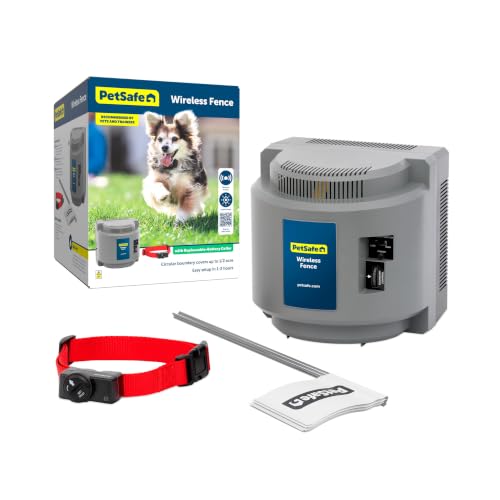
- Up to 1/2-acre circular coverage
- Static-free reentry
- Expandable with another transmitter
Best For: Wire-free containment for spaces up to 1/2 acre
Indoor No-Go Zones
PetSafe Pawz Away Indoor Pet Barrier

- Indoor boundary up to a 6-foot radius
- Beeps before static correction
- Fits cats and dogs 5 pounds and up
Best For: Keeping pets away from specific indoor spots
Two-Dog Yard & Remote Training

- Two collars for dogs weighing 10–130 pounds
- Adjustable boundary stated at 25–3,500 feet
- Automatic boundary beep and vibration; manual shock control
Best For: Two-dog households wanting a wireless boundary and remote training
No-Shock Boundary Option
X802 Wireless Dog Fence & Training Collar

- Stated adjustable boundary of 25–3,500 feet
- Vibration and boundary-reminder settings
- IP67-rated rechargeable receiver collar
Best For: Outdoor boundary reminders without a stated shock mode
Longest Training Range
Htcuto Wireless Fence for Two Dogs

- 25–3,500 ft adjustable boundary
- Up to 6,000 ft remote training range
- Two collars; IPX7 waterproof
Best For: Two-dog homes needing portable containment and remote training
Custom GPS Boundaries

- Custom-shaped GPS fences
- No subscription or ongoing phone connection
- No live tracking or alerts
Best For: Dogs 15 lb+ on outdoor properties of at least 3/4 acre
Compact Radial Boundary
BHCEY Wireless Fence for Two Dogs
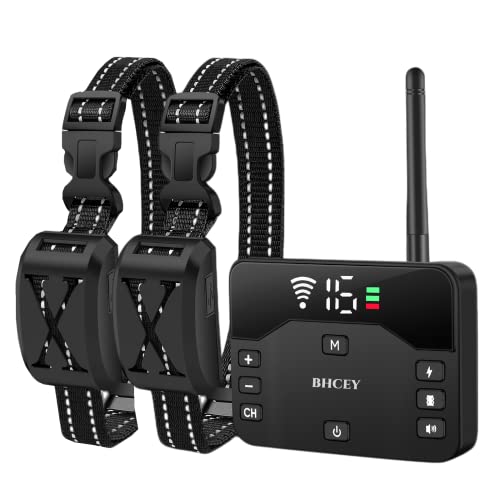
- Two collars included
- 30–800 ft radial boundary
- Sound, vibration, and static remote modes
Best For: Two-dog homes that can use a radial boundary
Best for Two Dogs – PetSafe Stay & Play Wireless Fence
For households comparing pet wireless training systems, this Stay & Play kit starts with two waterproof collars and 50 boundary flags. Its adjustable circular boundary covers up to 3/4 acre without buried wire.
Best For: Two-dog households that want a portable, wire-free boundary.
Pros:
- Includes two collars and training flags.
- Sets up without digging or burying wire.
- Allows static-free reentry if a dog crosses the boundary.
Cons:
- The boundary is circular, so it may not match an irregular yard.
- Collars use replaceable RFA-67D-11 batteries.
Choose this kit if covering two dogs from the start matters more than shaping a boundary to your property lines. Each collar fits dogs weighing at least 5 pounds, with neck sizes from 6 to 28 inches.
Best for Persistent Dogs – PetSafe Stay & Play Stubborn Dog Fence
Among pet wireless training systems, this Stay & Play version stands out for its tone-only mode and five static-correction levels, which let you adjust training for a persistent dog. The indoor transmitter creates an adjustable circular boundary covering up to 3/4 acre.
Best For: Owners training a persistent dog who want adjustable correction and a rechargeable collar.
Pros:
- Offers tone-only training and five static-correction levels.
- Includes a waterproof, rechargeable receiver collar.
- Requires no buried wire and allows static-free reentry.
Cons:
- Only one receiver collar is included.
- Circular coverage cannot trace an irregular property line.
This is the more targeted Stay & Play choice when training flexibility is the priority. The included collar fits dogs weighing at least 5 pounds and neck sizes from 6 to 28 inches.
Best for Visible Range Settings – PetSafe Stay & Play Compact Fence
If you want a display while setting up pet wireless training systems, the Stay & Play Compact has an LCD that shows the play-area range and system warning indicators. Its wire-free circular boundary adjusts up to 3/4 acre from the indoor transmitter.
Best For: Owners who want an on-device range display and a rechargeable collar.
Pros:
- LCD shows the selected play-area range and warning indicators.
- Includes a waterproof, rechargeable receiver collar.
- Portable setup requires no buried wire and permits static-free reentry.
Cons:
- Includes only one collar.
- The circular boundary may not suit an irregularly shaped yard.
The display is the practical differentiator here: it makes the selected range easier to check at the transmitter. The included collar fits dogs weighing at least 5 pounds and neck sizes from 6 to 28 inches.
Best for Smaller Coverage Areas – PetSafe Wireless Pet Containment System
This PetSafe option suits shoppers comparing pet wireless training systems for a smaller space: its portable indoor transmitter creates an adjustable circular boundary covering up to 1/2 acre. It sets up without burying wire and includes one waterproof receiver collar.
Best For: Owners who need up to 1/2 acre of wire-free circular coverage.
Pros:
- No digging or buried boundary wire required.
- Static-free reentry lets a dog return without a correction.
- Coverage can be expanded with an additional transmitter purchased separately.
Cons:
- Base coverage is limited to a 1/2-acre circular area.
- The collar requires replaceable RFA-67D-11 batteries.
Pick this system when its smaller coverage range fits your space. The included collar fits dogs weighing at least 8 pounds and neck sizes from 6 to 28 inches; extra transmitter coverage requires a separate purchase.
Indoor No-Go Zones – PetSafe Pawz Away Indoor Pet Barrier
Among pet wireless training systems, the PetSafe Pawz Away is the pick for keeping cats and dogs out of specific indoor spots, such as around furniture or trash cans. Its transmitter creates an adjustable restricted area up to a 6-foot radius; the receiver collar beeps first, then delivers a static correction if the pet stays in the area.
Best For: Households that need an indoor boundary for a cat or dog weighing at least 5 pounds.
Pros:
- Adjustable coverage up to a 12-foot diameter.
- Collar fits neck sizes from 6 to 28 inches.
- Additional compatible barriers and collars can cover more areas or pets.
Cons:
- Designed for indoor no-go zones, not yard containment.
- Transmitter requires three AA batteries, which are not included.
Choose this when the problem is a particular room or household spot rather than an outdoor boundary. Be comfortable with the beep-then-static approach before buying.
For shoppers comparing pet wireless training systems for two dogs, this Htcuto kit combines an adjustable wireless boundary with handheld remote training. The fence setting spans a stated 25 to 3,500 feet, while the remote has a stated range of up to 6,000 feet.
Best For: Owners of two dogs weighing 10–130 pounds who want both yard boundaries and remote training controls.
Pros:
- Includes two collars and supports beep, vibration, and manually controlled shock training modes.
- Boundary crossing triggers an automatic beep and vibration, not an automatic shock.
- IPX7-rated collars and rechargeable remote and collars suit outdoor use.
- Sets up without buried wire, Wi-Fi, or subscription fees.
Cons:
- Shock correction requires the owner to operate the remote; it is not automatic fence feedback.
- The stated 84-hour operating time applies when the wireless fence function is on, rather than the advertised standby time.
This is the more hands-on choice if you want to switch between boundary reminders and active training. Check that its manual correction approach fits how you plan to supervise your dogs.
If you prefer to avoid static correction, this entry among pet wireless training systems emphasizes vibration and boundary reminders. The X802 combines an adjustable wireless fence with remote controls, with a stated boundary range of 25 to 3,500 feet and dual-channel control for two dogs.
Best For: Owners of dogs weighing 10–130 pounds who want outdoor boundary reminders without a stated shock mode.
Pros:
- Offers adjustable vibration and boundary-reminder levels plus a flashlight mode.
- IP67-rated waterproof receiver collar is rechargeable.
- No buried wires are needed, and the memory function retains boundary settings.
Cons:
- The listing names dual-channel control but does not clearly establish that two receiver collars are included.
- No specific battery runtime is supplied.
This option suits buyers prioritizing vibration-based prompts over static correction. Confirm the included collar count before ordering if you need to equip two dogs immediately.
Longest Training Range – Htcuto Wireless Fence for Two Dogs
Among pet wireless training systems, the Htcuto combines a portable containment boundary with a remote training collar. Its adjustable fence range and long-range remote make it worth considering if you need both functions for two dogs.
Best For: Two-dog households that want a no-dig boundary and remote training for outdoor outings.
Pros:
- Adjustable wireless boundary from 25 to 3,500 feet, with beep-and-vibration or static-correction fence modes.
- Remote training range of up to 6,000 feet with ultrasonic, beep, vibration, and static modes.
- Includes support for two dogs in fence mode; collars are IPX7 waterproof.
Cons:
- Wireless fence mode supports two dogs, even though remote training can support up to four.
- The ultrasonic setting is intended to interrupt barking, but its effectiveness may vary by dog.
The standout is the combination of adjustable containment and multiple training options without Wi-Fi, an app, or a subscription. Start with the least intrusive cue your dog responds to and introduce the boundary through training rather than relying on corrections alone.
Custom GPS Boundaries – Dogtra GPS Fence
If you are comparing pet wireless training systems for an irregularly shaped property, the Dogtra GPS Fence lets you draw circular or custom virtual boundaries in its app. After setup, the collar operates independently without a phone connection or subscription.
Best For: Dogs at least 15 pounds on outdoor properties of 3/4 acre or larger where a custom-shaped fence makes more sense than a circular one.
Pros:
- Supports up to 30 fences, with warning, primary, and backup boundary layers.
- Selectable tone, vibration, or stimulation guidance; correction stops when the dog is returning.
- IPX9K waterproof rechargeable collar and no monthly subscription fee.
Cons:
- Containment only: no live tracking or notifications.
- Not intended for indoor wear or properties smaller than 3/4 acre; training flags are sold separately.
This is the strongest fit here when boundary shape matters more than handheld training controls. Allow time for the recommended perimeter training, and note that the app is for fence setup rather than monitoring your dog’s live location.
Compact Radial Boundary – BHCEY Wireless Fence for Two Dogs
For shoppers looking at pet wireless training systems with two collars included, the BHCEY pairs a radial wireless fence with a separate remote training mode. Its stated boundary adjusts from 30 to 800 feet across 16 distance levels.
Best For: Two-dog households seeking a simple circular-style boundary plus sound, vibration, and static remote training.
Pros:
- Two receiver collars included; the transmitter can connect with additional receivers.
- Remote mode offers sound, vibration, and static functions and can control up to three dogs.
- Rechargeable transmitter and collars; receivers have an IP65 water-resistance rating.
Cons:
- Fence mode creates a radial boundary, not a custom property-shaped perimeter.
- Its stated maximum fence range is 800 feet, less than the Htcuto system’s stated maximum.
The included pair of collars makes this a straightforward option for two dogs. Check whether a radial boundary suits your space, and introduce boundary cues with training before expecting the collars to keep dogs within the set area.
How We Picked the Best Pet Wireless Training Systems
We grouped these Pet Wireless Training Systems by their intended use: transmitter-based yard containment, GPS-defined boundaries, indoor barriers, and fence-and-training combinations. We prioritized distinctions buyers can check before purchasing, including stated coverage, number of dogs supported, correction options, power requirements, and whether a subscription or app is involved. Listed range is not a guarantee of performance in every home or yard.
Quick Comparison by Use
For a portable, generally circular outdoor boundary, compare the PetSafe Stay & Play models and the PetSafe Wireless Pet Containment System. The Stay & Play options list coverage up to 3/4 acre; the standard Wireless Pet Containment System lists up to 1/2 acre. The two-dog Stay & Play package is a starting point if you need two compatible collars. The Stubborn Dogs version is worth considering when you need its available correction settings, not simply because a dog is energetic.
The PetSafe Pawz Away is an indoor barrier for keeping pets away from a particular area, not a yard fence. Dogtra GPS Fence is the option to investigate for a custom-shaped outdoor boundary; check its app, device, and site requirements before buying. The Htcuto and other two-in-one listings target buyers seeking multi-dog containment or remote-training functions in one setup. Compare each listing’s included collars and mode controls rather than assuming those features work identically.
Key Buying Factors for Pet Wireless Training Systems
Boundary Shape and Reliability
Most transmitter-based wireless fences create an approximate circular area, which may not suit narrow lots or boundaries close to a road. Test the signal around the entire intended perimeter before letting a dog rely on it. Buildings, terrain, interference, and transmitter placement can affect where warnings occur. GPS fences offer more shape flexibility but can have their own positioning limitations; they are not a physical barrier.
Collars, Corrections, and Daily Upkeep
Check your pet’s weight and neck-size requirements, collar water-resistance rating, and whether the package includes a collar for every animal. Look for adjustable warning tones or vibration where available and use the lowest effective correction in accordance with the instructions. Also compare battery type and runtime, replacement parts, and what happens during a power or signal interruption. An indoor barrier may need a compatible receiver collar even if you already own an outdoor system.
Training and Safety
Budget time for supervised boundary training with flags or other visible markers. A wireless fence does not prevent other animals or people from entering your yard, and it should not be treated as a substitute for a leash or secure enclosure where those are needed. Confirm suitability with your veterinarian or a qualified trainer if your pet is fearful, very young, or has a medical concern.
Who Should Buy Which Pet Wireless Training Systems?
Choose a PetSafe yard system if you want a straightforward circular boundary and its listed coverage fits your property. Consider Pawz Away for a specific indoor no-go area. Investigate Dogtra if a custom-shaped boundary matters more than a simple transmitter setup. Compare Htcuto and the two-in-one alternatives if two collars or remote-training modes are priorities—but verify the exact package contents, controls, and return policy first.