Finding the right outdoor shelter can make a real difference for stray, feral, and backyard cats when temperatures drop. The best insulated cat houses help block wind, retain warmth, and give cats a dry place to rest.
Below, we’ve rounded up 10 strong options for 2026, including heated and non-heated picks, so you can choose the right balance of comfort, durability, and value.
Best 10 Insulated Cat Houses Picks for 2026
Heated Winter Refuge
K&H Heated Cat House, Outdoor Kitty Shelter

- 20W heated pad included
- Two escape doors for safety
- Weather-resistant for outdoor use
Best For: Outdoor cats that need a heated winter shelter
Low-Maintenance Shelter
New Age Pet ECOFLEX Albany Outdoor Cat House

- Moisture-resistant ECOFLEX build
- Dual doors with vinyl flaps
- Fast setup and easy cleaning
Best For: Easy-care outdoor shelter for feral or colony cats
Heavy-Duty Heated Haven
Aivituvin Heated Outdoor Cat House

- 6-sided insulated liner
- Thermostatic heating pad included
- Escape doors and openable roof
Best For: Cold-climate shelters for multiple outdoor cats
Classic Insulated Shelter
TRIXIE Insulated Outdoor Cat House

- Insulated walls, floor, and roof
- Weather flaps and small entrance
- Hinged roof for easy cleaning
Best For: Single-cat outdoor shelter with basic insulation
Spacious Outdoor Shelter

- Large size fits cats and other small pets
- Insulated, waterproof build helps block the elements
- Collapsible design assembles without tools
Best For: Feral or community cats needing a roomy weather-resistant shelter
Heavy-Duty Wooden Pick
Outdoor Cat House with Insulated Liner

- Six-sided insulation helps hold warmth
- Wooden build with raised waterproof base
- Large interior suits cats up to about 25 pounds
Best For: Larger cats needing a sturdy insulated outdoor shelter
Heated Weatherproof Pickup
K&H Heated Cat House, Outdoor Extra-Wide Kitty House

- Waterproof shell with insulated walls and roof
- Safety-listed removable heated bed included
- Two escape exits for added cat safety
Best For: Outdoor cats needing a warm, weatherproof winter shelter
Rugged Elevated Shelter
Indestructible Heated Cat House for Outside Cats
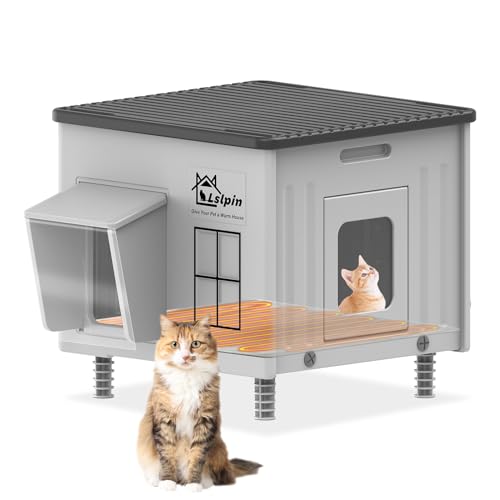
- Weatherproof HDEP build with double-layer insulation
- Elevated base helps keep cats off damp ground
- Includes thermostatic heating pad with safety certifications
Best For: Feral or barn cats needing a durable heated outdoor shelter
Large Multi-Cat Refuge
GUTINNEEN Extra Large Heated Cat House Outdoor

- Sized for 1-6 cats with a solid wood build
- 6-sided thermal liner and foam insulation
- Thermostat-controlled heating with escape doors
Best For: Multiple outdoor cats needing a roomy insulated winter shelter
Heated Winter Refuge – K&H Heated Cat House, Outdoor Kitty Shelter
If you want insulated cat houses with active warmth rather than passive shelter, this K&H option is built for outdoor cats that need serious cold-weather protection. It combines a weather-resistant shell with an included 20-watt heated pad, plus two exits to help cats feel safer inside.
Best For: Outdoor, community, or feral cats needing a heated shelter for winter use.
Pros:
- Includes a MET Safety Listed waterproof heated bed for added warmth.
- Two 6″ x 8″ exits provide escape routes and help prevent trapping.
- Removable clear door flaps help block harsh weather while keeping access flexible.
- Designed for outdoor use in garages, porches, barns, and similar spaces.
Cons:
- Requires 110/120V electrical power to run the heating pad.
- The heated bed may not feel warm when a pet is not in it, which can be confusing at first.
Overall, this is a practical pick if warmth is the priority and you need a shelter that is purpose-built for cold conditions. The dual exits and safety certifications make it especially appealing for caregivers who want a secure, heated setup.
Low-Maintenance Shelter – New Age Pet ECOFLEX Albany Outdoor Cat House
For shoppers comparing insulated cat houses that focus on durability and easy upkeep, the New Age Pet ECOFLEX Albany is a solid no-fuss shelter. Its wood-polymer composite construction resists moisture, while built-in air pockets and a raised floor help with temperature moderation.
Best For: Caregivers who want a weather-resistant outdoor cat house that is easy to clean and assemble.
Pros:
- ECOFLEX material won’t warp, crack, split, or absorb moisture like plywood or cardboard.
- Insulating air pockets and double-wall panels help retain warmth and stay cooler in summer.
- Dual escape doors with vinyl flaps add flexibility and safety for feral or colony cats.
- Snaps together in minutes and wipes clean with minimal effort.
Cons:
- Heating is optional, so winter warmth depends on adding a separate heated pad.
- Best suited to one cat at a time due to its compact interior space.
This is a good choice if you want a sturdy shelter that handles weather better than soft-sided alternatives. It’s especially useful where easy cleaning and quick setup matter as much as insulation.
Heavy-Duty Heated Haven – Aivituvin Heated Outdoor Cat House
This Aivituvin model stands out among insulated cat houses for its layered approach to cold-weather protection. It pairs a solid wood frame with a fully lined insulated interior and a heating pad, making it a strong option for very cold outdoor conditions.
Best For: Multi-cat outdoor shelters needing insulation plus automatic heat control.
Pros:
- Six-sided insulation and a heating pad help retain warmth in below-freezing temperatures.
- Built-in thermostat regulates heat automatically between 89°F and 116°F.
- Leak-resistant elevated base and slanted roof help with rain management.
- Openable roof and escape doors make cleaning and safety checks easier.
Cons:
- At 33.5″ wide, it takes up more space than compact shelters.
- Assembly is straightforward, but the product is still a substantial wooden unit.
For caregivers who need a more robust winter shelter, this is a thoughtful and well-equipped option. The insulated liner, thermostat, and predator-conscious design make it especially suitable for harsh climates.
Classic Insulated Shelter – TRIXIE Insulated Outdoor Cat House
If you want insulated cat houses with a traditional wood build, the TRIXIE insulated outdoor cat house offers weatherproof protection in a compact footprint. It uses insulated walls, floor, and roof, plus asphalt shingles and door flaps to help buffer cats from wind and rain.
Best For: One cat needing a compact insulated shelter for outdoor or sheltered indoor use.
Pros:
- Insulated walls, floor, and roof help provide all-around weather protection.
- Heavy-duty plastic flaps and a small entrance help shield against wind and rain.
- Hinged roof and removable floor make cleaning easier.
- Pre-drilled holes and included hardware simplify assembly.
Cons:
- Interior space is sized for one cat, so it is not ideal for multi-cat use.
- No built-in heating system is included.
This is a straightforward shelter for buyers who want insulation without extra electrical components. It’s a practical pick for single-cat setups where weather protection and easy maintenance matter most.
Heated All-Weather Pick – Deluxe Heated Cat House for Winter
If you want insulated cat houses that add real cold-weather comfort, this heated model is built for cats who need a warm retreat on a porch, patio, garage, barn, or indoors. It combines an energy-efficient heating pad with insulated walls and roof, plus weather-resistant materials and removable door flaps to help block drafts.
Best For: Cats that need a warm, portable shelter for winter use in outdoor or indoor spaces.
Pros:
- Includes a heating pad for added warmth in cold weather
- Insulated roof and walls help hold heat inside
- Dual escape doors support easy entry and airflow
- Tool-free setup makes it quick to place and use
Cons:
- Heating function may be more than you need in mild climates
- Smaller footprint is aimed at small cats
- Best suited to sheltered placement for top comfort
This is a strong pick if your priority is warmth plus convenience. The washable heating-pad cover and wipe-clean surfaces also make routine upkeep straightforward.
Spacious Outdoor Shelter – Texsens Outdoor Cat House
Among insulated cat houses, this Texsens shelter stands out for size and flexible use outdoors or inside. It uses waterproof materials, an elevated base, and insulated honeycomb panels with aluminum foil to help shield cats from rain, wind, and cold.
Best For: Community cats, feral cats, and multi-pet households needing a roomy weather-resistant shelter.
Pros:
- Large interior size suits cats and some other small animals
- Collapsible, tool-free design assembles in seconds
- Insulated construction and elevated base improve weather protection
- Top observation window and two curtain styles add flexibility
Cons:
- Unheated design may not be enough for extreme winter cold
- Larger footprint takes up more space than compact houses
- Multiple removable parts may require more setup than simpler shelters
This is a practical choice if you want a roomy insulated shelter with good versatility and easy cleanup. The included mats and weather-focused design make it well suited to outdoor feeding stations or covered entry areas.
Heavy-Duty Wooden Pick – Outdoor Cat House with Insulated Liner
Outdoor Cat House with Insulated Liner Weatherproof Feral Cat Shelter for Winter
Check Price On AmazonIf you need insulated cat houses with a more solid build, this wooden shelter is designed for cold, wet weather and larger cats. Its six-sided insulated liner, thick sponge padding, elevated waterproof base, and slanted roof are all aimed at keeping the interior warmer and drier.
Best For: Larger outdoor cats or multi-cat setups that need a sturdy, weather-protected shelter.
Pros:
- Six-sided insulation helps retain warmth on all sides
- Wood construction with waterproof base improves durability
- Slanted roof helps shed rain and snow
- Large interior can accommodate cats or small pets up to about 25 pounds
Cons:
- Heavier than soft-sided shelters
- No built-in heating pad for extra cold snaps
- Bulkier size may be harder to move around often
This is a good fit when sturdiness matters as much as insulation. It offers a more permanent shelter style for areas where rain, snow, and cold are routine.
Heated Weatherproof Pickup – K&H Heated Cat House, Outdoor Extra-Wide Kitty House
If you need one of the more practical insulated cat houses for harsh weather, this K&H outdoor shelter is built for warmth, wind protection, and easy access. It combines a waterproof outer shell with insulation in the walls and roof, plus a removable heated bed for winter use.
Best For: Outdoor cats that need a heated, weatherproof shelter for winter in garages, porches, barns, or similar spaces.
Pros:
- Insulated walls and roof help block cold, snow, and wind.
- Removable heated pad is safety listed and designed for winter warmth.
- Two escape exits help cats avoid being trapped by a predator.
- Washable bed cover makes routine cleaning easier.
Cons:
- Requires access to power for the heated bed.
- Soft-sided construction may not suit buyers wanting a rigid shelter.
This is a strong all-around choice if your priority is warmth plus safety features. The extra-wide layout also makes it a good fit for homes that want room for more than one cat.
Rugged Elevated Shelter – Indestructible Heated Cat House for Outside Cats
Among insulated cat houses, this elevated outdoor shelter leans hard into durability and winter protection. Its high-density material, double-layer insulation, and included heating pad are designed to keep outdoor cats warmer while helping the shelter stand up to rough conditions.
Best For: Buyers who want a sturdy, elevated heated shelter for feral, barn, or stray cats.
Pros:
- Weatherproof HDEP build is designed for outdoor durability.
- Double-layer side construction helps reduce heat loss.
- Elevated floor helps protect against damp ground and shallow water.
- Included heating pad uses UL-certified heating wires and flame-retardant PVC.
Cons:
- Smaller footprint may be less roomy than extra-large shelters.
- Assembly and cleaning require removing parts rather than simply folding it flat.
This is a sensible pick if you want a compact but rugged shelter that is built for wet, cold conditions. The escape-door design and elevated base add useful practical protection for outdoor use.
Large Multi-Cat Refuge – GUTINNEEN Extra Large Heated Cat House Outdoor
If you are comparing insulated cat houses for multiple cats, this extra-large wood shelter is built around space, insulation, and controlled heat. The 6-sided thermal liner, solid wood structure, and built-in thermostat are aimed at keeping cats comfortable in very cold weather.
Best For: Households or caretakers needing a large winter shelter for several feral or stray cats.
Pros:
- Extra-large design can house 1-6 cats.
- 6-sided insulation and foam-lined walls, floor, and roof help hold warmth.
- Built-in thermostat automatically regulates temperature.
- Escape doors, elevated base, and slanted roof add weather and safety protection.
Cons:
- Much larger size requires more space than compact shelters.
- Wood construction may be heavier and less portable than softer designs.
This model is best when capacity matters as much as insulation. It offers a more permanent shelter style that should appeal to caretakers looking for a weather-resistant winter station for multiple cats.
How We Picked the Best Insulated Cat Houses
We focused on the features that matter most for outdoor use: insulation quality, weather resistance, ease of entry, raised or protective flooring, and overall build stability. For heated models, we also looked at safety listings, wattage, and whether the heating setup is suitable for cold-weather use.
Quick Comparison of Insulated Cat Houses
Heated models are the better choice for harsh winters or frequent subfreezing temperatures, while non-heated insulated shelters can work well in milder climates or as a dry, draft-reducing refuge. Larger houses are better for multiple cats or bigger feral cats, but smaller shelters often retain heat more efficiently for a single cat.
Key Buying Factors for Insulated Cat Houses
Weather Protection
Look for sealed seams, waterproof or weather-resistant roofing, and an elevated base to keep moisture out. A covered or offset entrance helps reduce wind exposure, which is crucial for outdoor cat comfort.
Insulation and Heat Retention
True Insulated Cat Houses should use insulated walls, liners, or foam-filled construction to reduce heat loss. If you live in an area with severe winters, a safe heated option can provide a meaningful advantage, especially for older, younger, or short-haired cats.
Size and Interior Layout
Choose a size that fits your cat without leaving too much empty air space. Smaller interiors hold warmth better, while extra-large designs can be useful if you need room for a bed, straw, or multiple cats.
Safety and Access
For heated shelters, safety-listed components and protected cords are important. Escape doors or dual exits can also be valuable in outdoor settings, giving cats a second route out if another animal enters the shelter.
Who Should Buy Which Insulated Cat Houses?
If you want the warmest setup for winter, choose a heated shelter. If you need something simple, durable, and low-maintenance, a weatherproof non-heated model may be enough. Caretakers of feral colonies, barn cats, or outdoor pets should prioritize Insulated Cat Houses with raised floors and strong wind protection, while single-cat households can usually benefit most from compact, easy-to-warm designs.
In short, the best option depends on your climate, the number of cats using the shelter, and whether you need passive insulation or active heat support.