Evaporation can quickly change salinity and expose pumps, heaters, or filtration equipment. The right automatic top-off system restores lost water consistently while reducing daily tank maintenance.
We compared these 10 float aquarium auto top off systems by sensing method, pump and valve design, overflow protection, installation flexibility, and suitability for freshwater and reef aquariums.
Best 10 Float Aquarium Auto Top Off Systems Picks for 2026
Best Complete Kit

- Dual float sensors add backup overfill protection.
- Includes pump, adapter, holder, and installation parts.
- Supports tanks up to 5/8 inch thick with 78.74-inch lift.
Best For: Complete sump-based automatic refilling
Best Safety Features

- QST 2.0 provides overflow, sensor, and low-reservoir monitoring.
- Compact dual-sensor design fits rimmed, rimless, and sump tanks.
- Includes check valve, magnets, tubing, and micro pump.
Best For: Compact tanks needing active safety alerts
Best Power-Free Option

- Mechanical float valve operates without electricity.
- Adjusts across a 0.5- to 15-cm water-level range.
- Includes 20 feet of tubing and quick-push connectors.
Best For: RO-fed or gravity-fed power-free setups
Best Precision Monitoring
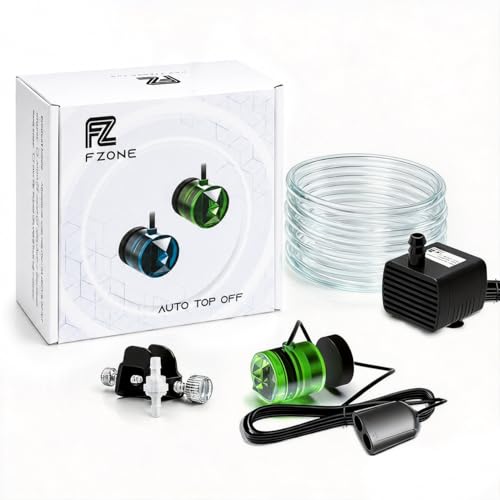
- Dual optical sensors target fluctuation under 0.6 cm.
- QST 2.0 detects overfill, sensor faults, and empty reservoirs.
- Compact magnetic mount fits walls up to 0.78 inch thick.
Best For: Reef and freshwater tanks needing precise control
Best RO/DI Kit
Aquefy Auto Top-Off Float Valve Kit
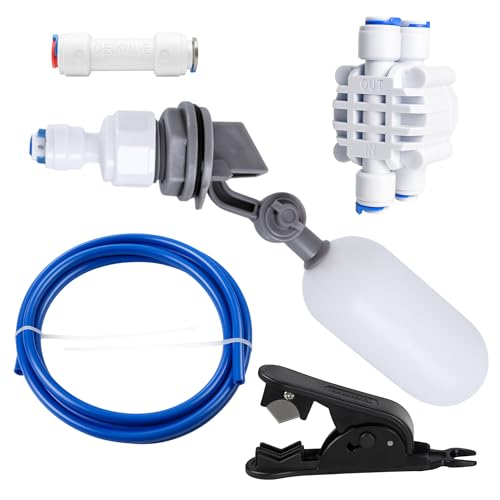
- Complete kit with cutter, tubing, fittings, and check valve
- Automatic shutoff helps limit waste and overflow
- Compatible with standard 1/4-inch RO/RO-DI tubing
Best For: RO/DI-connected reef tanks and aquariums
Best Adjustable Sump Valve
ZAOJIAO Aquarium Float Valve ATO

- Hang-on mount fits 5–18 mm sump walls
- Adjustable water level up to 25 mm from the top
- Polyethylene plastic and acrylic construction
Best For: Sump setups needing a compact adjustable float valve
Best Sealed-Sensor Pick

- Sealed sensor resists salt creep and moisture
- High/low cutoff, dry-run, and anti-siphon protection
- Two-year probe and one-year pump warranty
Best For: Reef and freshwater tanks up to 250 liters
Best Dual-Float Value

- Dual floats add backup overfill protection
- Fits walls up to 5/8 inch thick
- Complete kit with pump and power adapter
Best For: Evaporative sumps needing adjustable float control
Best Nano-Tank Design

- 0.7-inch sensor fits compact setups
- Works with rimmed, rimless, and sump aquariums
- QST stops unusually long refill cycles
Best For: Nano tanks prioritizing discreet installation
Best Complete Kit – DIGITEN Smart Aquarium ATO
For shoppers comparing float aquarium auto top off systems, the DIGITEN Smart ATO stands out as a corded, pump-based kit with dual float sensors and an included power adapter. Its adjustable holder fits aquariums up to 5/8 inch thick, while the included siphon-break option helps address backflow risks during installation.
Best For: Aquarium keepers who want a complete automatic sump refill kit with float-based backup protection.
Pros:
- Dual float sensors provide overfill protection and backup sensing.
- Includes the pump, ETL-listed adapter, holder, and other installation components.
- Adjustable bracket supports different water levels and tanks up to 5/8 inch thick.
- Offers up to 78.74 inches of lift and a 0.88 gpm flow rate.
Cons:
- Requires corded power and a separate water reservoir.
- Correct siphon-break installation may be necessary depending on reservoir and display-tank placement.
- Designed primarily for sump-style installation rather than a completely power-free setup.
The DIGITEN is a practical choice when you want an all-in-one float-sensor ATO rather than sourcing a pump and controller separately. Pay close attention to tubing placement to prevent unintended siphoning.
Best Safety Features – FZONE QST2.0 Aquarium ATO
The FZONE QST2.0 is a compact alternative to traditional float aquarium auto top off systems, using dual sensors and controller-based safety monitoring. Its small optical sensor works with rimmed, rimless, and sump tanks, while the included magnet mount fits walls up to 0.78 inch thick.
Best For: Freshwater or saltwater aquarium owners prioritizing compact installation and controller-based overflow alerts.
Pros:
- QST 2.0 stops the pump and sounds an alarm when filling exceeds the preset limit.
- Dual sensors monitor water levels with a stated 0.6 cm difference.
- Includes a check valve, 6-foot tube, strong magnets, and quiet micro pump.
- Provides up to 2 meters of lift at a listed 74 gallons-per-hour pump rate.
Cons:
- Recommended for tanks with wave fluctuations under 1 cm.
- The pump requires a reservoir with a neck wider than 1.97 inches.
- It depends on electrical power and electronic sensor operation.
Choose this FZONE model if compact mounting and active fault detection matter more to you than a purely mechanical float valve. Its included check valve is useful for reducing backflow concerns during normal operation.
Best Power-Free Option – MALIDA Float Valve ATO
The MALIDA takes a different approach from powered float aquarium auto top off systems: its mechanical float valve starts and stops water flow without electricity. It can hang on an aquarium or sump, connect to an RO system or water bucket, and adjust across a stated 0.5- to 15-cm water-level range.
Best For: Aquarists who want a lightweight, power-free water-level controller for an RO or gravity-fed supply.
Pros:
- Operates automatically without electricity.
- Adjustable float valve uses an engineering-plastic shaft designed to resist corrosion.
- Double hanging design supports direct installation on aquariums or sumps.
- Includes 20 feet of tubing and 1/4-inch quick-push connectors.
Cons:
- Does not include an electric pump, so it needs a suitable pressurized or elevated water source.
- Mechanical installation and water supply conditions determine performance.
- Its feature set is focused on water addition rather than electronic alarms or sensor diagnostics.
The MALIDA is appealing for simple installations where avoiding cords and pumps is the priority. Confirm that your RO system or reservoir can provide the required water flow before choosing this mechanical design.
Best Precision Monitoring – FZONE Dual Optical ATO
For precise water-level control, the FZONE Dual Optical ATO uses dual optical sensors rather than conventional float switches. This compact system is designed for rimmed, rimless, and sump aquariums, with anti-fluctuation and extended-filling technologies intended to limit unnecessary pump activation and detect abnormal filling.
Best For: Reef and freshwater aquariums needing compact, closely monitored automatic top-off operation.
Pros:
- Dual optical sensors monitor water level in real time with a stated fluctuation of less than 0.6 cm.
- QST 2.0 detects overfilling, sensor problems, and an empty reservoir, then stops the pump.
- Strong magnets support aquarium walls up to 0.78 inch thick.
- Includes a check valve and pump rated for 74 gallons per hour with 2 meters of lift.
Cons:
- Requires electrical power and careful sensor placement.
- Optical sensing may be less suitable where heavy surface movement complicates level detection.
- It provides a pump-based system rather than a power-free mechanical solution.
This FZONE model is a strong fit when stable water levels and multiple electronic safeguards are more important than mechanical simplicity. Its compact probe and magnetic mounting help accommodate tighter aquarium spaces.
Best RO/DI Kit – Aquefy Auto Top-Off Float Valve Kit
For shoppers comparing float aquarium auto top off systems, this Aquefy kit is a plumbing-based option for RO or RO/DI setups. It uses a float valve to stop incoming water at the selected level and includes the fittings, tubing, check valve, and tubing cutter needed for installation.
Best For: Reef tanks and aquariums connected to an RO or RO/DI system with standard 1/4-inch tubing.
Pros:
- Includes a float valve, check valve, tubing, adapter, and tubing cutter.
- Automatically shuts off filling to help reduce waste and overflow risk.
- Designed for broad compatibility with standard 1/4-inch RO/RO-DI tubing.
- Supports installations up to 80 psi, according to the supplied specifications.
Cons:
- Requires an RO or RO/DI water source rather than functioning as a standalone pump-based ATO.
- Installation involves cutting and connecting tubing.
This is a practical choice when your aquarium already uses an RO/DI system and you want a simple mechanical shutoff. The included cutter and fittings make it more complete than a basic replacement valve kit.
Best Pump-Based ATO – 4-Level Aquarium Auto Top-Off System
This pump-based option stands out among float aquarium auto top off systems for its sensor monitoring, adjustable flow, and timer-based protection. It is designed for freshwater and saltwater aquariums and can lift water up to 9 feet.
Best For: Aquarium owners who want an electric ATO with adjustable pump speed and layered overflow protection.
Pros:
- Water-level sensor is designed for both freshwater and marine aquariums.
- Four flow settings allow adjustment for smaller or larger tanks.
- Timeout auto power-off helps protect against a failed sensor.
- Includes 6.5 feet of tubing and offers a maximum lifting height of 9 feet.
Cons:
- Requires a 110-volt corded electrical connection.
- More components and controls may mean a more involved setup than a basic float valve.
Choose this system if you need to move top-off water from a reservoir below or beside the aquarium. Its adjustable flow and dual safety design provide more control than a purely mechanical valve, while the included tubing helps simplify installation.
Best Adjustable Sump Valve – ZAOJIAO Aquarium Float Valve ATO
For a compact approach to float aquarium auto top off systems, the ZAOJIAO ATO uses an adjustable float valve that hangs on an aquarium sump. Its mount fits aquarium walls from 5 to 18 mm thick and lets you set the water level within the stated adjustment range.
Best For: Sump installations that need a hang-on float valve with adjustable mounting and water-level positioning.
Pros:
- Hang-on design is suitable for aquarium sumps with 5–18 mm walls.
- Adjustable water-level range is listed as 0–25 mm from the sump top.
- Made from polyethylene plastic and acrylic.
- Specified pressure range is 0.02–0.8 MPa.
Cons:
- Supplied notes do not indicate that a pump, tubing, or electronic controller is included.
- Its stated adjustment range is intended for sump mounting rather than general-purpose placement.
This valve is best viewed as a straightforward sump-mounted component rather than a complete powered ATO package. Verify your sump wall thickness, plumbing connection, and water-source arrangement before purchasing.
Best Sealed-Sensor Pick – Compact Saltwater ATO
For shoppers comparing float aquarium auto top off systems, this compact ATO focuses on flood protection and saltwater durability. Its sealed sensor, anti-siphon device, and automatic shutoff are designed to help maintain water levels with fewer exposed components.
Best For: Reef and freshwater aquariums up to 250 liters where corrosion resistance and layered safety features matter.
Pros:
- Combines high/low cutoff, dry-run protection, and anti-siphon features.
- Vacuum-sealed sensor helps protect internal components from salt creep and moisture.
- Includes a 180cm-lift DC pump, hose, magnetic mount, and mounting accessories.
- Provides a two-year probe warranty and one-year pump warranty.
Cons:
- The listed tank-volume guidance is limited to 250 liters.
- Its compact integrated design may offer less component flexibility than modular systems.
This is a strong choice when reducing saltwater-related sensor exposure is a priority. The integrated construction and multiple shutoffs make it especially appealing for aquarists seeking a compact, safety-focused setup.
Best Dual-Float Value – DIGITEN Smart ATO
This DIGITEN model is a practical option among float aquarium auto top off systems, using dual float sensors and relay control to replenish evaporated water. The complete kit is designed for straightforward sump installation and includes the pump and power adapter.
Best For: Aquariums and sumps with frequent evaporation, including setups with glass or acrylic walls up to 5/8 inch thick.
Pros:
- Dual float sensors provide a backup level-control mechanism if the first float fails.
- Adjustable holder supports different water levels and tank walls up to 16mm thick.
- Includes pump, ETL-listed power adapter, siphon-break option, and mounting hardware.
- Offers a 78.74-inch maximum lifting height and a 12-month warranty.
Cons:
- Correct hose placement is important to avoid siphoning after the pump shuts off.
- The system is primarily described for sump water-level control, so installation space should be checked.
- The listed specifications contain an unusually high flow-rate figure, so confirm real-world pump performance before purchase.
With redundant float control and broad mounting adjustability, this kit suits shoppers who want a complete, conventional ATO for a sump. Pay particular attention to the siphon-break instructions during setup.
Best Nano-Tank Design – Compact QST ATO
For compact aquariums, this model stands out among float aquarium auto top off systems with a 0.7-inch-diameter sensor and compatibility with rimmed or rimless tanks. Its QST monitoring is intended to detect unusually long refill times and stop the pump when needed.
Best For: Nano and compact reef or freshwater aquariums where unobtrusive installation and stable salinity are priorities.
Pros:
- Space-saving sensor is designed for rimmed tanks, rimless tanks, and sumps.
- QST monitoring can stop the pump after a refill takes six times longer than expected.
- Designed to help protect against overfilling, dry running, and sensor malfunctions.
- Includes a pump and a two-year product warranty.
Cons:
- The supplied notes do not specify a maximum tank volume or pump lift height.
- The compact sensor may be less suitable for shoppers seeking a larger, modular float assembly.
This ATO is appealing when cabinet and tank space are limited. Its compact form and time-based protection make it a sensible fit for smaller systems, though buyers needing detailed capacity figures should verify them before ordering.
How We Picked the Best Float Aquarium Auto Top Off Systems
We focused on the features that matter during real aquarium maintenance: dependable water-level detection, controlled refill rates, compatibility with sumps and reservoirs, and protection against overfilling. The selection includes float-valve systems, optical-sensor controllers, pump-based units, and simpler mechanical options for different budgets and tank layouts.
We also considered installation complexity. A system may work well technically but still be a poor choice if its sensor is difficult to position, its tubing connections are incompatible, or the reservoir must sit in an inconvenient location.
Quick Comparison
| System type | Best suited for | Main advantage | Potential trade-off |
|---|---|---|---|
| Float-valve system | Simple freshwater or reef setups | Mechanical, straightforward operation | Requires careful positioning and clean water flow |
| Optical-sensor ATO | Reef tanks and sumps | Precise level detection | Sensors need regular cleaning |
| Pump-based controller | Remote reservoirs | Flexible placement and automated refilling | More components and failure points |
| Multi-level or timed system | Users wanting extra safeguards | Added timeout or backup control | Usually requires more setup |
Key Buying Factors for Float Aquarium Auto Top Off Systems
Sensor and Valve Design
Float valves are simple and affordable, but they must move freely and stay clear of salt creep or debris. Optical sensors can provide more precise control, particularly in reef sumps, though algae and mineral deposits can interfere with readings.
Overflow Protection
Look for dual sensors, maximum-run timers, adjustable flow control, or automatic power-off features. No safeguard replaces proper installation, but layered protection can limit the amount of water added if a sensor sticks or a pump runs too long.
Pump Capacity and Flow Rate
Match pump output to the distance and height between the reservoir and aquarium. Excessive flow can cause overshooting, while an undersized pump may struggle to deliver water reliably. Adjustable flow is useful when fine control is important.
Freshwater, Saltwater, and Reservoir Compatibility
Confirm that the materials, tubing, and valve are suitable for saltwater use. An ATO normally adds fresh purified water to replace evaporation; adding saltwater would gradually raise salinity unless the system is specifically designed for that purpose.
Installation and Maintenance
Check mounting options, tubing size, power requirements, and the available space in the sump or reservoir. Clean sensors and valves regularly, test the cutoff function, and keep the refill container covered to prevent contamination.
Who Should Buy Which Float Aquarium Auto Top Off Systems?
Choose a float-valve model if you want a low-cost, mechanically simple solution and can install it securely. Choose an optical-sensor ATO if stable water level and reef-tank precision matter more than the lowest price. A pump-based system is best when the reservoir must sit away from the aquarium or below the refill point.
For unattended operation, prioritize models with dual sensing, timeout protection, and clear status indicators. For a small freshwater aquarium, a simpler controller may be sufficient. Larger, heavily stocked, or sensitive reef systems should favor redundant safeguards, easy cleaning, and a pump sized for the installation distance.