The best dog treat dispensers turn snacks or kibble into an engaging activity, helping provide mental stimulation while slowing fast eaters. From rolling puzzle balls to wobbling feeders, the right design depends on your dog’s size, persistence, and play style.
We compare 10 options across difficulty, durability, capacity, cleaning convenience, and suitability for different breeds and households.
Best 10 Dog Treat Dispensers Picks for 2026
Best Adjustable Feeder

- Holds up to 1.5 cups
- Adjustable food-flow gates
- Wobbling slow-feeder design
Best For: Small dogs and adjustable mealtime enrichment
Best Beginner Puzzle Ball

- Level 1 beginner puzzle
- Holds 1 cup of food
- No removable parts
Best For: Puppies and dogs new to puzzle play
Best for Large Dogs

- Sized for medium and large dogs
- Unscrews for easy filling
- Dishwasher safe
Best For: Interactive, extended mealtimes for larger dogs
Best Automatic Option
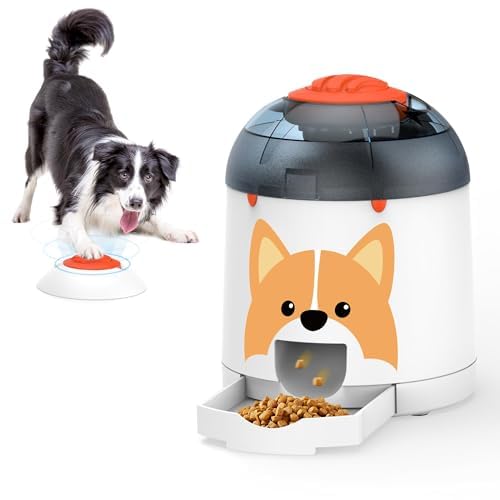
- Remote range up to 80 feet
- Adjustable dry-food dispensing
- USB rechargeable design
Best For: Remote training and automatic independent play
Best for Gentle Slow Feeding

- Interactive sniff-and-paw treat play
- Slows treat consumption
- BPA-, lead-, and phthalate-free material
Best For: Dogs that enjoy interactive play and gradual treat dispensing
Best for Remote Training Play

- Remote interaction up to 80 feet
- Adjustable slow-feeding panel
- Voice recording and preset tones
Best For: Owners seeking interactive training and remote treat release
Best for Large Meal Enrichment

- Holds up to three cups of food
- Weighted wobbling design
- Adjustable food-flow gates
Best For: Large dogs needing slow-feeding meal enrichment
Best Rubber Puzzle Balls

- Two rubber balls for treat play and fetch
- Designed for medium and large dogs
- Supports teething, training, and enrichment
Best For: Medium and large adult dogs that enjoy interactive play
Best All-Size Enrichment Dispenser

- Designed for small, medium, and large dogs
- Gradual treat release extends play
- Rinses clean for repeat enrichment
Best For: All-size indoor boredom relief and mental stimulation
Best Adjustable Slow Feeder
BSISUERM Adjustable Treat Dispensing Ball

- Adjustable switches control treat flow
- Promotes slower, prolonged puzzle play
- ABS barbell design rolls more quietly
Best For: Dogs needing adjustable portions and active indoor enrichment
Best Adjustable Feeder – Starmark Bob-A-Lot Small
If you want dog treat dispensers that can double as a meal replacement, the Starmark Bob-A-Lot offers adjustable food flow and active wobbling. Its weighted base encourages indoor play while gradually dispensing kibble or treats.
Best For: Small dogs, slow feeding, and owners who want adjustable difficulty.
Pros:
- Large chamber holds up to 1.5 cups of food.
- Top and bottom gates adjust the dispensing rate.
- Weighted, rounded base keeps the toy wobbling and moving.
Cons:
- Not intended to be used as a chew toy.
- Requires supervision and washing after use.
The Bob-A-Lot is a practical choice for small dogs that benefit from slower, more engaging meals. Its adjustable gates make it easier to tailor the challenge to different kibble sizes and eating habits.
Best Beginner Puzzle Ball – Nina Ottosson Treat Tumble
Among dog treat dispensers, the Nina Ottosson Treat Tumble is designed as an accessible introduction to puzzle play. Dogs nudge and roll the ball to release food, with treat size affecting how quickly it dispenses.
Best For: Puppies and dogs new to puzzle toys, plus slow-feeding enrichment.
Pros:
- Level 1 beginner design suits dogs new to puzzles.
- Holds up to 1 cup of kibble or treats.
- Has no removable parts and is made without BPA, PVC, lead, or phthalates.
Cons:
- Not water resistant.
- The small opening may require appropriately sized treats or kibble.
This lightweight puzzle ball is a straightforward pick for first-time puzzle users. Smaller treats make play easier, while larger pieces provide a more challenging dispensing experience.
Best for Large Dogs – KONG Wobbler Large
The KONG Wobbler is one of the more substantial dog treat dispensers for medium and large dogs. Its wobbling action turns kibble or treats into an interactive feeding activity, and the screw-apart design makes refilling simple.
Best For: Medium and large dogs that need longer, more engaging mealtimes.
Pros:
- Designed for medium and large dogs.
- Wobbling action encourages movement and mental engagement.
- Unscrews for filling and is dishwasher safe.
- Can replace a bowl to extend mealtime.
Cons:
- Intended for indoor use.
- Its larger 7.2-inch length may be less suitable for small dogs.
Choose the KONG Wobbler when durability, capacity, and easy maintenance matter more than compact sizing. It is particularly useful for turning regular meals into a more active routine for larger dogs.
Best Automatic Option – Potaroma Remote Puzzle Feeder
For shoppers seeking dog treat dispensers with automation, the Potaroma combines adjustable dry-food dispensing with remote-controlled play. It can support independent feeding, voice interaction, and training at distances of up to 80 feet.
Best For: Owners who want remote play, adjustable portions, and automatic dry-food dispensing.
Pros:
- Remote control works up to 80 feet away.
- Adjustable dispensing suits different dry kibble and treat sizes.
- Includes nine preset sounds and one recordable sound.
- USB rechargeable with a 280 ml container.
Cons:
- Hand wash only.
- Designed for dry food rather than wet food.
- More dependent on charging and remote operation than passive toys.
The Potaroma is a feature-rich alternative to traditional rolling dispensers. Its remote controls and recorded voice option make it useful for interactive training, while automatic dispensing can support independent play when you are away.
Best for Gentle Slow Feeding – Snoop Interactive Treat Toy
The Outward Hound Snoop is a compact option for dog owners seeking dog treat dispensers that combine sniffing, pawing, and play. Its treat-opening design releases rewards gradually, helping turn snack time into a brain game rather than a quick gulp.
Best For: Dogs that enjoy interactive play or tend to eat treats too quickly.
Pros:
- Encourages sniffing, pawing, and problem-solving to retrieve treats.
- Dispenses rewards slowly to support more measured eating.
- Made in the USA from BPA-, lead-, and phthalate-free Orbee-Tuff TPE.
- Mint-infused material can help freshen breath during play.
Cons:
- It is not indestructible and requires supervision.
- The 5-inch design may be less suitable for dogs needing a larger toy.
- The optional Orbee Nook ball is needed for the added challenge.
This lightweight, water-resistant toy works indoors or outdoors and offers a straightforward way to add mental stimulation to treat time. Remove and replace it if damaged.
Best for Remote Training Play – Automatic Puzzle Feeder
This OtterVerz automatic feeder stands out among dog treat dispensers for its remote button, adjustable food panel, and training-focused design. It lets dogs work for treats while owners control play from up to 80 feet away.
Best For: Owners who want remote interaction, slow feeding, and customizable training cues.
Pros:
- Remote control works from up to 80 feet indoors or outdoors.
- Adjustable food panel helps control portions and slow feeding.
- Offers four preset tones plus a 30-second voice-recording mode.
- USB rechargeable and suitable for small, medium, and large dogs.
Cons:
- Hand washing is required for care.
- The remote’s suction-cup setup is intended for smooth surfaces, while outdoor use requires placement in the tray base.
- Its automatic features may involve more setup than a basic treat toy.
With a 280 ml capacity and two remote-play arrangements, this feeder is designed for active engagement rather than passive dispensing. It can also provide independent entertainment when you are busy.
Best for Large Meal Enrichment – Bob-A-Lot Interactive Feeder
The Starmark Bob-A-Lot is a large-capacity choice among dog treat dispensers, holding up to three cups of food in its bottom chamber. Its weighted, rounded base wobbles as dogs play, gradually releasing kibble for enrichment and slower meals.
Best For: Large dogs and owners replacing a food bowl with an interactive slow-feeding activity.
Pros:
- Large chamber holds up to three cups of food.
- Weighted base creates rolling, spinning, and wobbling movement.
- Top and bottom gates adjust food flow for different kibble sizes.
- Supports slow feeding, exercise, and mental stimulation.
Cons:
- It is intended for interactive play, not as a chew toy.
- The 9.5-inch height and 1.5-pound weight may be substantial for smaller dogs.
- Indoor use is recommended, and the toy should be washed after use.
This durable, adjustable feeder is especially useful when you want to turn a full meal into a longer activity. Supervise play to help prevent misuse or damage.
Best Rubber Puzzle Balls – HIPPIH Dog Puzzle Toy 2 Pack
For shoppers comparing dog treat dispensers, the HIPPIH two-pack combines treat play with fetch and chewing-friendly rubber construction. The blue and green balls use different designs: the green ball accepts food in its grooves, while both are intended to support interactive play and teething.
Best For: Medium and large adult dogs that enjoy fetch, interactive training, and treat-based enrichment.
Pros:
- Includes two extra-tough rubber balls in different sizes.
- Supports fetch, interaction, training, and treat dispensing.
- Rubber design is intended to help with teeth cleaning without hurting gums.
- Can help keep active dogs occupied and reduce destructive boredom behavior.
Cons:
- Not suitable for miniature small dogs, and the ball must be wider than the dog’s mouth.
- Not recommended for aggressive chewers.
- Not water resistant.
This is a practical choice if you want a two-toy set for medium or large dogs and value a mix of treat play, fetch, and teething support. Check the ball size carefully before ordering.
Best All-Size Enrichment Dispenser – Interactive Treat Puzzle Toy
This round dispenser is a versatile option among dog treat dispensers, using gradual snack release to turn feeding into a puzzle. Its stated all-breed, all-life-stage design makes it suitable for indoor enrichment, boredom relief, and mental stimulation for small, medium, and large dogs.
Best For: Dogs of different sizes and ages that need a simple indoor boredom buster or beginner-friendly treat puzzle.
Pros:
- Designed for small, medium, and large dogs.
- Gradually dispenses treats to extend playtime.
- Supports mental stimulation, training, and boredom relief.
- Made with pet-safe materials and easy to rinse clean.
Cons:
- Made from plastic rather than rubber.
- Not water resistant.
- The notes do not specify included components or a warranty.
Choose this model if broad size compatibility and easy cleanup matter most. It is a straightforward enrichment feeder for dogs that enjoy working for snacks, though the supplied details do not describe a chew-resistant construction.
Best Adjustable Slow Feeder – BSISUERM Adjustable Treat Dispensing Ball
The BSISUERM stands out among dog treat dispensers for its adjustable food switches and barbell-shaped rolling design. You can control the opening and the amount dispensed to suit different dry foods, helping turn snack time into a slower, more active puzzle session.
Best For: Dogs that benefit from adjustable treat portions, prolonged play, indoor exercise, and food-motivated training.
Pros:
- Two adjustable switches accommodate different dry food and snack sizes.
- Controls treat flow to lengthen or shorten feeding time.
- Encourages chasing, exercise, intellectual training, and boredom relief.
- ABS construction and curved surfaces are designed for quieter, scratch-free rolling.
Cons:
- It is not intended to be a chew toy.
- Designed for indoor use and is not water resistant.
- The listed details identify the dog breed size as small despite describing use for all sizes.
This is a strong fit for owners who want more control over food release than a basic treat ball provides. Use it as an interactive feeder rather than a chew toy, and supervise play while confirming the size works for your dog.
How We Picked the Best Dog Treat Dispensers
We focused on the features that matter most in everyday use: dependable treat release, engaging movement, adjustable difficulty, material durability, and ease of cleaning. The selection includes wobble feeders, puzzle balls, slow feeders, and interactive toys suited to different dog sizes and experience levels.
We also considered whether each dispenser works best with dry kibble, small treats, or both. Size and supervision needs matter, too, so the roundup includes options for small dogs, medium and large breeds, puppies, and determined chewers.
Quick Comparison
| Best For | Recommended Types | What to Look For |
|---|---|---|
| Small dogs | Small puzzle balls and compact wobblers | Lightweight construction and appropriately sized openings |
| Medium and large dogs | Large wobble feeders and sturdy rolling toys | Higher capacity and strong, chew-resistant materials |
| Fast eaters | Treat-dispensing slow feeders | Controlled release and adjustable difficulty |
| Puppies and beginners | Simple rolling or button-activated designs | Low frustration and easy-to-access rewards |
| Experienced puzzle solvers | Adjustable or multi-step toys | Variable openings and more challenging mechanisms |
Key Buying Factors for Dog Treat Dispensers
Size and Treat Compatibility
Choose a dispenser that matches your dog’s mouth and the food you plan to use. Small openings can make a toy frustrating for large kibble, while oversized openings may release treats too quickly. Check the manufacturer’s recommended dog size and test treats before leaving the toy unattended.
Difficulty and Adjustability
Beginners generally do better with toys that release food after simple rolling or nudging. More experienced dogs may need adjustable openings, irregular movement, or multi-step puzzles to stay engaged. A gradual increase in difficulty helps prevent frustration.
Durability and Safety
Rubber and thick, hard-wearing plastic can withstand normal play better than thin materials, but no treat dispenser is indestructible. Inspect it regularly for cracks, sharp edges, or loose parts. Supervise aggressive chewers and remove damaged toys promptly.
Cleaning and Noise
Look for wide openings, removable components, or dishwasher-safe construction when possible. Rolling and wobbling toys can also be noisy on hard floors, so consider using them on a rug or choosing a quieter design for apartments.
Who Should Buy Which Dog Treat Dispensers?
Choose a compact puzzle ball or smaller Bob-A-Lot-style feeder for a small dog that enjoys gentle rolling play. Medium and large dogs will usually benefit from a larger, heavier dispenser that is harder to push around or carry.
For fast eaters, select a slow-feeding design that releases kibble gradually rather than all at once. Puppies and first-time users should start with an easy toy and high-value, appropriately sized treats. Dogs that quickly master basic feeders may prefer an adjustable puzzle or a dispenser with more complex interaction.
Finally, choose a durable, simple-to-clean model for daily use and reserve more intricate puzzle toys for supervised enrichment sessions. Regardless of the style, begin with short sessions, use part of your dog’s regular meal when appropriate, and monitor how safely your dog interacts with the toy.