Finding the right litter box can make daily bathroom trips easier for older cats, especially those dealing with stiffness, arthritis, reduced mobility, or a larger frame. The best options combine a low step-in height with enough interior space and stable, easy-clean construction.
We selected 10 cat litter boxes for senior cats with different needs in mind, from shallow stainless steel pans to high-sided designs that help contain litter and mess. Use the guide below to narrow the choices by access, size, cleaning needs, and household setup.
Best 10 Cat Litter Boxes for Senior Cats Picks for 2026
Best for Mess Control
High-Sided Stainless Steel XL Litter Box
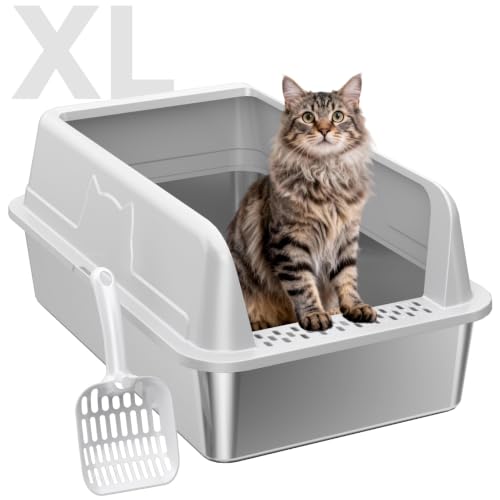
- 10.04-inch sides contain scatter and spills
- Odor- and stain-resistant stainless steel
- Includes scoop, clips, and non-slip pads
Best For: Digging cats and homes prioritizing floor protection
Best Budget-Friendly Access
Jumbo Low-Entry Plastic Litter Box

- Low entrance suits elderly and disabled cats
- Spacious 23.23-by-16.54-inch design
- Smooth surface supports quick cleaning
Best For: Senior cats and kittens needing an accessible, roomy pan
Best Small-Cat Metal Option
Low-Entry Stainless Steel Litter Pan
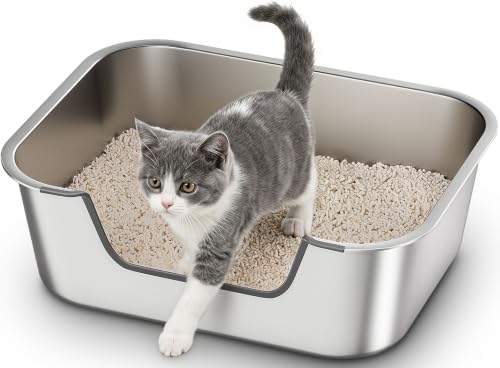
- 3.15-inch low entry for easier access
- Raised sides reduce splash and scatter
- Odor-resistant stainless steel construction
Best For: Small and medium senior, kitten, or injured cats
Easy-Access Classic
Large High-Sided Open Litter Box

- Lowered front for easier access
- High sides help contain litter
- Includes scoop with onboard storage
Best For: Older or large cats needing a simple open pan
Hygienic Step-In
Stainless Steel Low-Entry Litter Box

- 2.7-inch entry for limited mobility
- Smooth stainless steel is easy to clean
- High sides help reduce scatter
Best For: Senior or mobility-limited cats needing a low step
Roomy Corner Fit

- 2.9-inch entry supports easier access
- Jumbo interior offers room to turn
- Corner design helps contain scatter
Best For: Senior cats and multi-cat homes needing extra space
Best Ultra-Low-Entry Pick
Stainless Steel Shallow Litter Pan

- 2.76-inch entry for easy access
- Smooth stainless steel is easy to clean
- Rounded, pet-friendly corners
Best For: Senior cats, kittens, and small pets needing a shallow pan
Best Spacious Senior-Cat Tray
Vealind Extra-Large Low-Entry Box

- Roomy 23.6-by-15.7-inch design
- 3-inch entry for easier access
- Pedal and raised edge help limit scatter
Best For: Large or senior cats needing space and mess control
Best Stainless Steel XL Option
Non-Stick Low-Entry Litter Box

- 3.2-inch entrance for easier access
- Durable one-piece stainless steel build
- Higher sides help contain litter and splashes
Best For: Senior or recovering cats needing durable, easy-clean construction
Best Overall Space – Extra-Large Low-Entry ABS Litter Box
For shoppers comparing cat litter boxes for senior cats, this extra-large ABS pan prioritizes easy access and plenty of room. Its 5.7-inch height and 24-by-20-inch footprint suit cats that need a low step-in and may also work well in multi-cat homes.
Best For: Senior or mobility-limited cats, large breeds, and households needing a roomy open tray.
Pros:
- Low-entry design helps senior cats and kittens get in and out more easily.
- Extra-large 24-by-20-inch footprint gives cats room to turn and use the box comfortably.
- Rigid ABS construction and a smooth interior are designed for repeated use and simpler cleaning.
- Frosted exterior finish and an easy-grip lip offer practical handling.
Cons:
- The open, low-sided design may provide less litter containment than a high-sided box.
- Its large footprint requires substantial floor space.
This is a practical choice when accessibility and interior room matter more than splash control. The ABS material and smooth interior also make routine maintenance straightforward.
Best for Mess Control – High-Sided Stainless Steel XL Litter Box
This high-sided stainless steel pan is a strong option among cat litter boxes for senior cats when floor protection and easy cleaning are priorities. The 10.04-inch walls help contain scatter and spills, while the included scoop adds convenience.
Best For: Cats that dig or splash, homes seeking better litter containment, and owners who prefer a metal, non-stick surface.
Pros:
- High sides help reduce litter scatter and urine spills.
- Stainless steel surface resists odors and stains and is designed for quick cleaning.
- Secure clips and non-slip pads help keep the box stable during use.
- Includes a matching litter scoop.
Cons:
- The tall 10.04-inch walls may be less accessible for cats with significant mobility limitations.
- At 22.95 by 14.8 inches, it is narrower than some extra-large pans.
Choose this model when mess containment is more important than the lowest possible entry. A senior cat may need assistance or a ramp if stepping over the taller walls is difficult.
Best Budget-Friendly Access – Jumbo Low-Entry Plastic Litter Box
This jumbo plastic pan combines a low entrance with a spacious open design, making it one of the more accessible cat litter boxes for senior cats. Its 23.23-by-16.54-inch footprint provides room for larger, elderly, disabled, or multiple cats.
Best For: Senior cats, kittens, and owners seeking a roomy low-entry box with simple maintenance.
Pros:
- Low entrance helps elderly, disabled, and weak or injured cats enter more easily.
- Large interior accommodates big cats, small pets, or multi-cat use.
- Smooth, non-stick surface helps prevent buildup and simplifies wiping.
- Open top supports ventilation and easy access.
Cons:
- The 4.33-inch height may offer limited protection against high urine spray or litter scatter.
- Plastic may be less odor-resistant and durable than stainless steel.
This pan is a sensible accessibility-first pick for cats that struggle with high walls. Its broad, shallow layout is easy to reach, though placement on a washable mat may help manage scatter.
Best Small-Cat Metal Option – Low-Entry Stainless Steel Litter Pan
For small and medium cats, this stainless steel pan offers a 3.15-inch low entry without giving up raised sides. It is a compact choice among cat litter boxes for senior cats, especially when odor resistance and easy cleanup are important.
Best For: Small or medium senior cats, kittens, and injured cats needing a low step-in.
Pros:
- 3.15-inch front entry makes stepping in and out easier.
- Raised sides and back help limit litter scatter and urine splash.
- Stainless steel resists odors, scratches, and residue buildup.
- Compact 17.5-by-13.6-inch size suits smaller spaces.
Cons:
- The listed dimensions are intended for medium and small cats rather than large breeds.
- It is not the best fit for multi-cat households needing a large interior.
This is a well-balanced option for a smaller senior cat: the entry is accessible, while the raised sides provide more splash protection than a shallow open tray. Confirm the interior size before buying for a large or heavy cat.
Easy-Access Classic – Large High-Sided Open Litter Box
For cat litter boxes for senior cats, this open-top pan combines a lowered front with higher surrounding sides. That layout gives older or larger cats easier entry and exit while helping contain scattered litter.
Best For: Senior or large cats that need an open, easy-access box with convenient scoop storage.
Pros:
- Lowered front supports easier entry and exit.
- High sides help contain litter and keep floors cleaner.
- Open design makes monitoring and scooping straightforward.
- Includes a scoop with onboard storage.
Cons:
- The open top offers no covered enclosure.
- Its 19-by-15-inch footprint may be less suitable for especially large or multi-cat needs.
This is a practical, uncomplicated choice when accessibility and cleanup convenience matter more than enclosure or specialized materials.
Hygienic Step-In – Stainless Steel Low-Entry Litter Box
Among cat litter boxes for senior cats, this stainless steel pan emphasizes accessibility and easy maintenance. Its 2.7-inch front entry is designed for cats with limited mobility, while the open top provides visibility and a clear approach.
Best For: Senior, injured, disabled, or kitten-age cats needing a very low step-in and a wipe-clean metal surface.
Pros:
- Ultra-low 2.7-inch entry eases stepping in and out.
- Stainless steel resists odors, stains, and scratches.
- Smooth surface helps prevent waste adhesion and simplifies cleaning.
- High sides provide splash and scatter protection.
Cons:
- The listed medium size is relatively compact at 17.7 by 13.8 inches.
- Stainless steel may feel less lightweight than a plastic pan.
- The open design does not provide a covered enclosure.
This box stands out for combining a particularly low entry with durable stainless steel, making it a strong fit when mobility and sanitation are top priorities.
Roomy Corner Fit – Jumbo Low-Entry Litter Pan
This jumbo option is one of the more spacious cat litter boxes for senior cats, with a gentle 2.9-inch entrance and room to turn and dig. Its angled corner-entry design helps the large pan fit neatly into a corner while limiting litter scatter.
Best For: Senior cats or multi-cat households that need generous interior space and low step-in access.
Pros:
- Low 2.9-inch entrance minimizes strain during entry.
- Extra-large 23.6-by-15.7-inch interior allows comfortable movement.
- Corner-entry shape helps save space and contain scatter.
- Open top improves visibility and ventilation, while smooth plastic is easy to wipe clean.
Cons:
- The shallow 5.9-inch height may provide less containment than a taller-sided box.
- It has no included scoop or other listed accessories.
- The open-top design provides no enclosed privacy.
Choose this model when floor space and interior room are priorities; its low entry is accessibility-friendly, while the corner layout helps organize a larger litter area.
Best Ultra-Low-Entry Pick – Stainless Steel Shallow Litter Pan
For shoppers comparing cat litter boxes for senior cats, this stainless steel pan prioritizes exceptionally easy access. Its 2.76-inch height can be helpful for elderly, arthritic, disabled, or young cats that may struggle with taller sides.
Best For: Senior cats, kittens, and small pets needing a shallow, easy-entry pan.
Pros:
- Very low 2.76-inch profile makes entry and exit easier.
- Stainless steel surface is smooth and easy to clean.
- Rounded corners and no sharp edges support safer use.
- Can also be used for small animals such as rabbits, ferrets, guinea pigs, and hamsters.
Cons:
- The shallow design may provide less splash and scatter control than a higher-sided box.
- Its medium 17.72-by-13.78-inch footprint may be less suitable for very large cats.
This is a straightforward choice when low access matters more than deep litter capacity. The metal construction and compact footprint also make it practical for simple, frequent cleaning.
Best Spacious Senior-Cat Tray – Vealind Extra-Large Low-Entry Box
Among cat litter boxes for senior cats, this Vealind tray combines a 3-inch entry with a roomy 23.6-by-15.7-inch interior. Its higher back and anti-splash edge are designed to provide more containment while remaining accessible to older or mobility-limited cats.
Best For: Large cats, senior cats, and households wanting extra space and litter-mess control.
Pros:
- Extra-large design can hold up to 20 liters of litter.
- Low 3-inch entry supports easier access for senior and mobility-limited cats.
- Raised edge and attached litter-trapping pedal help reduce scatter.
- Reinforced base is designed for stability and durability.
Cons:
- The large footprint requires more floor space.
- At 5.9 inches high overall, it may be less accessible than an ultra-shallow pan for cats with severe mobility limitations.
This model is a strong fit when your cat needs room to turn around but you still want a relatively low entrance. The rounded, non-stick bottom is also intended to simplify routine cleaning.
Best Stainless Steel XL Option – Non-Stick Low-Entry Litter Box
This stainless steel option is one of the more versatile cat litter boxes for senior cats, offering a 3.2-inch entrance, a 19.7-by-13.8-inch footprint, and 5.9-inch sides. It is designed for senior, injured, post-surgery, and large cats while adding splash protection and easy-clean construction.
Best For: Senior or recovering cats whose owners want durable metal construction and higher sides.
Pros:
- Low 3.2-inch entrance helps reduce entry and exit difficulty.
- One-piece stainless steel construction resists corrosion, scratches, and residue buildup.
- Smooth non-stick surface is intended to resist odors and wipe clean easily.
- Higher sides help minimize litter scatter and urine splashes.
Cons:
- The entrance is higher than the 2.76-inch profile of the shallowest option here.
- The 19.7-by-13.8-inch size may offer less interior room than an extra-large tray.
- Metal construction weighs 2.3 pounds before litter is added.
This box balances accessibility with containment better than a very shallow tray. Its rounded edges, entrance trim, and non-stick stainless steel surface make it especially practical for owners focused on durability and maintenance.
How We Picked the Best Cat Litter Boxes for Senior Cats
We focused on the features that matter most for aging, injured, disabled, and large cats: genuinely low entry points, usable interior dimensions, stable construction, easy cleaning, and effective mess control. Stainless steel models received attention for their non-porous surfaces and odor resistance, while ABS and other plastic designs can offer lighter weight and lower upfront cost.
Because cats vary considerably in mobility and body size, a practical fit mattered more than a single “best” design. We included open-top pans, high-sided trays, extra-large boxes, and corner-friendly options so different households can find a suitable match.
Quick Comparison
| Best for | Look for | Trade-off |
|---|---|---|
| Arthritic or weak cats | Low, wide entry and nonslip stability | May provide less litter containment |
| Large or long-bodied cats | Extra-large floor area and open access | Requires more floor space |
| Odor-conscious homes | Stainless steel, non-porous surfaces | Can be heavier or costlier |
| Mess-prone diggers | High back and side walls | Entry height must remain manageable |
| Small rooms | Compact or corner-oriented footprint | Less room to turn around |
Key Buying Factors for Cat Litter Boxes for Senior Cats
Entry Height and Access
Prioritize the lowest entry your cat can comfortably step over without jumping. A shallow front is especially important for cats with arthritis, hip problems, weakness, or recent injuries. Check the actual entry height rather than relying only on labels such as “senior” or “low entry.”
Interior Size and Shape
Your cat should be able to enter, turn around, dig, and position comfortably. Extra-large cats often need a longer, wider pan, while a cramped box can lead to accidents or avoidance. Measure the available floor space before ordering.
Side-Wall Height and Litter Scatter
High sides help contain urine, kicked litter, and enthusiastic digging, but they should not create a difficult climb. A useful compromise is a low front entry with higher sides or a raised back.
Material and Maintenance
Stainless steel resists odor absorption and typically scrubs clean easily. Plastic and ABS boxes are often lighter and more affordable, but scratches can retain smells over time. Whichever material you choose, use a litter depth your cat can comfortably navigate.
Stability and Placement
Choose a box that will not slide or tip when your cat steps in. Place it on a level, easily accessible surface away from loud appliances, steep stairs, and food or water. For homes with multiple floors, additional boxes can reduce walking demands.
Who Should Buy Which Cat Litter Boxes for Senior Cats?
Choose a low-entry stainless steel pan for a senior cat with pronounced mobility limitations or for owners who want easy odor-resistant cleaning. Choose an extra-large open box for big, long-bodied cats or cats that need room to turn. Choose a high-sided model with a low front if litter scatter and tracking are major concerns. Choose a lightweight ABS or plastic tray if you need a budget-friendly option that is easy to move and replace.
Monitor how your cat uses the new box during the transition. Keep the familiar litter initially, place the new pan near the old one, and avoid sudden changes if your cat is hesitant. Persistent accidents, straining, or changes in litter-box habits warrant veterinary attention.