Managing an aquarium is easier when your critical gear runs on a dependable control panel. From lighting schedules and temperature stability to auto top-off and safety shutoffs, the right setup can reduce daily maintenance and help protect livestock.
Below, we’ve selected 10 of the best options for 2026, covering practical automation tools for freshwater, saltwater, and pond-adjacent use. This roundup focuses on useful controls, straightforward setup, and the features buyers actually need.
Best 10 Aquarium Equipment Control Panel Picks for 2026
24/7 Power Management
Coralife 8-Outlet Digital Power Center

- 8 outlets with grounded 3-prong plug
- 15-minute timer intervals and 7 daily cycles
- Safety covers for unused outlets
Best For: Aquarists needing simple scheduled power control
Replacement Control Parts
Aquascape XT Control Panel Replacement

- Replacement for Smart Pond Dosing System XT
- Helps restore an existing compatible setup
- Not a standalone controller
Best For: Owners replacing a failed XT control panel
Temperature Regulation Hub
Inkbird ITC-308S Aquarium Controller
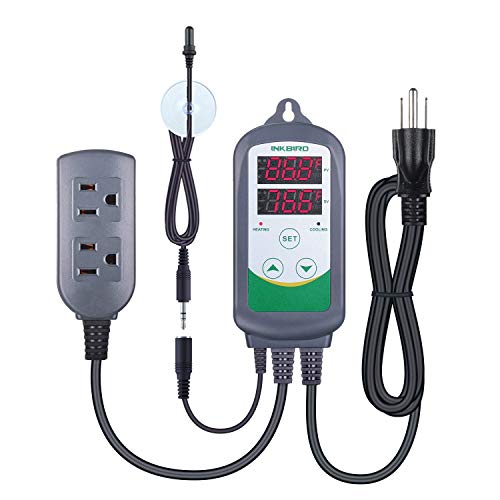
- Controls heating and cooling outlets
- Fully submersible probe for aquarium use
- Dual display with alarms and calibration
Best For: Keepers needing a simple heater-and-fan controller
Overflow Protection Switch
Aquarium High Water Safety Cutoff

- Cuts power at the set high water level
- Helps prevent overflow from pump or filter issues
- Supports pumps up to 350W
Best For: ATO setups needing overflow safety backup
Dual-Treatment Dosing Control

- Adds two water treatments at once
- Built for Smart Pond Dosing System XT
- Includes alert system and tubing
Best For: Pond owners who need a compatible dual-treatment add-on
Temperature Safety Control
Aquarium Heater Thermostat Controller

- Controls heating and cooling with two outlets
- Digital display shows current temp and mode
- Buzzer alerts and power-on delay add safety
Best For: Aquariums and other setups needing basic temperature automation
Light Scheduling Control
NICREW Aquarium Light Timer & Dimmer

- Creates sunrise and sunset effects
- Dims compatible LEDs from 10% to 100%
- Simple setup with three preset modes
Best For: Aquarium owners wanting easy lighting automation
Dual-Zone Temperature Control
Dual Probe Reptile Thermostat Controlled Outlet

- Two separate outlets for heating or cooling
- Dual waterproof sensors for multi-zone control
- Includes high/low and temp-difference alarms
Best For: Users needing separate temperature control for two zones or two tanks
Stable ATO Bracket Setup
Auto Water Filler Controller with Float Valve

- Bracket-mounted design installs without tools
- Adjustable float valve for 0.5 to 15 cm range
- O-ring seal and tube support help prevent leaks
Best For: Aquarists wanting a simple, compact top-off controller
Smart Auto-Top-Off Control
Smart Automatic ATO System with Pump

- Complete ATO kit with controller, sensor, and pump
- Built-in alarms for leaks, timeout, and pump issues
- 12V design with smart pause and anti-interference sensor
Best For: Users wanting an automated, alarm-equipped top-off system
24/7 Power Management – Coralife 8-Outlet Digital Power Center
If you’re building an aquarium equipment control panel around basic power scheduling, this Coralife unit is a straightforward option. It combines 8 outlets with a 24-hour mechanical timer, 15-minute interval settings, and up to seven time cycles per day, seven days per week.
Best For: Aquarists who want a simple outlet timer for lights and other scheduled gear.
Pros:
- 8 grounded outlets for multiple aquarium devices
- 15-minute interval settings with up to 7 cycles per day
- Sliding outlet safety covers help protect unused outlets
- Grounded 3-prong plug and 3-foot power cord
Cons:
- Not smart-home compatible
- Uses a mechanical timer rather than app-based control
This is best viewed as a practical power-scheduling hub rather than a feature-heavy smart controller. For hobbyists who mainly need reliable timed outlet control, it keeps the setup simple.
Replacement Control Parts – Aquascape XT Control Panel Replacement
For an aquarium equipment control panel-style setup built around a pond dosing system, this Aquascape part is a replacement control panel for the Smart Pond Dosing System XT. It is not a full controller with aquarium programming features, but a direct replacement component for maintaining an existing system.
Best For: Owners who need a replacement control panel for a Smart Pond Dosing System XT.
Pros:
- Designed as a replacement for the Smart Pond Dosing System XT Control Panel
- Useful for restoring an existing compatible system
- Simple part swap versus replacing the whole dosing system
Cons:
- Replacement part only, not a standalone control solution
- Compatibility is limited to the specified XT system
This is a maintenance item, not a general-purpose aquarium controller. If your current Aquascape dosing setup needs a new panel, this is the most direct fit.
Temperature Regulation Hub – Inkbird ITC-308S Aquarium Controller
If your aquarium equipment control panel needs to manage heat and cooling, the Inkbird ITC308S focuses on temperature control. It offers on/off control for heating and cooling outlets, a fully submersible probe, and a dual display that shows measured and set temperature at the same time.
Best For: Aquarium owners who want a dedicated temperature controller for heaters and cooling fans.
Pros:
- Controls both heating and cooling outlets
- Fully submersible probe for aquarium use
- Dual display shows current and set temperature
- Includes temperature calibration and over-temperature/sensor fault alarm
Cons:
- On/off control only, not a variable controller
- Maximum output load is 1200W at 110V
This is a practical all-in-one temperature control unit for hobbyists who want clear readings and basic automation. It keeps the aquarium environment steady without adding unnecessary complexity.
Overflow Protection Switch – Aquarium High Water Safety Cutoff
For an aquarium equipment control panel focused on safety, this high water level switch is built to cut power when water reaches the set level. It is designed for aquarium water level control, ATO safety backup, and overflow prevention in both saltwater and freshwater systems.
Best For: Aquarists who want a float-switch safety cutoff for ATO or pump protection.
Pros:
- Automatically powers off at the set high water level
- Designed to prevent overflow from pump or filter issues
- Compatible with saltwater and freshwater aquariums
- Supports pumps up to 350W with plug-and-play setup
Cons:
- Safety-focused device rather than a full control panel
- Rated for 350W, so it is not meant for higher-power gear
This is a targeted protection device for anyone worried about overflow events. It works best as a backup layer in a broader aquarium control setup.
Dual-Treatment Dosing Control – Smart Pond Dosing Add-On Kit
If you want an aquarium equipment control panel that helps manage water treatment dosing with less guesswork, this add-on kit is built for the Smart Pond Dosing System XT. It lets you add two different water treatments at the same time, making it easier to pair a staple treatment with a problem-solving treatment when water conditions call for both.
Best For: Pond keepers already using the Smart Pond Dosing System XT who want a quick add-on for dual treatment control.
Pros:
- Adds support for two water treatments simultaneously
- Designed for the Smart Pond Dosing System XT #40040
- Installs in seconds
- Includes control panel, intake assembly, tubing, and cables
Cons:
- Only designed for use with the Smart Pond Dosing System XT
- Focused on dosing control, not general aquarium monitoring
This is a specialized control-panel add-on rather than a standalone controller, so it makes the most sense if you already have the matching dosing system. For users in that setup, the quick install and low-treatment alert system make it a practical way to expand treatment options.
Temperature Safety Control – Aquarium Heater Thermostat Controller
For buyers searching for an aquarium equipment control panel that can manage heating and cooling, this thermostat controller is a straightforward plug-and-play option. It uses a probe and dual outlets to control temperature across freshwater or saltwater setups, with a large digital display and selectable Fahrenheit or Celsius readout.
Best For: Aquarium, terrarium, or greenhouse setups that need simple heating and cooling temperature control.
Pros:
- Plug-and-play setup with a large digital display
- Two outlets can control heating and cooling devices simultaneously
- Factory calibrated with buzzer alerts for out-of-range temperatures
- Power-on delay helps protect compressors from rapid cycling
Cons:
- Wired probe-and-outlet setup is not a smart system
- Single-purpose focus on temperature control only
This controller is a strong fit if temperature stability is your main priority and you want a simple interface rather than a more complex aquarium management system. Its dual-device support and safety features make it practical for a wide range of controlled environments.
Light Scheduling Control – NICREW Aquarium Light Timer & Dimmer
If you need an aquarium equipment control panel for lighting, this NICREW timer and dimmer offers simple scheduling and brightness control in one compact unit. It can simulate sunrise and sunset effects, and it lets you adjust brightness from 10% to 100% for compatible 5.5mm x 2.1mm barrel-connector DC LED lights.
Best For: Fish tank owners who want easy light timing and dimming for compatible LED setups.
Pros:
- Simulates sunrise and sunset effects
- Three default setting modes for quick setup
- Manual brightness adjustment from 10% to 100%
- Quick installation with a compact, corded design
Cons:
- Only works with compatible 5.5mm x 2.1mm DC LED lights
- Not smart home compatible
This is a practical choice if your main goal is more natural-looking tank lighting without a complicated controller. Its simple controls and broad voltage support make it easy to match with compatible LED strip lights.
Dual-Zone Temperature Control – Dual Probe Reptile Thermostat Controlled Outlet
If you’re building an aquarium equipment control panel around temperature management, this dual-probe controller is a practical fit for setups that need separate heating or cooling outputs. It lets each outlet switch on and off at user-set temperatures, and the two waterproof sensors make it useful for managing two areas or even two tanks.
Best For: Hobbyists who want a simple dual-zone temperature controller for aquarium, terrarium, or greenhouse use.
Pros:
- Two individually separate outlets for heating or cooling
- Dual waterproof sensors for controlling different zones
- High/low temperature and temperature-difference alarms
- Power-on delay helps protect compressors from frequent cycling
Cons:
- Designed as a temperature controller, not a full aquarium monitoring hub
- Best suited to users comfortable setting separate on/off thresholds
- Wall-mount format may not suit every enclosure layout
Overall, this is a straightforward control solution if temperature is the main part of your aquarium equipment control panel. It focuses on separate outlet control, safety alarms, and broad compatibility with heating and cooling equipment.
Stable ATO Bracket Setup – Auto Water Filler Controller with Float Valve
For an aquarium equipment control panel focused on water level stability, this manual float-valve auto filler keeps top-off duties simple. It uses a bracket-mounted design with an adjustable float and leak-resistant sealing to help maintain a consistent sump or tank water level.
Best For: Aquarists who want a compact, bracket-mounted water level controller for sump or aquarium top-off.
Pros:
- Simple installation with no tools or metal screws required
- Adjustable water level range from 0.5 to 15 cm
- Leak-proof design with O-ring seal and 16/12 mm tube compatibility
- Heavy acrylic and plastic bracket adds stability
Cons:
- Manual float valve is less automated than sensor-based ATO systems
- Best for water level control only, not broader aquarium automation
- Limited to the included bracket and tube setup
This is a basic but useful option if you want water-level control without adding a more complex controller. It suits setups where reliability, easy mounting, and a compact footprint matter more than advanced automation.
Smart Auto-Top-Off Control – Smart Automatic ATO System with Pump
If you want an aquarium equipment control panel that handles top-off automatically, this smart ATO system brings sensor-based refill control with built-in alerts. It uses a controller, sensor, and submersible pump to manage water level and includes alarm conditions for common faults such as low reservoir water, leaks, stuck floats, and pump issues.
Best For: Aquarium owners who want a complete, sensor-driven automatic top-off kit for tanks or sumps.
Pros:
- Complete kit includes controller, sensor, and submersible pump
- Multiple alarms for out-of-water, leak, stuck-float, timeout, and connection issues
- 12V working voltage for energy-saving, safer operation
- Smart pause button and anti-interference sensor design
Cons:
- More complex than a basic float-valve filler
- Requires correct setup of the siphon-breaking joint and pump components
- Designed for specific tank thickness limits up to 5/8 inch
This model is the most automation-ready of the group and fits well when water-level management needs to be part of a more capable control setup. Its alarm features and complete kit design make it a strong choice for users who want easier hands-off maintenance.
How We Picked the Best Aquarium Equipment Control Panel
We focused on products that solve real tank-management problems: stable temperature control, reliable lighting timers, dosing automation, water-level protection, and simple power management. We also favored units with clear programming, useful safety features, and compatibility with common aquarium equipment.
Because an Aquarium Equipment Control Panel can serve very different needs, we included a mix of timer-based, thermostat-based, and auto top-off solutions rather than forcing one “best” choice for every setup.
Quick Comparison
If you want lighting automation, look at timer and dimmer-style controls. For heating and cooling, choose a thermostat controller with probe-based monitoring. For top-off and overflow protection, prioritize float valves, leak prevention, and fail-safe shutoff features. If you need broader power distribution, an outlet-based control center is usually the most flexible option.
Key Buying Factors for Aquarium Equipment Control Panel
Control Type
Decide whether you need simple on/off scheduling, temperature regulation, or multi-function automation. A basic timer is ideal for lights, while a thermostat controller is better for heaters, fans, and temperature-sensitive tanks.
Safety Features
Look for high-water shutoff, probe failure alerts, grounded outlets, and fail-safe behavior after power interruptions. In aquarium use, safety matters as much as convenience.
Compatibility
Make sure the unit matches your gear’s voltage, plug type, and intended use. Some controllers are designed for heaters and cooling fans, while others are better suited to lighting, dosing, or ATO systems.
Ease of Setup
The best Aquarium Equipment Control Panel is one you can actually program correctly and maintain confidently. Clear displays, simple buttons, and readable instructions can save time and reduce mistakes.
Tank Size and Livestock Needs
Small freshwater tanks may only need a light timer and heater control, while reef systems often benefit from tighter temperature stability and stronger water-level safeguards. Match the controller to the sensitivity of your livestock and equipment load.
Who Should Buy Which Aquarium Equipment Control Panel?
Choose an outlet timer or digital power center if you want to automate lights and multiple accessories. Pick a temperature controller if your main goal is protecting fish from swings in heat or cooling. Go with an auto top-off or high-water safety switch if evaporation, sump stability, or overflow protection is your biggest concern.
If you’re building a more complete automation setup, start with the function that addresses your largest risk first, then expand from there. That approach usually delivers the best value and the most reliable day-to-day performance.