Stable temperature, salinity, and water level are essential for healthy saltwater aquariums, but maintaining them manually can be time-consuming. The right controller or automation device helps reduce daily guesswork and provides important protection when conditions change.
This roundup covers 10 useful options for reef and marine setups, from dual-stage temperature controllers and automatic top-off systems to safety switches and circulation equipment. Use the guide below to match each type of device to your tank, livestock, and maintenance routine.
Best 10 Aquarium Controllers for Saltwater Tanks Picks for 2026
Temperature Control Pick
Pinpoint Dual-Stage Temperature Controller

- Dual-stage temperature control
- ±0.1°F display resolution
- Includes temperature probe
Best For: Dedicated aquarium temperature management
Overflow Protection Pick
Aquarium High-Water Safety Switch

- Cuts power at high water levels
- Supports pumps up to 350W
- Compatible with saltwater and freshwater
Best For: ATO and pump overflow protection
Flow Control Pick

- Five adjustable wave modes
- 1500GPH flow for 20-100 gallon tanks
- Includes feeding and night modes
Best For: Customizable saltwater and reef circulation
Algae Management Pick
API MARINE ALGAEFIX Algae Control
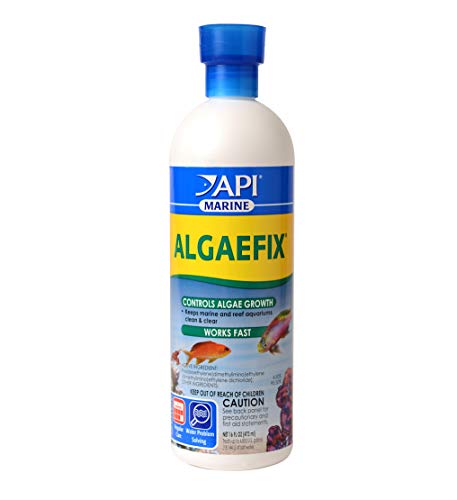
- 16-ounce marine algae treatment
- Targets three listed algae types
- Designed for marine and reef aquariums
Best For: Managing algae in saltwater and reef tanks
Reliable Temperature Control

- Controls heating and cooling simultaneously
- Corrosion-resistant for saltwater use
- Includes temperature and sensor alarms
Best For: Saltwater tanks needing simple dual-stage temperature control
Smart Water-Level Management

- Automatically replaces evaporated water
- Includes sensor, pump, and controller
- Alerts for refill and equipment problems
Best For: Saltwater tanks and sumps needing automatic top-off
Advanced Dual-Outlet Protection
HiTauing S10B Temperature Controller

- Independent heating and cooling outlets
- Seawater-resistant monitoring probe
- Touch display with Fahrenheit/Celsius support
Best For: Marine tanks requiring dedicated heater and chiller control
Maintenance Support
API Stress Zyme Bacterial Cleaner

- Works in freshwater and saltwater aquariums
- Helps consume sludge and reduce maintenance
- Adds beneficial bacteria for weekly upkeep
Best For: Weekly bacterial and cleaning support
Evaporation Control
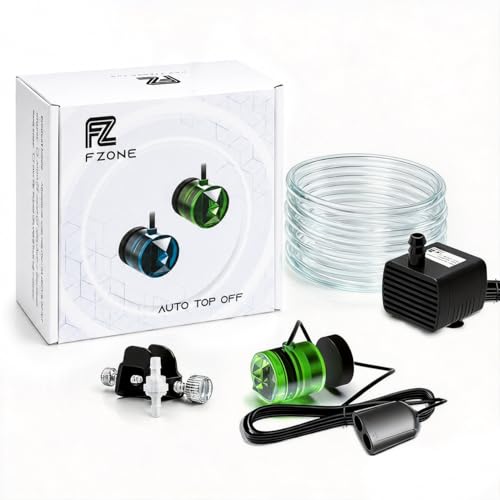
- Dual optical sensors track water level in real time
- Safety features help prevent overfilling and dry running
- Compact design fits tanks and sumps up to 20 mm thick
Best For: Precise automatic top-off in reef and saltwater tanks
Temperature Management
Inkbird Aquarium Heater Controller

- Controls aquarium heating for seawater and reef tanks
- Allows separate day and night temperature settings
- Includes calibration, sensor-fault, and temperature alarms
Best For: Scheduled heater control with safety monitoring
Temperature Control Pick – Pinpoint Dual-Stage Temperature Controller
For aquarists comparing aquarium controllers for saltwater tanks, the American Marine Pinpoint Dual-Stage Temperature Controller offers dedicated temperature monitoring and control with a probe and a display resolution of ±0.1°F. Its 110-volt design suits setups that need a focused temperature-control solution.
Best For: Saltwater aquarists seeking a dedicated temperature controller with a fine-resolution display.
Pros:
- Includes a temperature probe for monitoring.
- Display resolution of ±0.1°F.
- Dual-stage temperature controller design.
- Uses standard 110-volt power.
Cons:
- Accuracy is listed as ±1.0°F, which is broader than the display resolution.
- At 2.5 pounds, it may be less convenient for compact setups.
This is a specialized choice rather than an all-in-one aquarium controller. It makes the most sense when temperature management is your primary monitoring need.
Overflow Protection Pick – Aquarium High-Water Safety Switch
This high-water safety switch adds a protective layer to aquarium controllers for saltwater tanks by cutting power when the water reaches the set level. It is designed to help limit overflow from failed auto top-off systems, clogged filters, or restricted water flow.
Best For: Saltwater and freshwater aquariums that need backup protection for an ATO system or pump.
Pros:
- Automatically cuts power at a high-water level.
- Works with saltwater and freshwater systems.
- Supports pumps and devices up to 350W.
- Plug-and-play installation requires no complicated wiring.
Cons:
- It is a high-water safety switch, not a comprehensive aquarium monitoring system.
- Its corded 110-volt design may limit placement options.
For aquarists primarily concerned with overflow prevention, this compact switch provides a straightforward backup safeguard. Confirm that the connected pump stays within the 350W rating.
Flow Control Pick – hygger 1500GPH Wave Maker
The hygger Wave Maker is a flow-focused option among aquarium controllers for saltwater tanks, combining a 1500GPH powerhead with a controller offering five modes, adjustable flow, feeding mode, and night mode. Its 12V DC output and magnetic mount suit 20- to 100-gallon saltwater or reef aquariums.
Best For: Saltwater, freshwater, and coral reef aquariums needing adjustable circulation and multiple flow patterns.
Pros:
- Five wave modes with 30%-100% flow adjustment.
- 1500GPH maximum flow for 20- to 100-gallon tanks.
- Includes feeding, night, and linkage modes.
- 12V DC design includes protection against several electrical and motor conditions.
Cons:
- It controls water movement rather than serving as a broad aquarium monitoring hub.
- Its 1500GPH capacity may be more flow than smaller tanks require.
This is a strong fit when circulation control is the priority. The range of modes and adjustable output makes it more flexible than a basic fixed-flow powerhead.
Algae Management Pick – API MARINE ALGAEFIX Algae Control
API MARINE ALGAEFIX is a 16-ounce liquid treatment for marine and reef aquariums. While it is not a monitoring device, it can complement aquarium controllers for saltwater tanks by helping manage green, red slime, and brown algae when used according to the supplied dosing schedule.
Best For: Marine and reef aquarium owners dealing with listed algae types in systems containing fish, corals, and invertebrates.
Pros:
- Targets green, red slime, and brown algae.
- Formulated for marine and reef aquariums.
- Notes indicate compatibility with corals and numerous invertebrates when used in salt water.
- Dosing transitions from every three days to weekly after control is achieved.
Cons:
- It is an algae-control treatment, not an aquarium controller.
- Requires repeated dosing rather than one-time application.
This product belongs in the maintenance category rather than the automation category. It may be useful alongside monitoring equipment when algae growth is the specific problem being addressed.
Reliable Temperature Control – Inkbird ITC-308S
For aquarium controllers for saltwater tanks, the Inkbird ITC-308S is a practical choice when your priority is maintaining a stable temperature. It can control heating and cooling equipment simultaneously, while its corrosion-resistant design suits freshwater, saltwater, coral, shrimp, and tropical fish setups.
Best For: Saltwater aquariums that need dual-stage temperature control and straightforward monitoring.
Pros:
- Controls a heater and cooling device at the same time.
- Corrosion protection makes it suitable for saltwater and coral aquariums.
- Displays measured and set temperatures in Celsius or Fahrenheit.
- Includes high- and low-temperature alarms plus a sensor-failure alarm.
Cons:
- Maximum output load is 1,200W, so equipment must stay within its rating.
- It is a temperature controller rather than a complete aquarium automation system.
The ITC-308S is a sensible option for aquarists who want dedicated temperature oversight without adding broader automation features. Its dual-stage control and alarms are especially useful for saltwater systems where temperature stability matters.
Smart Water-Level Management – Automatic ATO System
Among aquarium controllers for saltwater tanks, this automatic top-off system focuses on replacing evaporated water and maintaining a consistent sump or tank level. It includes a sensor, submersible pump, and controller, with alerts for common refill and equipment problems.
Best For: Saltwater aquariums and sumps where dependable automatic evaporation compensation is more important than temperature control.
Pros:
- Includes the controller, water-level sensor, and submersible pump.
- Provides alarms for an empty reservoir, leaks, stuck float, timeout, pump disconnection, and short circuits.
- Uses a low 12V working voltage.
- Supports a pause button and automatically resumes after 30 minutes.
Cons:
- It is an auto top-off controller, not a general-purpose aquarium controller.
- Fits tanks up to 5/8 inch (16 mm) thick.
- Correct siphon-break placement is required during installation.
This ATO kit is a focused solution for keeping water levels steady in saltwater tanks and sumps. Its included components and troubleshooting alarms make it convenient, provided the tank rim and installation requirements match your setup.
Advanced Dual-Outlet Protection – HiTauing S10B Temperature Controller
The HiTauing S10B is one of the more specialized aquarium controllers for saltwater tanks, combining heating and cooling outlets with a seawater-resistant probe. Its digital touch display and adjustable temperature range make it suitable for saltwater and freshwater aquariums as well as other temperature-controlled applications.
Best For: Aquarists who want separate heater and chiller control with a corrosion-resistant probe and broad temperature settings.
Pros:
- Independently regulates heating and cooling through dual outlets.
- Uses a seawater-resistant probe designed to withstand corrosion, heat, and cold.
- Supports Fahrenheit and Celsius readings with a touch-control LED display.
- Offers a temperature control range from -22°F to 230°F.
Cons:
- Setup involves learning the button sequence and mode settings.
- The included suction cup is described as small.
- It does not provide broader functions such as automatic top-off or lighting control.
The S10B is a good fit when temperature management is the central requirement and both heating and cooling equipment need independent control. Its saltwater-resistant probe adds useful protection for marine environments, though it remains a dedicated temperature controller rather than an all-in-one system.
Maintenance Support – API Stress Zyme Bacterial Cleaner
API STRESS ZYME Bacterial cleaner, Freshwater and Saltwater Aquarium Water Cleaning Solution, 4 oz
Check Price On AmazonAPI Stress Zyme is not a monitoring controller, but it can support aquarium controllers for saltwater tanks by helping maintain cleaner water and reducing routine maintenance. Its bacterial formula is designed for weekly use in freshwater and saltwater aquariums.
Best For: Saltwater aquarists who want weekly bacterial support for cleaner gravel, decorations, and aquarium water.
Pros:
- Suitable for both freshwater and saltwater aquariums.
- Helps consume sludge and keep gravel and decorations clean.
- Adds beneficial bacteria to support aquarium health.
- Simple weekly-use liquid formula.
Cons:
- Does not provide temperature, water-level, or other automated controller functions.
- Limited to a 4-ounce bottle.
Choose this product as a maintenance supplement rather than a true aquarium controller. It may pair well with automated equipment, but it does not monitor or regulate tank conditions itself.
Evaporation Control – FZONE Dual Optical Sensor ATO
The FZONE ATO is a practical choice for aquarium controllers for saltwater tanks when stable water level is the priority. Its dual optical sensors monitor water in real time, while built-in protections help manage filling and reduce overfill or dry-running risks.
Best For: Reef and saltwater aquariums that need compact, precise automatic top-off control.
Pros:
- Dual optical sensors provide precise water-level monitoring.
- Fits rimmed, rimless, and sump installations with a compact 0.7-inch profile.
- Includes overfill, dry-run, malfunction, and empty-reservoir protections.
- The pump lifts water up to 2 meters and includes a check valve to help prevent backflow.
Cons:
- Controls automatic top-off only, rather than temperature or broader water parameters.
- Requires an electrical connection and a separate water reservoir.
With its dual sensors, strong magnets, and 74-gallon-per-hour pump, this is a focused ATO solution for maintaining salinity stability caused by evaporation. It is best suited to aquarists who want dedicated top-off automation.
Temperature Management – Inkbird Aquarium Heater Controller
The Inkbird Aquarium Heater Controller is a dedicated temperature-control option among aquarium controllers for saltwater tanks. It supports seawater aquariums and reef setups with dual displays, programmable day and night temperature cycles, and safety alerts, though it provides heating control only.
Best For: Saltwater, reef, and ornamental shrimp aquariums that need scheduled heater control and temperature alarms.
Pros:
- Suitable for freshwater, seawater, coral, shrimp, and tropical-fish aquariums.
- Supports separate daytime and nighttime temperature settings within 24 hours.
- Offers Celsius or Fahrenheit displays and temperature calibration.
- Includes sensor-fault and over/under-temperature alarms with automatic output shutdown.
Cons:
- Provides heating control only and has no cooling function.
- Its fixed over/under-temperature alarm settings are not adjustable.
- Maximum output load is 1,200 watts at 110 volts.
This controller is a focused choice for managing aquarium heaters rather than a complete multi-parameter system. The dual time-cycle feature is useful when livestock or plants benefit from different day and night temperatures.
How We Picked the Best Aquarium Controllers for Saltwater Tanks
We selected products based on the aquarium condition they help manage, compatibility with saltwater environments, control precision, safety features, installation demands, and usefulness in a real maintenance routine. The list includes dedicated temperature controllers, automatic top-off equipment, overflow protection, and supporting devices that improve stability without requiring a fully integrated reef computer.
Because these products perform different jobs, they should not be compared only by price. A temperature controller may protect against heater failure, while an ATO system maintains water level and salinity. Some items are best viewed as parts of a broader control system rather than complete aquarium controllers.
Quick Comparison
- Temperature management: American Marine Pinpoint, Inkbird ITC-308S, HiTauing, and Inkbird heater systems.
- Automatic top-off: The Smart ATO and FZONE ATO systems help replace evaporation-related water loss.
- Water-level protection: The aquarium safety switch can provide an additional power-off safeguard for failed top-off equipment.
- Water movement: The hygger wave maker supports adjustable circulation for marine tanks.
- Maintenance support: API Marine Algaefix and API Stress Zyme address algae management and biological maintenance, but they are not electronic controllers.
Key Buying Factors for Aquarium Controllers for Saltwater Tanks
Temperature Control and Probe Reliability
Choose a dual-stage controller if you need it to manage both heating and cooling equipment. Look for a durable, saltwater-resistant probe, readable controls, and a suitable temperature range. Always use an independent thermometer to verify readings before trusting automated equipment.
ATO Sensors and Fail-Safes
Optical sensors generally offer accurate water-level detection, while backup sensors, timers, and emergency shutoffs can reduce the risk of overfilling. An ATO should be installed according to the manufacturer’s water-level limits, with the freshwater reservoir sized conservatively.
Electrical Safety
Saltwater and electricity require careful separation. Use drip loops, properly rated outlets, and ground-fault protection where appropriate. A controller should be treated as one layer of protection—not a substitute for regular inspection of pumps, heaters, tubing, and probes.
Tank Size and Equipment Load
Confirm the controller’s outlet ratings and the power requirements of your heater, chiller, pump, or top-off pump. Large reef systems may need separate devices for temperature and evaporation control, while smaller tanks benefit from compact, simple automation.
Who Should Buy Which Aquarium Controllers for Saltwater Tanks?
For precise temperature protection: Choose a dual-stage temperature controller such as the American Marine Pinpoint or Inkbird ITC-308S.
For evaporation control: Select an ATO system with dependable sensors, such as the FZONE or Smart ATO options.
For extra overflow protection: Add a dedicated safety switch, especially if an unattended top-off system could cause costly water damage.
For adjustable circulation: The hygger wave maker is the relevant choice for improving flow patterns in saltwater tanks.
For routine water maintenance: API treatments may support algae or biological management, but follow dosing instructions carefully and do not use them as replacements for filtration, water changes, or stable husbandry.