Outdoor cats need more than a simple shelter when temperatures drop. The right heated cat house can help provide steady warmth, better protection from wind and moisture, and a safer place to rest through winter.
In this roundup, we focus on options that balance comfort, safety, durability, and easy setup so you can choose a shelter that fits your cat’s space and climate needs.
Best 10 Heated Cat Houses Picks for 2026
Safety-First Winter Shelter

- 20W MET Safety Listed heated pad included
- Two exits help prevent trapping
- Insulated, waterproof shelter for outdoor use
Best For: Outdoor cats needing a certified heated shelter
Roomy All-Weather Shelter

- Large shelter with UL-tested heated pad
- Waterproof awning and raised base
- Observation window plus reflective strips
Best For: Feral or community cats needing a larger outdoor shelter
Room for Two Cats
K&H Extra-Wide Heated Cat House

- Extra-wide design fits up to 2 cats
- Safety listed removable heated bed included
- Insulated and weatherproof with two exits
Best For: Caregivers needing a larger heated shelter for multiple cats
Heavy-Duty Insulated Pick
Indestructible Heated Cat House for Outside Cats
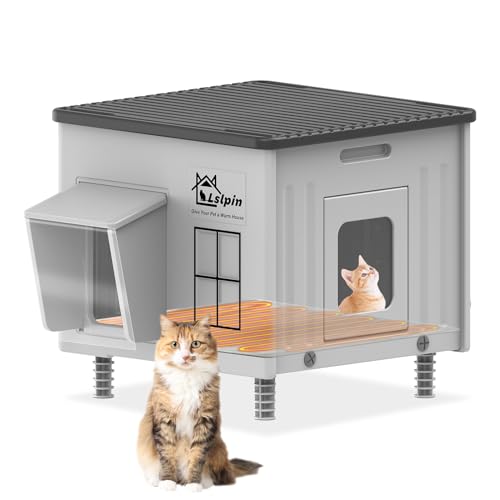
- HDPE shell with weatherproof, insulated build
- Elevated base helps block ground moisture
- Includes thermostatic heating pad and escape door
Best For: Feral, barn, or larger outdoor cats in winter
Rain-Blocking Elevated Pick
Heated Cat House for Outside Cat in Winter

- Waterproof tarpaulin exterior helps block rain and snow
- Aluminum foil and pearl cotton support insulation
- Elevated design and escape door add outdoor safety
Best For: Small outdoor cats needing fast, weather-ready shelter
Most Protective Winter Shelter
Indestructible Heated Cat House for Outdoor Cats

- Double-layer shell with air cavity traps heat
- Waterproof and weather-resistant for winter use
- Elevated base and escape door support outdoor safety
Best For: Extra-small cats under 14 lbs in harsh weather
Ultimate Winter Fortress
GUTINNEEN Extra Large Heated Cat House

- Large size fits multiple outdoor cats
- 6-sided insulation and heating pad retain warmth
- Openable roof and escape doors add convenience and safety
Best For: Feral colonies, barn cats, or multi-cat winter shelter needs
Compact All-Weather Shelter
Weatherproof Heated Cat Houses for Outdoor Cats

- Waterproof PVC roof and Oxford fabric shell
- 25W thermostatic heating pad with auto shutoff
- Easy tool-free assembly for quick setup
Best For: 1-2 outdoor cats on porches, balconies, or small yards
Heavy-Duty Feral Refuge
Aivituvin Heated Outdoor Cat House

- Solid wood build with 6-sided insulation
- Thermostat keeps heat in a stable 89°F-116°F range
- Escape doors and elevated base improve outdoor safety
Best For: Durable winter shelter for 1-3 outdoor cats
Safety-First Winter Shelter – K&H Heated Cat House, Olive
If you’re comparing heated cat houses for winter, this K&H shelter is built around the basics that matter most: insulation, weather resistance, and a safety-listed heated pad. Sized at 19″ x 22″ x 17″, it’s aimed at outdoor cats, community cats, and ferals that need a dependable place to get out of wind, snow, and sub-zero temperatures.
Best For: Outdoor cats, ferals, and porch or garage setups where safety-listed electric warmth is the priority.
Pros:
- 20-watt MET Safety Listed heated bed included for winter warmth.
- Two 6″ x 8″ exits help cats escape if a predator approaches.
- Insulated, weather-resistant, and waterproof construction for outdoor use.
- Works in garages, porches, barns, and other sheltered spaces.
Cons:
- Uses 110/120V electrical current only.
- The heated bed may not feel warm to the touch when not in use, which can be confusing during testing.
- Clear door flaps are removable, so wind protection depends on setup.
This is a straightforward, safety-focused heated cat house for owners who want a proven outdoor shelter with dual exits and included warmth. It’s a strong fit when certified electrical safety and winter protection are the main priorities.
Easy-Setup Cozy Shelter – Deluxe Heated Cat House
This deluxe heated cat house is designed for quick comfort in a compact footprint, making it a practical pick for porches, garages, barns, patios, or even indoor corners. It combines a heating pad with insulated walls and a water-resistant exterior to help cats stay warm and sheltered in cold weather.
Best For: Cat owners who want a lightweight, easy-assembly heated house for indoor or outdoor use.
Pros:
- Tool-free assembly and portable design make placement easy.
- Insulated roof and walls help hold in warmth.
- Dual doors support airflow and easy entry/exit.
- Removable, washable heating-pad cover simplifies cleanup.
Cons:
- Smaller size may not suit cats that like to stretch out.
- Less suited to harsh exposure than heavier-duty shelters if not placed under cover.
- Primarily built around one cozy retreat rather than a roomy shared space.
For buyers who want a simple heated cat house without a complicated setup, this model keeps the focus on convenience and everyday use. It’s especially appealing if you need something easy to move, clean, and reposition as the weather changes.
Roomy All-Weather Shelter – Texsens Heated Cat House
If you want a larger heated cat house with extra visibility and weather protection, this Texsens shelter stands out. It uses a UL-tested heating pad, foil insulation, a waterproof awning, and an elevated base to help keep cats dry and warm in tougher outdoor conditions.
Best For: Stray, feral, or community cats that need a roomier shelter with added visibility and ventilation features.
Pros:
- Large interior size offers more room than many basic shelters.
- Raised base and waterproof awning help protect against wet ground and rain.
- Two exits with removable clear flaps improve safety and weather blocking.
- Observation window and reflective strips add monitoring and visibility benefits.
Cons:
- Bulkier footprint may take more space in a yard or patio.
- Includes several components, so setup may feel more involved than ultra-basic models.
- Designed for cats, dogs, and rabbits, which may be more than some buyers need.
This is a feature-rich option for buyers who want a heated cat house with practical outdoor details, not just a warm box. The added window, elevated design, and multiple layers of protection make it a thoughtful choice for monitoring and winter use.
Room for Two Cats – K&H Extra-Wide Heated Cat House
This extra-wide K&H heated cat house is built for buyers who need more space without giving up winter protection. It combines an insulated, waterproof shell with a removable heated bed, making it a strong fit for outdoor cats that need a dependable place to stay warm through the cold months.
Best For: Households or caregivers looking for a larger heated shelter that can fit two cats.
Pros:
- Extra-wide design is large enough to accommodate 2 cats.
- Removable heated cat bed is safety listed for peace of mind.
- Insulated, weatherproof construction helps block snow and wind.
- Two exits and clear plastic door flaps support safety and warmth.
Cons:
- Larger size may be more than needed for a single-cat setup.
- Requires 110/120V power for the heated bed.
- Best suited to covered or semi-sheltered outdoor locations for maximum longevity.
For people caring for multiple cats, this extra-wide shelter offers a practical step up in room and comfort. It keeps the same safety-focused K&H approach while providing enough space for two cats to share the warmth.
Heavy-Duty Insulated Pick – Indestructible Heated Cat House for Outside Cats
If you want heated cat houses that feel built for rough outdoor conditions, this model focuses on durability, insulation, and easy cleanup. Its HDPE shell, double-layer side design, elevated base, and included thermostatic heating pad make it a practical option for winter shelter in garages, porches, barns, or the yard.
Best For: Feral, barn, or larger outdoor cats that need a sturdy heated shelter for cold weather.
Pros:
- High-density HDPE construction is designed for sturdy, weatherproof outdoor use.
- Double-layer side design helps support heat circulation and reduce heat loss.
- Elevated floor keeps the shelter off wet ground and helps with damp conditions.
- Includes a thermostatic heating pad plus an escape door for added convenience and safety.
Cons:
- Best suited to cats that fit within the house’s 17.7″ x 17.7″ footprint.
- At 5.48 kg, it is more substantial than simple soft-sided shelters.
This is a solid pick if your priority is a rugged heated cat house that emphasizes insulation, elevation, and outdoor durability over portability.
Rain-Blocking Elevated Pick – Heated Cat House for Outside Cat in Winter
Among heated cat houses, this one leans into weather protection and simple setup. The waterproof tarpaulin exterior, thickened inner walls, aluminum foil heat-circulation design, and elevated legs are all aimed at keeping outdoor cats drier and warmer in winter.
Best For: Small outdoor cats that need a quick-to-assemble shelter with strong rain and snow protection.
Pros:
- 500D waterproof tarpaulin helps block rain and snow.
- Thickened inner walls and aluminum foil on all six sides support heat retention.
- Elevated 5.9-inch base helps keep the interior dry and clear of snow buildup.
- No-tool assembly makes it easy to set up quickly.
Cons:
- Listed for small cats, so it may not suit larger pets.
- Material listing includes leather, which may be less straightforward than more rigid shelter builds.
This model is a good fit if you want a heated cat house that prioritizes dryness, warmth, and fast assembly for an outdoor cat.
Most Protective Winter Shelter – Indestructible Heated Cat House for Outdoor Cats
If you need heated cat houses for harsh winter weather, this shelter is built around layered insulation and water resistance. Its double-layer shell with an air cavity, waterproof materials, elevated base, and UL-approved heating pad are all meant to help outdoor cats stay warm and dry.
Best For: Extra-small outdoor cats under 14 lbs that need a highly insulated winter shelter.
Pros:
- Double-layer shell plus air cavity is designed to slow heat loss and trap warmth.
- Waterproof, weather-resistant build helps protect against snow, rain, and moisture.
- Elevated design keeps the shelter off the ground for better dryness.
- No-tool assembly and detachable parts make setup and storage easier.
Cons:
- Designed for cats under 14 lbs, so size is limited.
- Material and styling are more utilitarian than decorative.
This is a strong choice if you want a winter-focused heated cat house with a clear emphasis on insulation, elevation, and weather protection.
Ultimate Winter Fortress – GUTINNEEN Extra Large Heated Cat House
If you need heated cat houses for multiple outdoor cats, this extra-large GUTINNEEN shelter is built for cold, wet conditions and group use. It combines solid wood construction, a 6-sided insulated liner, and a heating pad to help hold warmth when temperatures drop below freezing.
Best For: Feral colonies, barn cats, or multi-cat households that need a larger winter shelter with strong weather protection.
Pros:
- 6-sided insulation and heating pad help retain warmth in below-freezing weather.
- Openable roof makes cleaning and access easier for daily care.
- Elevated base, slanted roof, and door curtain improve weather resistance.
- Emergency escape doors add an extra layer of safety for outdoor cats.
Cons:
- Larger footprint may be harder to place in tight spaces.
- Best suited for users who need a more permanent shelter setup.
This model leans toward durability and capacity, so it makes sense if you want one insulated shelter that can handle rough weather and multiple cats. The built-in thermostat and reinforced wood build make it a practical long-term winter option.
Compact All-Weather Shelter – Weatherproof Heated Cat Houses for Outdoor Cats
This heated cat house is a compact choice for outdoor cats that need a simple, weather-resistant place to rest in cold months. It uses a waterproof roof, insulated materials, and a thermostatic heating pad to keep the interior warm while staying easy to set up.
Best For: Cat owners who want a smaller outdoor shelter for 1-2 cats on a porch, balcony, yard, or garden.
Pros:
- 100% waterproof PVC roof and tear-resistant Oxford fabric help resist wet weather.
- 25W thermostatic heating pad automatically shuts off when overheated.
- Windproof door curtain and escape door improve comfort and safety.
- Easy zipper-based assembly with no tools required.
Cons:
- Smaller size is only intended for 1-2 cats.
- Lightweight build may be less substantial than wood shelters.
For shoppers prioritizing convenience, this model keeps the formula straightforward: insulation, waterproofing, and controlled heat in a manageable footprint. It’s a good fit if you need a practical seasonal shelter rather than a heavy-duty structure.
Heavy-Duty Feral Refuge – Aivituvin Heated Outdoor Cat House
Among heated cat houses, this Aivituvin option stands out for buyers who want a sturdy wooden shelter with layered insulation and controlled heat. It’s designed to help keep feral or stray cats comfortable in winter, with a thermostat-regulated pad and weather-focused details throughout.
Best For: People looking for a durable outdoor winter shelter for 1-3 cats with stronger structure and safer heat regulation.
Pros:
- Solid wood construction and 6-sided insulated liner support long-term outdoor use.
- UL-tested heating pad and thermostat maintain a stable 89°F to 116°F range.
- Chew-resistant reinforced cord adds extra safety for outdoor use.
- Elevated base, slanted roof, and escape doors help with weather protection and safety.
Cons:
- May have a temporary wood or paint odor after shipping.
- Larger, heavier build may be less portable than softer shelters.
This is a strong pick if you want a winter shelter that feels more permanent and weather-ready. The combination of insulation, heating control, and rugged construction makes it especially suitable for colder climates and repeated outdoor use.
How We Picked the Best Heated Cat Houses
We looked for Heated Cat Houses that offer a practical mix of warmth, weather resistance, safety-listed or thermostatic heating, and insulation that can hold heat without feeling stuffy. We also prioritized shelters that are sized for outdoor use, easy to assemble, and designed with escape doors or multiple exits where that improves safety.
Quick Comparison
The main differences usually come down to size, insulation quality, heating style, and whether the shelter is meant for a single cat, a bonded pair, or multiple feral cats. Smaller units are often easier to place on porches or in garages, while extra-wide or multi-section designs can work better for colonies, feeding stations, or harsh climates.
At a Glance
- Best for compact spaces: smaller single-cat shelters
- Best for colder climates: fully insulated, weatherproof designs with thermostatic heat
- Best for multiple cats: extra-large or multi-compartment shelters
- Best for feral colonies: models with escape doors and elevated bases
Key Buying Factors for Heated Cat Houses
Heating safety: Look for low-wattage, safety-listed, or thermostatically controlled pads that are made for pet use. A good heated cat house should warm safely without overheating.
Insulation and weather protection: Thick insulated walls, covered seams, waterproof roofs, and raised floors help keep warmth in and cold moisture out. For outdoor use, this matters as much as the heater itself.
Entrance design: One opening is fine for calm pets, but two doors or an escape exit can be helpful for outdoor and feral cats. They improve confidence and give cats a way out if another animal enters.
Size and layout: The house should be large enough for the cat to turn around, but not so large that body heat is wasted. For two cats, choose a larger model instead of forcing a single-cat shelter to do double duty.
Placement and maintenance: Even the best Heated Cat Houses perform better when placed out of direct wind, on a dry surface, and checked regularly for cord protection, bedding condition, and moisture buildup.
Who Should Buy Which Heated Cat Houses?
Single indoor-outdoor cats: Choose a compact heated shelter with simple assembly and reliable insulation.
Feral or stray cats: Prioritize escape doors, waterproof construction, and a design that is easy to secure and clean.
Harsh winter areas: Go for extra insulation, thermostatic heating, and a more enclosed build that limits heat loss.
Multi-cat households or feeders: Pick a larger or multi-section option so cats can share space without crowding.
In short, the best Heated Cat Houses are the ones that match your cat’s habits, your climate, and the space where the shelter will live. A well-chosen model should feel warm, dry, and secure without adding unnecessary hassle.