An interactive slow feeder puzzle can turn mealtime into mental exercise, helping dogs eat more slowly while staying engaged.
For puppies, fast eaters, and bored adults alike, the right pick should match your dog’s size, skill level, and feeding style.
Best 10 Interactive Slow Feeder Puzzle Picks for 2026
Level-Up Food Puzzle
Potaroma 2-Level Training Feeder
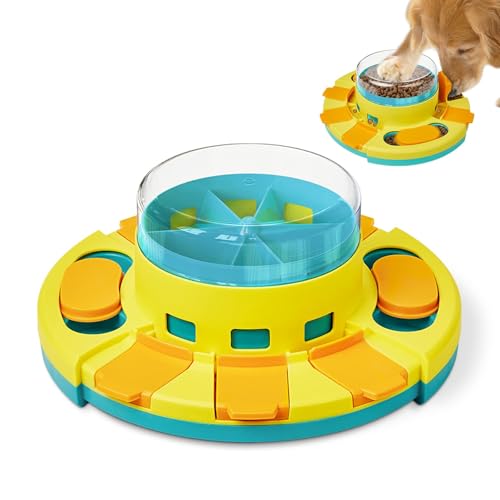
- Two puzzle levels for progression
- Slows eating by over 10x
- Weighted base with non-slip mats
Best For: Small dogs and puppies learning puzzle feeding
Slide-and-Sniff Puzzle

- Sliding parts reveal treats
- Lightweight and portable
- Sized for puppies and small pets
Best For: Puppies, cats, and small dogs
Three-Layer Maze Feeder

- Three-layer maze slows meals
- Non-slip base improves stability
- Food-safe PP with rounded edges
Best For: Medium and large dogs that eat too fast
Adjustable Treat Roller

- Adjustable switches control food flow
- Rolling puzzle boosts mental stimulation
- Disassembles for easier cleaning
Best For: Supervised medium and large dogs
Two-Level Mental Game

- Press-to-release and slide-to-search design
- Holds up to 2 cups of kibble or treats
- Attached covers keep setup simple
Best For: food-motivated dogs that need indoor enrichment
Three-Tier Licker Puzzle

- 3-in-1 feeder: lick mat, slow feeder, puzzle bowl
- Three rotating tiers add mental challenge
- Holds up to 2 cups and is dishwasher safe
Best For: medium and large dogs needing a calmer, layered feeding routine
Carrot-Style Dual-Level Feeder
Interactive Slow Feeder Puzzle for Training

- Two difficulty modes for beginner and advanced play
- Slows eating by more than 10 times
- Weighted, non-slip base helps prevent tipping
Best For: Dogs needing a stable enrichment feeder with progressive challenge
Barbell Treat Dispenser
Interactive Slow Feeder Puzzle for Chase Play

- Adjustable treat holes for different kibble or snack sizes
- Barbell shape encourages rolling and chasing
- ABS body is designed for quieter indoor play
Best For: Dogs that like chase-style treat dispensing and indoor enrichment
Level-Up Food Puzzle – Potaroma 2-Level Training Feeder
This interactive slow feeder puzzle is built for dogs that need both mental stimulation and a more measured mealtime. The two-level design lets beginners start with simple treat nudging, then move up to a more advanced press-to-dispense challenge, making it a practical pick for training and boredom control.
Best For: Small dogs and puppies that need a beginner-to-intermediate puzzle feeder with slow-feeding support.
Pros:
- Two difficulty levels in one toy for gradual IQ training
- Large top granary helps reduce frequent refills
- Slows eating by over 10x, with weighted base and non-slip mats
- No assembly and non-removable parts make cleanup simpler
Cons:
- Designed mainly for small breeds
- Hand wash only
- May be too simple for very advanced puzzle dogs
If you want an interactive slow feeder puzzle that can grow with your dog, this model offers a good balance of challenge, stability, and everyday feeding use. Its straightforward build also makes it easy to put into rotation as a boredom buster.
Slide-and-Sniff Puzzle – DR CATCH Pink Treat Feeder
This interactive slow feeder puzzle uses sliding parts to make pets work for treats, which can stretch out mealtime while adding a simple mental challenge. Its low-profile layout is sized for puppies, cats, and small dogs that need a compact enrichment toy.
Best For: Puppies, cats, and small dogs that enjoy a lightweight sliding treat puzzle.
Pros:
- Sliding design encourages nose and paw movement
- Works as both a puzzle toy and slow feeder
- Lightweight and portable for easy use
- Sized for small pets and indoor enrichment
Cons:
- Not intended for unsupervised play
- Best suited to small breeds and puppies
- Not water resistant
For shoppers who want a simple interactive slow feeder puzzle without a bulky footprint, this one focuses on easy-to-learn treat discovery. It’s a solid pick when you want mealtime enrichment that still feels manageable for smaller pets.
Three-Layer Maze Feeder – Atdoall Interactive Slow Bowl
This interactive slow feeder puzzle adds a three-layer maze to make dogs eat more slowly while staying mentally engaged. It’s shaped more like a puzzle bowl than a toy, so it works well for pets that need a mealtime solution for boredom, anxiety, and fast eating.
Best For: Medium and large dogs that need a stable maze-style slow feeder.
Pros:
- Three-layer maze design increases feeding challenge
- Non-slip base helps keep it steady during use
- Food-safe PP material with rounded edges
- Holds up to 1.5 cups of dry or wet food
Cons:
- Not ideal for very small dogs due to size
- More of a feeder than a standalone toy
- May be too easy for dogs that already know advanced puzzles
If you want a practical interactive slow feeder puzzle for everyday meals, this Atdoall option leans into stability and digestion-friendly pacing. The bowl format makes it especially useful for pets that benefit from slower eating rather than a high-dexterity game.
Adjustable Treat Roller – BoYoYo Smart Puzzle Feeder
This interactive slow feeder puzzle combines rolling action with adjustable food release, so dogs have to work to make treats fall out. It’s designed for enrichment and slower eating, making it a strong fit when you want one toy that can handle both playtime and mealtime.
Best For: Medium and large dogs that need a supervised, adjustable treat-dispensing challenge.
Pros:
- Adjustable switches let you control food flow
- Spiral structure adds a tougher puzzle element
- Helps slow eating and support digestion
- Disassembles for easier cleaning; dishwasher-safe or hand wash
Cons:
- Not suitable for aggressive chewers
- Best used under supervision
- May be noisier on hard floors than a soft mat toy
As an interactive slow feeder puzzle, this BoYoYo model stands out for its adjustable difficulty and treat control. It’s a good choice if you want a toy that can be tuned to your dog’s pace and used for both brain work and slower feeding.
Two-Level Mental Game – KADTC 2 Levels Dog Puzzle Toy
If you want an interactive slow feeder puzzle that does more than stretch out mealtime, this KADTC toy adds a clear, two-step challenge. Dogs press to release kibble, then flip and slide the attached covers to keep searching, which makes it useful for food-motivated pups that need mental work as much as slower eating.
Best For: Dogs that enjoy press-to-release play, indoor enrichment, and a meal-sized puzzle that keeps them focused.
Pros:
- Two levels of play keep the challenge going after the first reward.
- Clear top helps dogs see kibble and stay engaged.
- Holds up to 2 cups for meals, snacks, or training rewards.
- Attached covers reduce loose parts and setup hassle.
Cons:
- Designed for indoor use, so it is not meant for outdoor play.
- The puzzle format may be too simple for dogs that already master basic feeders quickly.
Overall, this is a practical pick for owners who want a slow feeder with extra brain work built in. The press-and-search design gives dogs a clear payoff and helps turn mealtime into a more structured activity.
Three-Tier Licker Puzzle – Outward Hound Lickin’ Layers
This interactive slow feeder puzzle combines a lick mat, slow feeder, and puzzle bowl in one 3-in-1 design. The rotating tiers and textured surfaces make dogs work through food more slowly, which is especially useful for medium to large breeds that need a calmer mealtime routine or extra boredom relief.
Best For: Medium and large dogs that benefit from a layered feeder with licking, sniffing, and pawing challenges.
Pros:
- 3-in-1 design works as a lick mat, slow feeder, and puzzle bowl.
- Three spinning tiers create a more engaging mealtime challenge.
- Holds up to 2 cups of food for kibble, wet food, raw meals, or peanut butter.
- Top-rack dishwasher safe and made from BPA-, PVC-, and phthalate-free materials.
Cons:
- Best suited to medium and large breeds, not tiny dogs.
- Not water resistant, so it is intended for indoor use only.
For dogs that need more than a basic slow bowl, this feeder offers a good balance of challenge and convenience. It is a strong choice when you want one toy that can handle daily enrichment and slower eating at the same time.
Duck-Style Treat Spinner – Small Dog Interactive Treat Dispenser
This small-dog-focused interactive slow feeder puzzle uses a duck-shaped dispenser that releases treats when your dog presses the tail. It is built to slow eating, support digestion, and keep dogs busy with a simple manual challenge, though it does require training before most dogs can use it smoothly.
Best For: Small dogs that need a press-to-release feeder with adjustable openings and easy cleaning.
Pros:
- Press-to-activate dispenser adds treat-dispensing fun and mental stimulation.
- Three adjustable outlet sizes help match different kibble diameters.
- Anti-slip base and no-assembly design make it easy to use.
- Fully washable and battery-free for simple daily maintenance.
Cons:
- Large dogs may need extra stability when using it.
- Training is required before dogs can activate the dispenser reliably.
This is a useful pick if you want a compact feeder that mixes portion control with IQ-style play. Its adjustable openings and simple cleanup make it a practical everyday option for smaller pets.
Carrot-Style Dual-Level Feeder – Interactive Slow Feeder Puzzle for Training
This interactive slow feeder puzzle is built for dogs that need both mental stimulation and a more controlled mealtime. Its two difficulty modes make it useful for beginners and more advanced pups, while the slow-feeding design is meant to help stretch out eating and reduce gulping.
Best For: Dogs that need a stable slow feeder with adjustable challenge levels for daily enrichment.
Pros:
- Two gameplay modes support progressive training and longer play sessions.
- Designed to slow eating by more than 10 times to help reduce bloating and overeating.
- Weighted base and four non-slip pads help keep it in place during use.
- Food-grade polypropylene build has no detachable small parts and is easy to hand wash.
Cons:
- Best suited to supervised indoor use, not rugged chew sessions.
- Hand washing is required instead of a fully automatic cleaning option.
Overall, this feeder is a practical pick if you want a puzzle-style option that combines treat dispensing with slower eating. It focuses on stability, simplicity, and adjustable difficulty rather than heavy-duty chew resistance.
Barbell Treat Dispenser – Interactive Slow Feeder Puzzle for Chase Play
If you want an interactive slow feeder puzzle that also encourages movement, this barbell-shaped dispenser is built for chase-and-roll play. Adjustable food holes let you control how easily treats come out, making it useful for extending mealtime and adding a simple brain game.
Best For: Dogs that enjoy rolling toys and treat rewards during indoor play.
Pros:
- Adjustable switches let you control treat flow for different kibble or snack sizes.
- Barbell shape and bright color are designed to attract attention and encourage chasing.
- Made from sturdy ABS material with a curved surface for quieter rolling.
- Limits treat intake while supporting longer play and mental engagement.
Cons:
- Not intended as a chew toy.
- Listed as not water resistant.
- Works best for supervised indoor play rather than rough use.
This is a good choice if you want a toy that combines motion, treat dispensing, and basic training in one design. It’s more about active enrichment than long-lasting chewing, so it fits dogs that enjoy chasing and problem-solving.
Grey Squeaker Feeder – Interactive Slow Feeder Puzzle for Calm Play
This interactive slow feeder puzzle is aimed at dogs that need mealtime enrichment with a calmer, nose-work style challenge. The built-in squeaker and treat-hiding layout are meant to capture attention while the non-slip base helps keep feeding more controlled.
Best For: Puppies and adult dogs that need a slow-feeding puzzle with easy cleaning and indoor enrichment.
Pros:
- Built-in squeaker helps grab attention for foraging and puzzle play.
- Four non-slip pads help hold the toy steady during mealtime.
- Food-grade, BPA-free PP construction with non-removable parts reduces swallowing concerns.
- Rinses clean easily and is dishwasher safe for low-effort maintenance.
Cons:
- Not a chew toy and should be used with caution around aggressive chewers.
- Requires supervision during play.
For pet parents who want a simple feeder that supports slower eating and light mental stimulation, this one covers the basics well. Its main strengths are stability, easy cleaning, and a design that keeps pets busy without a complicated setup.
How We Picked the Best Interactive Slow Feeder Puzzle
We focused on designs that do more than slow eating: they should challenge your dog, dispense food reliably, and fit everyday use. We prioritized size fit, difficulty range, stability, cleaning ease, and whether the puzzle is suitable for treats, kibble, or both.
Because an Interactive Slow Feeder Puzzle is meant to support enrichment without causing frustration, we also looked for models with adjustable difficulty or beginner-friendly layouts for first-time users.
Quick Comparison
Choose a simpler feeder if your dog is new to puzzle toys or eats mostly one meal at a time. Move up to multi-step or layered designs for dogs that solve basic toys quickly. If your dog prefers licking over chasing, look for a flatter puzzle style rather than a ball or rolling dispenser. Non-slip bases matter most for enthusiastic eaters and hardwood floors.
Key Buying Factors for Interactive Slow Feeder Puzzle
Difficulty and Progress
The best option should match your dog’s current skill level. Too easy, and it won’t hold attention; too hard, and it may create frustration. Adjustable or multi-level models offer the most flexibility as your dog learns.
Food Type and Portion Size
Check whether the toy works best with dry kibble, small treats, or wet food. Some designs are ideal for snack-sized rewards, while others can handle a full meal. Portion compatibility is especially important if you plan to use the toy daily.
Stability and Safety
A secure base helps prevent sliding, tipping, and noisy movement. Rounded edges, durable materials, and secure moving parts are important if your dog tends to paw, chew, or nose toys aggressively.
Cleaning and Upkeep
Puzzle feeders get messy fast. Look for parts that rinse easily or separate for thorough washing. If the toy has crevices or layered components, make sure cleaning won’t become a chore.
Who Should Buy Which Interactive Slow Feeder Puzzle?
Choose a beginner-friendly feeder for puppies, seniors, and dogs new to puzzle toys. Pick a more advanced Interactive Slow Feeder Puzzle for smart, high-energy dogs that finish simpler toys too quickly. If your dog is a fast eater, prioritize slow dispensing and a non-slip base. If your dog gets bored easily, select a puzzle with moving parts, layered access, or multiple ways to earn food.
For most buyers, the best choice is the one that fits your dog’s feeding pace, energy level, and tolerance for challenge—not just the most complex design.