A collar-activated pet door can let your pet come and go while limiting access for animals without a matching key or tag. But the right choice depends on more than the sensor: your pet must fit comfortably, and the door must suit your installation location.
These 10 options cover cat flaps, door-mounted dog doors, and wall-mounted models. Use the buying guide below to narrow the field by size, access method, and everyday convenience.
Best 10 Smart Pet Doors with Collar Sensor Picks for 2026
Best for Multiple Pets

- Programs up to five collar keys
- Selective entry, exit, and auto-locking
- Fits dogs up to 100 pounds
Best For: Multi-pet homes needing programmable door access
Best for Indoor Cat Spaces
RFID Cat Door with Four Collar Keys

- Four collar sensor keys included
- Four-way locking and remote control
- Metal surfaces may affect RFID reading
Best For: Multi-cat homes managing access to separate rooms
Best Powered Option for Large Dogs
Automatic Collar-Sensor Dog Door

- Two waterproof sensor collars
- Timed settings and manual controls
- Fits dogs up to 100 pounds
Best For: Large dogs needing powered, scheduled door access
Best Simple Magnetic Option

- Matching magnetic-key access
- 7-by-7.5-inch flap opening
- Locking-mode details need confirmation
Best For: Cats needing a simple magnetic-key flap
Best for Giant Dogs
Aiday X-Large Wall-Mount Automatic Dog Door

- Fits dogs up to 200 pounds
- Two collars and scheduled access
- Requires wall cutout and outlet
Best For: Extra-large dogs needing controlled wall access
Best for Medium Dogs
Collar-Sensing Door-Mount Automatic Dog Door
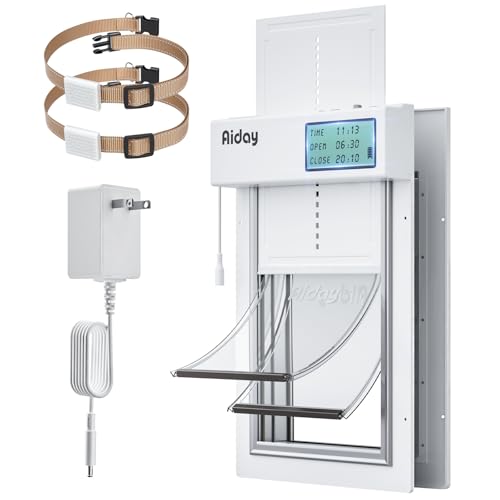
- Fits dogs up to 40 pounds
- Two IP65-rated sensor collars
- Timed access; outlet required
Best For: Medium dogs using a door-mounted entry
Best Manual Locking Option
ALUMANI Magnetic-Collar Cat Door

- Two magnetic collars included
- Four manual locking settings
- Collar must touch frame for entry
Best For: Cats needing simple collar-controlled entry
Black Multi-Cat Pick
RFID Cat Door with Four Collar Keys

- Four collar sensor keys included
- Remote control and four-way lock
- Metal surfaces may affect RFID reading
Best For: Multi-cat homes with separate indoor pet areas
Brown Finish Pick
RFID Cat Door with Four Collar Keys

- Brown finish with four collar keys
- Remote control and four-way lock
- Fits thicknesses up to 3 inches
Best For: Brown-finish installations needing selective cat access
White Interior Pick
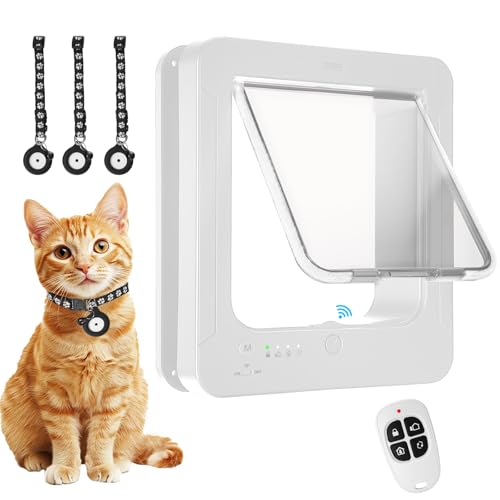
- White finish for interior doors
- Unlocks for authorized collars
- Dimensions not supplied in notes
Best For: Selective access to indoor feeding or litter areas
Best for Multiple Pets – PetSafe Electronic Pet Door
Among smart pet doors with collar sensor access, this PetSafe model suits households that want to control which pets can use a large door. Its waterproof collar keys support selective entry, exit, and automatic locking for dogs up to 100 pounds.
Best For: Multi-pet homes needing programmable access through an interior or exterior door.
Pros:
- Programs access for up to five collar keys.
- Offers selective entry, exit, and auto-locking options.
- Supports dogs up to 100 pounds; a separate wall-install kit is available.
Cons:
- Requires four D-cell batteries, which are not included.
- Wall installation requires a separately purchased kit.
The combination of multiple keys and adjustable access makes this a flexible choice, provided you account for its battery and installation requirements.
Best for Indoor Cat Spaces – RFID Cat Door with Four Collar Keys
For shoppers comparing smart pet doors with collar sensor access for cats, this RFID model includes four collar keys and a remote control. It is aimed at controlling access to spaces such as bedrooms, feeding areas, and litter-box rooms.
Best For: Multi-cat households separating indoor spaces or limiting access to food and litter areas.
Pros:
- Includes four matching collar sensor keys.
- Unlocks for a matching collar rather than allowing unrestricted entry.
- Offers four-way locking and remote control.
Cons:
- Listed for cats up to 20 pounds.
- Metal doors or walls may interfere with RFID tag reading.
This is a practical option when several cats need controlled access; check your installation surface before relying on its RFID recognition.
Best Powered Option for Large Dogs – Automatic Collar-Sensor Dog Door
This mains-powered model stands out among smart pet doors with collar sensor access for its motorized operation and timed controls. It includes two IP65-rated waterproof sensor collars and fits dogs up to 100 pounds.
Best For: Large-dog owners who want powered opening and scheduled access through a door.
Pros:
- Includes two sensor collars and two selectable sensing ranges.
- Offers timed access settings plus manual up/down controls.
- Anti-pinch mechanism reverses when it detects an obstruction.
Cons:
- Needs a nearby power outlet.
- Requires an 11.2-by-18.1-inch cutout in a door 1.2 to 2 inches thick.
Its scheduling and powered operation add control, but measure the door and plan the outlet location before committing to the cutout.
Best Simple Magnetic Option – HIDROSIL Cat Door
If you are browsing smart pet doors with collar sensor access, note that this HIDROSIL cat flap uses a matching magnetic key rather than an electronic RFID sensor. Its 7-by-7.5-inch flap opening is intended for household cats, with open-passage and locked modes described in the supplied details.
Best For: Cat owners who prefer a simple magnetic-key flap over electronic collar recognition.
Pros:
- Uses a matching magnetic key for controlled access.
- Includes a cutout template and installation instructions.
- ABS construction has a close-fitting seal.
Cons:
- Not an electronic RFID collar-sensor door.
- Product notes describe open-passage and fully locked modes despite the four-way-lock title.
Choose this for its straightforward magnetic setup, but confirm the locking behavior if four distinct access modes are essential.
Best for Giant Dogs – Aiday X-Large Wall-Mount Automatic Dog Door
Among smart pet doors with collar sensor access, this Aiday wall-mounted model is sized for dogs up to 200 pounds. It includes two sensor collars and an automatic flap with a 13.4-by-23.1-inch passage.
Best For: Owners of extra-large dogs who want scheduled, collar-controlled access through a wall.
Pros:
- Includes two collars and offers two selectable sensing ranges.
- On-door scheduling and manual controls let you manage access.
- Anti-pinch reversal and magnetic seals add safety and draft protection.
Cons:
- Requires a wall cutout and a nearby outlet.
- Check wall fit carefully: the notes list a 4.1–7.1-inch expandable tunnel but also a 4–5-inch compatible-thickness range.
This is the roomy option when a standard flap is too small, provided your wall construction matches the installation requirements.
Best for Medium Dogs – Collar-Sensing Door-Mount Automatic Dog Door
For shoppers comparing smart pet doors with collar sensor access for a standard door, this medium model fits doors roughly 1.2–2 inches thick and dogs up to 40 pounds. Two included IP65-rated sensor collars trigger the automatic opening.
Best For: Medium-dog owners who want timed, collar-controlled access without cutting into a wall.
Pros:
- Includes two waterproof-rated collars and two selectable sensing ranges.
- Timed settings disable collar recognition during closed periods.
- Anti-pinch reversal and silicone strips help protect pets during passage.
Cons:
- Requires a 9.2-by-14.6-inch door cutout and an outlet.
- The sensor collar uses a button battery, with an estimated three-month battery life.
Its 8.1-by-12.3-inch flap makes measuring your dog as important as checking the weight limit before installation.
Best Manual Locking Option – ALUMANI Magnetic-Collar Cat Door
Not all smart pet doors with collar sensor access use electronics: this ALUMANI cat door uses an included magnetic collar to unlock entry when it touches the lower outer frame. It includes two collars and a four-way locking switch.
Best For: Cat owners who prefer a manually switched flap with collar-controlled entry rather than an automatic motorized door.
Pros:
- Includes two magnetic collars for entry access.
- Four settings offer only-in, only-out, open, and locked modes.
- Its ABS construction is described as claw-resistant and weatherproof.
Cons:
- The cat must bring its collar close enough to touch the frame to unlock entry.
- No timed access or automatic opening is specified.
The listed flap opening is 6 7/8 by 7 1/8 inches; measure your cat before cutting, and note that the product notes conflict on maximum pet weight.
Black Multi-Cat Pick – RFID Cat Door with Four Collar Keys
Among smart pet doors with collar sensor access, this black model is geared toward managing indoor spaces: it unlocks for matching collars and comes with four collar sensor keys. Its remote control and four-way locking flap offer additional ways to manage access.
Best For: Multi-cat households separating feeding, litter, or sleeping areas.
Pros:
- Includes four collar sensor keys for authorized cats.
- Remote control and four-way locking provide access options.
- Designed for installation in standard interior doors.
Cons:
- Metal doors or walls may interfere with RFID tag reading.
- Installation requires cutting into a door and using basic tools.
This is a practical choice if you want selective access between rooms rather than an unrestricted flap. Check the installation surface before committing, particularly if it contains metal.
Brown Finish Pick – RFID Cat Door with Four Collar Keys
For shoppers comparing smart pet doors with collar sensor access in a brown finish, this model pairs RFID collar activation with four sensor keys. It also lists remote control, four-way locking, an 11.5-by-10-inch size, and a maximum compatible thickness of 3 inches.
Best For: Households seeking a brown, collar-activated door for controlled access to indoor pet spaces.
Pros:
- Four collar sensor keys accommodate multiple authorized cats.
- Remote control and four-way locking add access options.
- Published size and thickness specifications help with planning.
Cons:
- Metal doors or walls may affect RFID tag reading.
- You should verify the opening size and door thickness before cutting.
The brown color and stated dimensions distinguish this option. It makes the most sense where the mounting surface suits the listed dimensions and won’t interfere with the RFID sensor.
White Interior Pick – Collar-Sensing Cat Door
This white option among smart pet doors with collar sensor access is designed for standard interior doors. It unlocks when it detects an authorized collar, helping a cat reach a bedroom, feeding area, or litter space while restricting other pets.
Best For: Indoor pet-area access in homes where cats need separate spaces.
Pros:
- RFID collar detection unlocks for authorized cats.
- Notes describe four collar sensors for multi-pet use.
- Designed for installation in standard interior doors with basic tools.
Cons:
- Metal doors or walls may affect RFID reading.
- The supplied details do not specify opening dimensions or compatible door thickness.
Choose this model for straightforward, selective indoor access in a white finish. Confirm the fit with the seller before cutting your door, since dimensions are not provided in the supplied details.
How We Picked the Best Smart Pet Doors with Collar Sensor
We organized the 10 selected options around the decisions that matter most when shopping: pet size, door versus wall installation, collar credential type, locking choices, and stated convenience features such as scheduling or remote control. Product names are a starting point, not proof that every model has the same security or weather performance. Check the current listing and installation instructions before ordering.
Quick Comparison: Which Type Fits Your Home?
For cats, the selection includes RFID collar-key doors and magnetic-collar flaps, several with four-way locking. Compare those by the number of included collar keys, replacement-key availability, and whether the controls suit your routine. For dogs, the door-mounted choices include medium and large versions, while a wall-mounted extra-large option is listed for bigger pets. The PetSafe large electronic door is specified for dogs up to 100 lb; still, measure your dog rather than relying on weight alone.
Do not assume a door-mounted unit can be installed through a wall, or vice versa. Wall installations may require a compatible tunnel or other materials, while a door installation depends on the door’s construction and available flat space.
Key Buying Factors for Smart Pet Doors with Collar Sensor
Opening Size and Installation
Measure your pet’s shoulder height and widest point, then compare those measurements with the usable flap opening—not just the product’s “medium,” “large,” or “XLarge” label. Check required cutout dimensions, mounting thickness, and clearance for the frame and moving flap. If you rent or have a metal, glass, or insulated door, confirm the installation is permitted and compatible before cutting.
Collar Recognition and Access Rules
RFID keys, electronic collar keys, and magnetic collars are not interchangeable technologies. Verify which credential the door uses, how many are included, whether each pet needs a separate one, and what happens if a tag or power source fails. Four-way locking can provide more control than a simple open-or-closed setting, but check the exact modes and whether they are electronic or manually set. If scheduling or remote control is important, confirm what can actually be controlled and whether setup requires batteries, mains power, or both.
Daily Use and Security Limits
Consider flap noise, weather sealing, cleaning access, and how securely the collar attachment stays on your pet. Collar recognition may help restrict entry, but it does not guarantee that another animal cannot follow your pet through the flap. Supervise initial use and plan a safe way to bring pets inside if the door stops operating.
Who Should Buy Which Smart Pet Doors with Collar Sensor?
Choose a cat-sized RFID model if you want credential-based access and included keys for multiple cats. Consider a magnetic-collar flap if its simpler access method and locking arrangement meet your needs. For dogs, start with the correctly sized door-mounted model when you have a suitable exterior door; consider the wall-mounted extra-large option when your pet’s measurements and installation plans call for it. If you want a named large-dog capacity, compare the PetSafe model’s stated 100 lb limit with your dog’s actual dimensions. Whatever you choose, prioritize fit and installation compatibility over extra controls.