A dog brace may help support a sore joint, but the right choice depends on where your dog needs help. A knee brace will not fit or function like a hock wrap, carpal support, or elbow protector.
These 10 options cover front- and rear-leg support. Use the guide below to narrow your choice by joint, fit, and the amount of stability your dog needs.
Best 10 Dog Braces for Arthritis Picks for 2026
Best Elbow Coverage
Right-Side Elbow Protector Brace
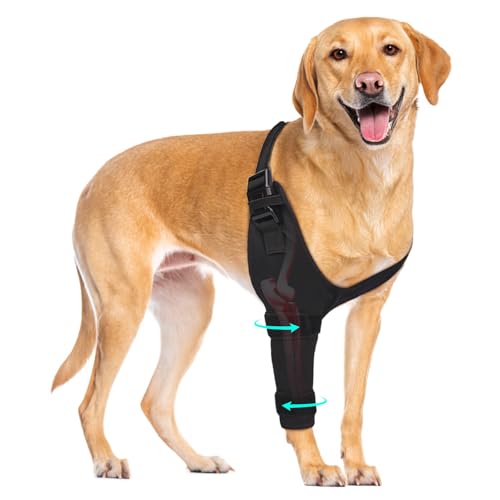
- Cushioned elbow compression
- Helps shield skin from licking
- Washable, adjustable wrap
Best For: Right-elbow cushioning and coverage
Best Flexible Front-Leg Wrap

- Two adjustable Velcro straps
- Breathable mesh and neoprene
- Helps discourage licking
Best For: Adjustable front-leg compression
Best Two-Brace Set

- Pair supports both front legs
- Removable metal spring strips
- Reflective, breathable sleeves
Best For: Two front-leg braces with flexible support options
Hind Knee Support

- Targets the hind knee
- Gentle compression and flexible fabric
- Lightweight, adjustable size M
Best For: Hind-knee arthritis or ligament-related support
Front Wrist Stability

- Supports the front carpal joint
- Two metal support strips
- Adjustable, breathable wrap
Best For: Front-wrist arthritis or sprain support
Paired Hock Coverage
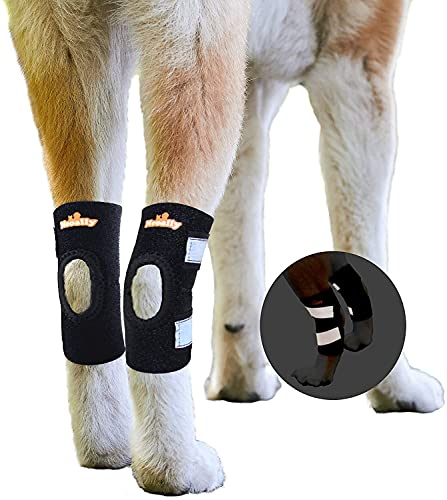
- Two rear-hock braces included
- Reflective securing straps
- Soft 4 mm neoprene
Best For: Support for both rear ankles or hocks
Front Wrist Support

- Supports front carpal joints
- Two metal spring strips per brace
- Remove every 2–3 hours and overnight
Best For: Dogs needing front wrist support
Senior Hock Wrap
Labra Rear Leg Compression Brace

- Adjustable neoprene hock wrap
- Can cover a bandaged area
- Remove every 2–3 hours
Best For: Senior dogs needing intermittent rear hock support
Best Vest-Style Support – Hind-Leg Knee Brace with Stabilizers
For shoppers comparing dog braces for arthritis, this hind-leg knee brace combines metal stabilizers with a supportive vest. It is designed for dogs dealing with rear-leg joint discomfort, including osteoarthritis, while the vest helps keep the leg support from slipping.
Best For: Dogs needing a vest-anchored brace for hind-leg knee stability.
Pros:
- Metal stabilizers provide structured knee support.
- Vest distributes pressure across the body and helps prevent slipping.
- Adjustable Velcro connections allow fit adjustments.
Cons:
- The listed XS size needs careful checking against your dog’s measurements.
- Vest-and-leg design involves more coverage than a simple wrap.
Choose this option when keeping a rear-leg brace positioned is a priority; its vest is the key distinction from standalone sleeves.
Best Elbow Coverage – Right-Side Elbow Protector Brace
Among dog braces for arthritis, this right-side elbow protector targets a different joint than knee or wrist wraps. Its full-wrap design combines compression and elbow padding for dogs with elbow discomfort, calluses, hygromas, or pressure sores.
Best For: Dogs needing right-elbow cushioning and coverage during daily activity.
Pros:
- Wraparound compression supports and cushions the elbow.
- Breathable SBR fabric and adjustable straps support a comfortable fit.
- Provides a barrier against licking and abrasion.
- Washable and reusable for routine care.
Cons:
- This listing is for the right side in size L; confirm both before ordering.
- Designed for elbow coverage rather than hind-leg support.
This is the most targeted pick here for elbow pressure and skin protection, particularly when a dog also needs a wearable barrier over the area.
Best Flexible Front-Leg Wrap – Agon Compression Brace
If you are looking at dog braces for arthritis but want flexible front-leg support, the Agon wrap uses adjustable compression rather than rigid inserts. Its mesh and neoprene construction is intended to support movement while covering the leg.
Best For: Small- or medium-size dogs needing adjustable front-leg compression.
Pros:
- Two Velcro straps allow compression adjustments on this size.
- Breathable mesh and neoprene offer lightweight coverage.
- Can help shield wounds from licking and scratching.
- Washable, quick-drying materials suit repeat use.
Cons:
- Measure leg circumference and length before ordering.
- Flexible compression may not suit dogs needing rigid stabilization.
This wrap makes sense when adjustability and everyday front-leg coverage matter more than a reinforced splint-style design.
Best Two-Brace Set – NeoAlly Front-Leg Braces
For buyers comparing dog braces for arthritis-related front-leg discomfort, this NeoAlly pair offers two support modes: use the sleeves alone for compression or add the removable metal spring strips for more structure. Reflective straps add visibility in low light.
Best For: Dogs needing a pair of front-leg braces with adjustable support levels.
Pros:
- Removable spring strips let you switch between structured support and a simpler wrap.
- Includes a pair for both front legs.
- Perforated neoprene and nylon lining are designed for breathability.
- Reflective straps improve visibility in the dark.
Cons:
- The listed size is L/XL; measure leg circumference before buying.
- Care directions call for periodic removal and no overnight wear.
The removable inserts make this a versatile choice, but plan to check for irritation at first use and follow the stated wear breaks.
Hind Knee Support – Adjustable ACL/CCL Knee Brace
If you’re comparing dog braces for arthritis in a hind knee, this lightweight brace offers gentle compression and targeted support for dogs also dealing with ACL/CCL concerns. Its flexible fabric is designed for comfortable daily wear.
Best For: Dogs needing hind-knee support for arthritis discomfort or ligament-related instability.
Pros:
- Targets the knee joint rather than the ankle or wrist.
- Adjustable, lightweight design is simple to put on for walks or vet visits.
- Soft, flexible fabric provides gentle compression.
Cons:
- This listing is for size M; check your dog’s measurements before ordering.
- Not intended for front-leg or hock support.
Choose this option when the knee is the joint that needs support. For arthritis-related mobility changes or a suspected ligament injury, ask your veterinarian whether a knee brace is appropriate.
Among dog braces for arthritis, this Bawektrl wrap is specifically for the front carpal joint, or wrist. It combines adjustable straps with two metal strips for dogs that need added lower-front-leg stability.
Best For: Dogs needing support around a front wrist affected by arthritis-related instability or a sprain.
Pros:
- Two metal strips add structure around the carpal joint.
- Three adjustable fasteners help secure the wrap.
- Perforated neoprene and nylon lining are designed for breathability.
Cons:
- Not a brace for a hind knee or rear hock.
- Requires measuring against the size chart for an appropriate fit.
This is the more targeted choice when your dog’s concern is at the front wrist rather than farther up the leg. Check the fit regularly so the straps stay secure without rubbing.
For shoppers seeking dog braces for arthritis at the rear ankles, this NeoAlly set includes two hock braces rather than a single wrap. Each uses neoprene with a nylon lining and reflective hook-and-loop straps.
Best For: Dogs that need support at both rear hocks or ankles.
Pros:
- Includes a pair for both rear legs.
- Reflective straps add visibility in low light.
- 4 mm neoprene and nylon lining are designed for soft, durable wear.
Cons:
- Supports the hock or ankle, not the knee.
- This listing is size S; measure leg circumference before ordering.
The pair format is useful if both hocks need coverage. Follow the supplied directions to monitor comfort and remove the braces when they aren’t needed or during extended rest.
Front Wrist Support – Lyderpet Carpal Brace Pair
If you’re comparing dog braces for arthritis affecting the front wrists, this Lyderpet pair targets the carpal joints with adjustable support. Its neoprene and nylon construction is designed to be soft and lightweight for repeated use.
Best For: Dogs needing support around the front wrists or carpal joints.
Pros:
- Two metal spring strips provide splint-like support.
- Three adjustable hook-and-loop straps help keep each brace in place.
- Soft, lightweight materials are designed for comfortable wear.
Cons:
- Designed for the front carpal area, not the rear legs.
- The maker advises removing it every 2–3 hours and overnight.
Check the size chart and measure your dog’s leg before ordering; a secure fit matters for this wrap-style design.
Short-Leg Hock Support – Reflective Rear Brace Pair
Among dog braces for arthritis, this rear-leg pair is intended for dogs with short legs that need support at the hock—the ankle-like joint. Each neoprene brace combines compression with metal spring strips while allowing some flexibility.
Best For: Short-legged dogs needing rear hock support rather than knee support.
Pros:
- Two metal spring strips in each brace add support.
- Lightweight neoprene offers compression without a rigid full-leg splint.
- Reflective hook-and-loop straps help secure the braces and improve visibility in low light.
Cons:
- Will not fit or support the knee.
- Correct sizing requires measuring against the seller’s chart.
Choose this option for the rear ankle area, not for an ACL or CCL problem that calls for knee-specific support.
Senior Hock Wrap – Labra Rear Leg Compression Brace
For shoppers considering dog braces for arthritis-related mobility concerns, Labra’s adjustable neoprene wrap offers targeted support at a senior dog’s rear hock. It can also cover a bandaged area during recovery, but it is not a knee brace.
Best For: Senior dogs needing occasional support around a rear hock joint.
Pros:
- Adjustable hook-and-loop closure makes the wrap straightforward to apply.
- Targets the rear hock without covering the whole leg.
- Can be placed over a bandaged area for added coverage.
Cons:
- Does not support the knee.
- The maker recommends removing it every 2–3 hours to let the leg breathe.
Measure the hind leg before choosing a size. For senior dogs, Labra suggests putting the brace on ahead of their most active hours rather than leaving it on continuously.
How We Picked These Dog Braces for Arthritis
We focused on braces for the joints represented in this roundup: knees, rear hocks, front wrists or carpal joints, and elbows. We also considered the type of support each design offers, from flexible compression wraps to braces with metal inserts, plus adjustability and how easily a dog could wear the brace during normal movement. Product descriptions are a starting point, not proof that a brace will treat arthritis or suit every dog.
Quick Comparison: Match the Brace to the Joint
- Knee or stifle: Consider a hind-leg knee brace when the discomfort or instability is centered higher on the rear leg. Check which leg it fits and whether its stabilizers restrict movement more than your dog needs.
- Rear hock: A hock wrap supports the ankle-like joint lower on the back leg. Choose between flexible compression and a more structured design based on your veterinarian’s guidance.
- Front wrist or carpus: Carpal braces and wraps target the lower front leg. Some use inserts for added structure; others prioritize flexible support.
- Elbow: A padded elbow sleeve may be useful when an arthritic elbow also needs protection from rubbing or pressure. It is not a substitute for a knee or wrist brace.
Key Buying Factors for Dog Braces for Arthritis
Correct Joint and Fit
First, confirm the affected joint with your veterinarian; limping can have several causes. Then follow the seller’s measuring directions rather than choosing by breed or weight alone. Measure the specified leg circumferences, check left-versus-right requirements, and confirm that straps will not cross a wound or press into the opposite leg. A brace that slips, twists, or rubs can create new problems.
Support, Comfort, and Daily Use
More structure is not automatically better. Metal inserts may limit side-to-side movement, while softer wraps may be easier to tolerate for a dog that needs light support. Look for secure closures, enough room for a normal gait, and material you can keep clean and dry. Introduce the brace gradually, supervise initial wear, and inspect the skin after removal. Stop using it and ask your veterinarian for advice if you notice persistent redness, swelling, or a changed gait.
Who Should Buy Which Dog Braces for Arthritis?
For a dog with a diagnosed knee problem, start with the knee-brace options and ask whether structured support is appropriate. For lower rear-leg weakness, compare the hock braces; a compression wrap may suit a different need than a brace with metal strips. For front-leg discomfort near the wrist, choose a carpal-specific design rather than a general leg sleeve. For elbow soreness with pressure-related skin concerns, look at the padded elbow protector.
If your dog has a suspected ligament injury, significant instability, worsening pain, or difficulty bearing weight, get a veterinary assessment before relying on a brace. Bracing can be one part of a care plan, not a replacement for diagnosis, medication, rehabilitation, or surgery when needed.