Sliding dog puzzle toys turn treats and mealtimes into engaging problem-solving sessions. The right design can help reduce boredom, slow fast eating, and provide useful mental stimulation at home.
This roundup compares 10 options across difficulty levels, puzzle styles, treat capacity, and suitability for different breeds and play habits.
Best 10 Sliding Dog Puzzle Toys Picks for 2026
Best Advanced Challenge

- Level 3 puzzle for experienced dogs
- Multiple sliding directions reveal treats
- Holds up to 1 cup for slow feeding
Best For: Clever dogs ready for an advanced indoor puzzle
Best Multi-Mode Value
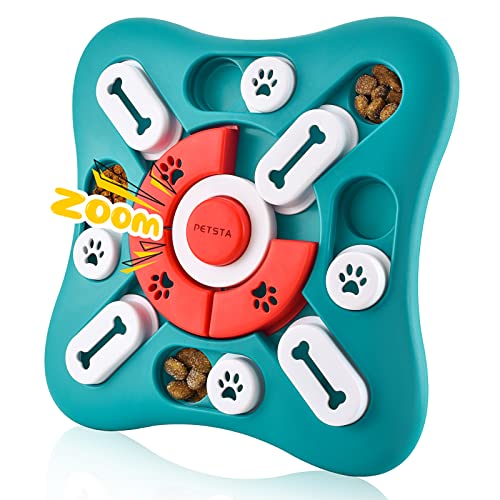
- Three ways to play with sliding tracks
- 16 holes support extended slow feeding
- Non-removable parts and dishwasher-safe design
Best For: Pets that prefer varied food-finding games
Best Intermediate Starter

- Level 2 puzzle for beginners and smart pups
- Uses sliding blocks and swivel flippers
- Doubles as a slow feeder
Best For: Dogs starting interactive puzzle play
Best for Small Dogs
DR CATCH Sliding Feeder Puzzle

- Compact design for puppies and small breeds
- Food rewards are found by sliding parts
- Encourages slower, more engaging feeding
Best For: Small dogs, puppies, and cats needing compact enrichment
Best Beginner Challenge

- Three adjustable challenge levels
- Uses sliders, lids, and bones
- Holds 3/4 cup for puzzle feeding
Best For: Beginners and intermediate dogs learning treat puzzles
Best Squeaky Slider
FOXMM Interactive Treat Puzzle

- Sequential slider-based treat game
- Built-in squeaker attracts attention
- Washable food-grade polypropylene
Best For: Small and medium dogs that enjoy sound-enhanced puzzles
Best Expert-Level Board

- Level 4 challenge for advanced dogs
- Uses tiles, wheel, and sliders
- Holds 1 cup for puzzle feeding
Best For: Experienced dogs ready for complex treat puzzles
Best Multi-Level Value

- Four play methods with sliding and flip challenges
- 14-hole design can slow feeding and extend engagement
- Six anti-slip pads help reduce movement
Best For: Flexible enrichment for dogs at multiple skill levels
Best Expert Challenge

- Level 4 puzzle uses sequential layered actions
- Difficulty can increase as your dog learns
- No removable parts and easy to clean
Best For: Experienced dogs ready for advanced mental stimulation
Best Slow-Feeding Slider

- Spin-to-release play turns kibble into a reward game
- Two-cup capacity supports meals and treat sessions
- Dishwasher-safe one-piece design with non-slip pads
Best For: Interactive slow feeding and enrichment for dogs 10 pounds and up
Best Advanced Challenge – Challenge Slider Dog Toy
The Outward Hound Nina Ottosson Challenge Slider is one of the more demanding sliding dog puzzle toys, with multiple tile movements designed for dogs ready to progress beyond intermediate games. It can also hold up to 1 cup of kibble, treats, spreads, or wet food, making it useful for enrichment or slow feeding.
Best For: Clever dogs that have mastered Level 2 puzzles and need a more involved indoor brain game.
Pros:
- Level 3 design uses back-and-forth and side-to-side sliding movements.
- Holds up to 1 cup of food for enrichment or slow feeding.
- Tips and Tricks help adjust the difficulty.
- Lightweight and portable for indoor use.
Cons:
- May be too difficult for dogs new to puzzle toys.
- Plastic construction is not water resistant.
- Requires supervision and setup with treats or food.
Choose this model when your dog already understands simpler puzzles and benefits from a longer, more challenging search for rewards. Its larger capacity is also helpful for making mealtime more engaging.
Best Multi-Mode Value – PETSTA Spin & Slide Puzzle
The PETSTA dog puzzle combines circular and linear sliding tracks with seek-and-hide play, giving dogs several ways to work for food. Its 16-hole design can extend feeding time beyond 20 minutes, while four anti-slip pads help keep the toy in place.
Best For: Dogs or cats that enjoy varied sliding games and owners who want a dishwasher-safe slow-feeding option.
Pros:
- Offers three play approaches, including Spin & Slide and Seek & Hide.
- Sixteen treat holes are designed to extend slow-feeding time.
- Built-in parts are non-removable and designed to stay in place.
- Anti-slip pads and dishwasher-safe cleaning add convenience.
Cons:
- The notes advise caution for aggressive chewers.
- Its listed small size may not suit every large dog.
- It is intended for indoor use and is not water resistant.
This is a flexible choice if your pet loses interest in one repeated motion. The combination of sliding tracks, hidden rewards, and slow feeding creates a varied enrichment routine.
Best Intermediate Starter – Hide N' Slide Dog Toy
The Outward Hound Nina Ottosson Hide N’ Slide is an intermediate option for dogs beginning to explore sliding dog puzzle toys. Dogs slide blocks and swivel flippers to uncover treats, and the toy can also serve as a slow feeder for up to 1/4 cup of kibble or treats.
Best For: Beginners or smart pups that need a manageable step up from basic treat toys.
Pros:
- Level 2 challenge suits beginner and intermediate puzzle solvers.
- Combines sliding blocks with swiveling flippers.
- Can provide boredom relief and mental stimulation.
- Works as a slow feeder for smaller food portions.
Cons:
- Its 1/4-cup capacity is smaller than some puzzle feeders.
- Plastic construction is not water resistant.
- May not provide enough difficulty for dogs experienced with advanced puzzles.
For dogs new to interactive feeding, this offers a useful balance of challenge and accessibility. The adjustable play approach lets you introduce sliding and swiveling actions without jumping straight to an advanced puzzle.
Best for Small Dogs – DR CATCH Sliding Feeder Puzzle
The DR CATCH dog puzzle is a compact sliding feeder designed for cats, puppies, and small dogs. Pets move the slider with a nose or paw to find food, adding mental enrichment while encouraging slower, more engaging feeding.
Best For: Small breeds, puppies, and cats that need a compact food-finding game.
Pros:
- Compact 9.44-by-9.44-inch format suits small pets.
- Sliding play encourages nose and paw use.
- Can help slow feeding and make snacks more engaging.
- Supports mental stimulation, training, and scent-focused play.
Cons:
- Not intended as an indestructible toy.
- The notes recommend supervision and replacement if damaged.
- Its small-breed design may be unsuitable for larger dogs.
This is a practical pick when a full-size puzzle would be excessive. Its simple sliding action and small footprint make it appropriate for introducing puppies or small pets to food-based enrichment.
Best Beginner Challenge – Nina Ottosson Dog Brick
The Outward Hound Nina Ottosson Dog Brick is one of the more approachable sliding dog puzzle toys for introducing treat-based enrichment. Its three challenge levels let you use bones, lids, and sliders to adjust the game as your dog gains confidence.
Best For: Beginners, intermediate dogs, and households that want a puzzle that can also support slower feeding.
Pros:
- Offers easy, medium, and hard play options in one toy.
- Combines sliders, flip lids, and removable bones for varied play.
- Holds up to 3/4 cup of kibble or treats and can function as a slow feeder.
- Suitable for dogs of all life stages and designed for indoor use.
Cons:
- Not water resistant, so it is intended for indoor use.
- Its intermediate Level 2 design may not challenge dogs already experienced with advanced puzzles.
The Dog Brick is a practical starting point for dogs learning how to work sliding mechanisms. Its adjustable activities and mealtime use give it more flexibility than a single-action treat toy.
Best Squeaky Slider – FOXMM Interactive Treat Puzzle
The FOXMM Interactive Dog Treat Puzzle is a compact option among sliding dog puzzle toys, using a slider-based search game to encourage sequential problem-solving. A built-in squeaker adds an attention-getting element for interactive sessions.
Best For: Small and medium dogs, adult pets, and owners seeking a washable indoor puzzle with an added squeak.
Pros:
- Encourages pets to slide pieces in sequence to uncover food.
- Includes a sounding device designed to attract attention.
- Made from food-grade polypropylene and washable with water or in a dishwasher.
- Can help slow eating and provide mental activity during indoor play.
Cons:
- Designed for small and medium dogs rather than large breeds.
- It is not intended to be a chew toy, and supervision is recommended.
- At 10 by 10 inches, its play area is smaller than some larger puzzle boards.
This FOXMM puzzle suits dogs that respond to sound and enjoy a straightforward slider challenge. Its washable construction is convenient, but supervised use is important because the toy is not designed for chewing.
Best Expert-Level Board – Nina Ottosson MultiPuzzle
The Outward Hound Nina Ottosson MultiPuzzle is an expert-level choice for dogs that have already mastered simpler sliding dog puzzle toys. It combines sliding tiles, a spinning wheel, and sliders to create a more complex treat-finding routine.
Best For: Experienced puzzle dogs of any size and owners who want a large board that can double as a slow feeder.
Pros:
- Level 4 design provides a complex challenge for advanced dogs.
- Combines tiles, a wheel, and sliders for multiple problem-solving steps.
- Holds up to 1 cup of kibble or treats.
- Suitable for small, medium, and large dogs and all life stages.
Cons:
- Its expert difficulty may frustrate dogs that are new to puzzle toys.
- The 15-inch square board takes more floor space than compact options.
- Not water resistant, so it is intended for indoor use.
The MultiPuzzle is best viewed as a progression toy rather than a beginner board. Its larger size and layered mechanisms make it a strong fit for dogs ready for a demanding treat puzzle and puzzle-based feeding.
Best Multi-Level Value – Barkwhiz 3-Level Dog Puzzle
The Barkwhiz is a versatile choice among sliding dog puzzle toys, combining flip games with a linear sliding track. Its three challenge levels and 14 food-storage holes let you adjust difficulty while turning treats or kibble into a slower, more engaging activity.
Best For: Homes seeking a multi-level puzzle for small, medium, and large dogs, with options for enrichment and slow feeding.
Pros:
- Offers four play methods across Levels 1–3, including a sliding track.
- Can extend feeding time and encourage scent-based problem solving.
- Six silicone anti-slip pads help keep it steady during play.
- Food-safe plastic is washable with warm water and soap.
Cons:
- Requires supervision to help prevent destructive chewing.
- It is not water resistant.
Choose this model if you want one puzzle that can become more challenging as your dog learns. Its larger surface and multiple mechanisms make it flexible, though active supervision remains important.
Best Expert Challenge – Nina Ottosson Tower of Treats
The Nina Ottosson Tower of Treats is an advanced option for dogs that have already mastered easier puzzles. This Level 4 design uses layered steps that must be completed in sequence, making it a more demanding alternative to basic sliding dog puzzle toys.
Best For: Smart, experienced puzzle solvers that need a challenging indoor boredom-busting activity.
Pros:
- Expert Level 4 format provides a complex, sequential challenge.
- Difficulty can be adjusted by starting with layers unlocked.
- No removable parts, helping simplify setup and cleanup.
- Made without BPA, PVC, lead, or phthalates.
Cons:
- May be too difficult for dogs new to puzzle toys.
- Its 2.8-pound, 12.5-inch design may be less convenient to store or carry than smaller puzzles.
- It is not water resistant.
This tower is best treated as a progression puzzle rather than a beginner feeder. Start with the layers unlocked, then increase the challenge as your dog understands the sequence.
Best Slow-Feeding Slider – KADTC 3-Level Puzzle
The KADTC combines sliding-style enrichment with a spin-to-release dispenser and slow-feeding functions. Its three challenge settings, four play methods, and two-cup capacity make it a practical pick for dogs that need both mental stimulation and a more gradual mealtime.
Best For: Small, medium, and large dogs weighing 10 pounds or more that benefit from interactive slow feeding and indoor enrichment.
Pros:
- Three challenge settings and four ways to play support progression.
- Spin-to-release action encourages dogs to paw, sniff, and search.
- Two-cup capacity works for meals or treat sessions.
- One-piece construction and dishwasher-safe, food-grade ABS simplify cleanup.
Cons:
- Designed for supervised puzzle play, not chewing.
- The approximately 13-inch play surface may require more floor space.
- Best suited to dry food or treats used with the dispenser.
Consider the KADTC if slowing meals is as important as providing a brain game. Its integrated design reduces loose pieces, while non-slip pads are intended to limit skidding and noise on hard floors.
How We Picked the Best Sliding Dog Puzzle Toys
We focused on puzzle toys that make dogs work for treats or portions of their food through sliding, spinning, lifting, or multi-step actions. Our comparison considers challenge level, design variety, ease of loading and cleaning, expected durability, and whether a toy can work as enrichment or a slow feeder.
Because dogs differ in size, persistence, and puzzle-solving experience, no single toy is ideal for every household. Beginner-friendly designs may suit puppies and inexperienced dogs, while advanced multi-step puzzles can better engage confident problem-solvers.
Quick Comparison
| What to Compare | Best For | What to Look For |
|---|---|---|
| Difficulty | Matching your dog’s experience | Simple sliding compartments for beginners; layered mechanisms for advanced users |
| Size | Safe, comfortable play | A surface and openings that fit your dog’s muzzle and paw size |
| Food capacity | Meals or occasional treats | Larger compartments for kibble-based enrichment and smaller wells for treats |
| Cleaning | Frequent daily use | Removable parts and smooth, accessible compartments |
| Construction | Persistent or powerful chewers | Sturdy materials, while remembering that puzzle toys are not chew toys |
Key Buying Factors for Sliding Dog Puzzle Toys
Difficulty and Challenge
Start below your dog’s current ability so the toy remains rewarding rather than frustrating. A puzzle with multiple actions can provide more engagement, but dogs should be supervised until they understand how it works.
Size and Layout
Choose a toy that stays stable on the floor and offers openings your dog can access without forcing its nose or jaw into tight spaces. Larger boards may provide more compartments but also need more room to use and store.
Materials and Supervision
Puzzle toys are designed for interactive enrichment, not unsupervised chewing. Inspect them regularly for cracks, loose pieces, or damaged sliders, and remove the toy if your dog starts biting or tearing it.
Cleaning and Feeding Use
If you plan to use a puzzle for full meals, prioritize capacity and easy cleaning. Dry kibble is usually simpler to portion and remove than wet food, which can collect in seams or difficult-to-reach recesses.
Who Should Buy Which Sliding Dog Puzzle Toys?
First-time puzzle users and easily frustrated dogs should begin with a straightforward slider or treat-dispensing design. Dogs that already solve basic toys may benefit from brick, tower, or multi-step layouts that require several actions. For households managing fast eaters, choose a design with enough surface area and food capacity to distribute a meal gradually.
Small dogs may prefer compact boards with accessible compartments, while large dogs generally need a stable, spacious toy that will not slide easily across the floor. Highly persistent dogs should use durable-looking toys only with supervision; no plastic puzzle is a substitute for a chew-resistant toy. Whichever option you choose, introduce it with visible treats, praise successful attempts, and increase difficulty gradually.